The REAL Leader’s Legacy

I do a talk/training on the Leader’s Legacy. Basically, it discusses how leaders need to understand the shadow they cast across an organization and a culture, and helps them define and shape their legacy for the present and the future.

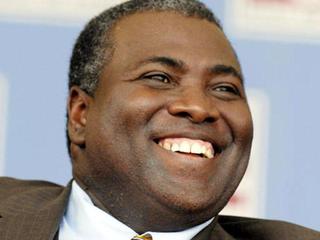
What I should do is just tell them to watch every Tony Gwynn interview.  And then listen to, watch, and read every single tribute being given to the man who died from cancer on Monday at the age of 54.

While Tony’s legacy as a player has been brought up, it is in passing…as though his greatness on the baseball diamond was a given.  What has stood out to me is the impact he had as a person.

Over and over again, sportswriters (and managers and players and fans) have shared personal stories of how Tony Gwynn made a difference in their lives.  That he took the extra moment to remember that the reporters asking him the questions were human beings.  And he treated them as such.

tony-gwynn-big-smile_zpsaa4e49a8

Buster Olney shared the story about a 19-year-old college student who approach Tony Gwynn for an interview for his small, one-man newspaper operation he published from his basement.  Tony saw he was wearing a Vanderbilt sweatshirt and said, “Hey, you should meet another guy I know who went there – he’s our beat reporter.”  And thus Tyler Kepner, now-writer for the NY Times, was introduced to Buster Olney.  There are so many amazing things about this story – 1) Tony took the time to do an interview for a 19-year-old college student; 2) Tony knew that Buster, who was a new reporter for the Padres at that point, graduated from Vanderbilt; and 3) Tony took the time to connect the two in a meaningful way.

Whatever legacy you think you’re leaving, ask yourself if you would have done the same in his shoes.

The world lost a good guy when it lost Tony Gwynn.

I got 99 problems but failure ain’t one

Jason Lauritsen wrote this thought-provoking post on how we approach the concept of failure and why it has such a stigma in our society.  He argues that failure doesn’t need to be something we fear – we should embrace it and move forward from it.  (It’s a good post – go read it!)

This got me thinking about how we as a society in the US approach failure in general….particularly in the newer generations of workers. You hear the jokes about “everyone gets a trophy” or soccer games where no one keeps score.  Because we don’t want our precious children to feel the sting of defeat “too soon”.  Unfortunately, “too soon” easily turns into “ever”…and helicopter parents who earned an indulgent chuckle when their children are in kindergarten solicit anger and frustration from bosses who see the results in their employees. (Kathy Caprino expertly addresses the parenting aspect of business in this article on Forbes.com.)
jenga-fail-jenga-cat-epic-fail-1290113932

Consider these things THAT ACTUALLY HAPPENED IN A REAL COMPANY.  WITH ADULTS.

  • A mother calls her 25-year-old son in sick at work, “because he needs his sleep.”
  • Parents of an intern call the HR department to ask what clothes they should buy their 21-year-old daughter for her summer at the company, even though the information was sent to the intern.
  • An employee calls his mother in the middle of a meeting with an HR manager to talk about what is going on…not once, but TWICE. (Seriously.  This one amazes me.)

These rather extreme examples are a moment in the life of a person who has not yet learned how to cope with the demands of a corporate environment.  But the fallout extends beyond these one-off situations, and it’s not just the Millennials displaying an inability to handle failure.  Do any of these sound familiar?

  • A senior manager refuses to “rock the boat” and speak out against an initiative that he knows will damage the culture because he’s afraid of risk.
  • A vice president insists on full consensus for every single decision she makes because she doesn’t trust her own judgement.
  • A CEO yells and screams at his executive team when the stock goes down because he’s surrounded by idiots who can’t do anything right (or so he thinks).
  • An entry-level employee hates her job because she doesn’t get a promotion in the first 6 months.

We are a society of instant gratification.  We are a society of limiting risk (unless we know we have substantial backup).  We are a society that lacks perseverance in the face of repeated adversity.  We are a society of people who think “Failure is not an option” is a rallying cry.

I’m here to tell you – failure is ALWAYS an option.  Without failure, we would never be able to celebrate success.  Without failure, we would never appreciate a job well done.  Without failure, we would never be motivated to better ourselves. Without failure, we would never learn anything.

Failure drives us forward – but only if we approach it correctly.  Here are some thoughts on how managers and employees (and yes, parents!) alike can harness the power of failure:

  • Acknowledge failure WILL happen: The idea that if you can go without a mistake for 60 seconds, you can go forever without one is ridiculous.  Accept that failure at some point will occur and give yourself (and others) permission to fail.
  • Talk about failure: Talking about something helps to remove the stigma of that thing.  By talking openly about failure, you help to create a culture where such transparency is expected and welcomed.  There is nothing more powerful than a leader who admits his/her vulnerability, shares his/her failures, and then shares what he/she learned from it.
  • Bring options to the table: If you goof up, figure out how you’re going to make it better.  Don’t just wallow in self pity (or freak out and hide).  Start a dialogue about the situation so you can move on. Own up, share what you think contributed to the mistake, offer some options to rectify the issue, and solicit ideas from your stakeholder.
  • Fail once – and learn from it: While failure is a part of the process, repeated failure can be a sign of something else.  I don’t mind an employee who keeps trying new things, isn’t 100% success the first time, but applies what he/she has learned to the next thing.  I do mind an employee who makes the same mistakes over and over again and blames others for his/her inability to change.

If you spend any time in the working world, you’re going to experience failure, from either your actions or the actions of others.  And some of those failures are gonna be doosies.  Failure is not a problem to solve.  It’s a lesson to learn.  Our reaction to failure is what ultimately drives  success.  So will you seize failure as an opportunity?  Or will you hide behind your inability to embrace what failure can do for you?

I can accept failure, everyone fails at something. But I can’t accept not trying.
– Michael Jordan

[Author’s Note: I know there are a lot of people who DO handle failure well.  And that we all know of someone who has persevered, regardless of the odds.  And to those people, I say “you rock.”]
Missed opportunities, or what if you spent $4M and no one cared?

[Editor’s Note: Due to the horrible performance by this author’s team, the game itself shall not be discussed.  I mean, seriously – what the heck was that?!]

Every year, the Super Bowl audience breaks down to two camps – those who care about the game and those who care about the commercials.  Ever since Apple’s ‘1984’ ad aired, the Super Bowl has risen in prominence as THE place for companies to make a marketing impact.  With the increase of on demand entertainment, live sporting events on the level of the Super Bowl offer one of the few places where millions of eyes will be watching at the same time.  And given the mythical status some Super Bowl ads attain, this is one of the few times that people WANT to watch the commercials. So you would think companies would do their best to make the most of this moment.

Sadly, this year’s crop fell short.  In fact, recent years have revealed some lackluster attempts to get our attention.  We long for the days of EDS’s “herding cats” or the CareerBuilder chimps. Instead, we get a Maserati ad that everyone hoped was a horror movie trailer and others that made Joe Namath’s coat the highlight of the evening. [Ed. Note: The Budweiser Puppy/Clydesdale ad was still awesome.  Because….puppy.  Duh.]  Not exactly everyone’s idea of $4M well spent.

missed_opportunities

We’ve all had situations in which we had a great opportunity to make a positive impression…and fell flat on our face.  Or worse, made no impression at all.  By examining the possible mistakes made by this year’s Super Bowl ad companies, it’s possible you can avoid a similar problem when provided a high visibility stage upon which to make a statement:

  • Playing it safe:  A lot of the ads toyed with audacity, but couldn’t quite get there.  That $4M price tag might have kept companies from wanting to go too far out of the norm.  As a result, there was a lack of creativity.  And I’m not the only one who thought so.
    What it means to you: When you get a chance to play on the big stage, decide whether or not you want to swing for the fences.  If you’re going to take a risk, take a real risk.  A jazz instructor I knew once said, “If you’re going to make a mistake, make a mistake of passion.”
  • Not managing the message: If you followed the Twitter feed for Super Bowl ads, you saw a wide range of negative comments – some deserved (and funny), some bizarre and intolerant. As a result, the ad’s message was lost in the aftermath.
    What it means to you: It’s not possible to anticipate all reactions to the content, but it’s good to have a backup plan. When you take your moment in the sun, consider the audience, the possible response, and how you’ll handle any backlash.
  • Losing sight of the goal: This one can also be thought of as “Letting the size of the stage dictate your message”.  Bud Light, who has had some winners in the past, decided to feature a regular guy who doesn’t know he’s in a commercial – and not just any commercial, a Super Bowl Commercial.  So you ended up with Don Cheadle and a llama, and Arnold Schwarzenegger in inappropriate shorts.  And how is this about beer? Or even about the Bud brand?
    What this means to you: Just because you’re in a high visibility situation, it doesn’t mean you should forget why you’re there.  Whatever message you want to send, keep the core of that message.  What do you want people to remember – you and your message, or the fact that you had a dancing bear introduce you?

Chances are, your stage isn’t as big as what we saw on Sunday.  But every single time you have a chance to make an impression, you should think of it as your personal Super Bowl.  Seize the opportunity to tell your story, share your message, and be memorable – in a GOOD way.  Don’t spend the social equivalent of $4M just so people can say, “meh.”

 Do you have a story about how a time you made an impression on the big stage?  Share in the comments?