To Burn or Not to Burn? (a question of bridges)

Early on in my career, I had one of those proud/not-so-proud moments (depending on how you look at it) while working for a small company as an “office manager” – you know, that all-inclusive title that pretty much means you have no authority but all the blame.  I dropped an F-bomb on the owner’s wife.  [It’s a long story, but basically she accused me of not caring enough about the job. Because I didn’t respond to her request in 3 seconds.  But I digress.]

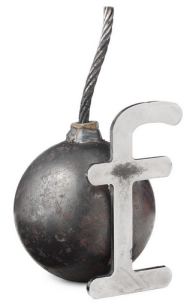
I believe the exact phrase I used was, “F*** you and f*** this job.”  I grabbed my phone and my purse and made my dramatic exit.

After walking away from the building, the reality of what happened hit me and I called my husband and said, “I think I just quit my job.”  The thing was, I couldn’t afford to quit my job.  So…I turned around and went back to the office to figure it out.   So much for leaving in a blaze of glory.

Luckily, the owner’s wife apologized first, then I apologized, and we made it work until I moved on to complete my student teaching.  Despite the time that has past, I’ve never forgotten that moment, thinking back to it with a certain wistfulness every time I’ve moved on from a company.  But I have never reenacted that moment because I know there would be consequences.

man lighting fuse

Before you decide to lay waste to the past and leave in a dramatic fashion (like these extreme quitters), decide if it’s worth it by answering these questions:

  • Will I need a reference from anyone at this company?
    Obviously you would only select “friendly” references.  But any recruiter worth their salt will do what they can to find backdoor references – folks NOT on your friendly list – because they want the real scoop.  Those are the people you need to be thinking about.
  • Did I gain a significant amount of experience at this company that I will need to be able to refer to in the future?
    A job you had for a month or two might be okay to leave off the ol’ resume.  But what if you were there for 2 years?  Or 5 years? Or 15?  You’re going to need to be able to use that experience to sell your skills to a future employer.
  • Is it possible I may want to return to this company?
    Sean Connery claimed he would NEVER play James Bond again…and then came back to make, you guessed it, Never Say Never Again.  I get tough work environments, burn out, impossible bosses, etc.  The reality is that people move on, circumstances change, and time lends perspective.  Don’t risk future opportunity to for short-term satisfaction.
  • How small is my industry’s world?
    This is particularly important if you have a niche skill set – IT, legal, and yes, even instructional design, can fall into this arena.  Word of your behavior will get out.  And with social media, the range will be even further than you think.  If there’s a chance your exit may reflect poorly on you if told to a potential future employer, it’s a BAD idea to burn that bridge.
  • Am I an adult?
    Seriously, are you?  A true professional tries to address the issues at hand, and if that doesn’t work, he or she leaves like an adult human being rather than a 2-year-old or viral video wannabe.  Yes, it’s really entertaining to watch the videos of extreme quitters, and we all live vicariously through their efforts.  But what did it really change in those companies?  And where are those people today?  A few people did turn their moment of fame into a career, but most probably traded a moment of triumph for a professional lifetime of explaining away that YouTube clip.

There are times when burning bridges might make sense (companies engaging in illegal activities come to mind).  The point is, only you can make that choice – so make it a good one.

If you decide it’s totally worth it – go for it!  And please, film it so we can enjoy it, too.

Do you have story of a burned bridge to share?  Are there times when it DOES make sense to burn a bridge?  Let me know in the comments!

“Other duties as assigned” (why it’s a good way to work)

I had a streak of bad luck at one point in my career.  Three of the companies I worked for either went out of business or closed the office of where I was working.  I was the William H Macy of business.  I could have been hired as a cooler for competitors.

After the third company went down and the job went away, I wanted to take a little bit of a mental break and just do some temp work until I figured out what was next.  So I was assigned to a small company to do data entry.  About a week into that, I started asking questions.  Why were the forms all hand-written?  What about a web form? Wait, you don’t have a web site?  Well, why not? And who the heck is managing the network?  And shouldn’t you have a single point of contact for general questions?

All of that question-asking led to a full-time position building the company’s web presence and setting some communication infrastructure that’s still in place today.

I share this story not because I want to brag about my mad skillz and the fact that I landed on my feet.  I share it to illustrate that I landed on my feet as a result of asking questions that were outside of my assigned responsibilities.taking out the trash

All too often, I hear employees use the phrase, “It’s not in my job description.”  Or I encounter managers who want a copy of the job description to prove to an employee that there is a task or behavior that they should be doing.  And it sticks in my craw a bit because I find it SO limiting…and it’s so indicative of where a company’s culture currently is.  Employees who think they aren’t responsible for the success of the company will limit themselves to the specifics of their job.  Managers who can’t explain how an employee’s actions contribute to the overall success of an organization rely on job descriptions to “prove it”.  It handicaps both parties…and hinders the business.

There’s a reason that other duties as assigned is included in job descriptions – because there are times when the unexpected happens and the business needs its employees to step up and do some things that are outside of their normal day-to-day.  No business can promise exactly what your daily routine will look like (maybe some manufacturing jobs can get close, but there are still variables).  The company needs some flexibility to succeed in an ever-changing business environment.

Other duties as assigned should be the way you approach your job every single day.  Yes, there are actual job responsibilities you need to complete (duh).  But this phrase is a license for innovation!  You are responsible for adding value – if you can add value outside of your ‘job box’, you will be successful.  For those of you who complain you’re getting burned out or want more development, here’s the phrase for inspiration.  Look around you and find a problem to solve.  If you’re always complaining that one department doesn’t seem to talk to another, call a meeting with the offending parties and see what you can do to help.  Maybe it’s not “technically” your job…but if you see a way to add value by doing it, by all means – do it!

Now, there is some risk inherent in performing other duties all willy-nilly, so here are a couple of suggestions on how you might do it successfully:

  • Tie your other duties to a business need: It’s harder to fault an employee when you’re helping the business achieve its goals.
  • Target pain points: The others will thank you.
  • Don’t make it all about you: Sometimes the problem/pain point you’re solving benefits you…but what would benefit others?
  • Let people know what you’re doing: No one likes an end-around.  Keep your manager up to speed on what you’re doing and why.

So when you’re tempted to grumble or make fun of other duties as assigned, change your mindset.  You may just land on your feet.

Got an example of a time when an “other duties as assigned” mindset helped you?  Share in the comments!

If you’re not stubborn, you’ll give up on experiments too soon. And if you’re not flexible, you’ll pound your head against the wall and you won’t see a different solution to a problem you’re trying to solve.
― Jeff Bezos

It’s good to be the king…except when it isn’t

You’ve heard them, those fateful words mumbled by frustrated employees under their breath when they’re angry. You, in fact, may have mumbled the words yourself at one time or another.

“I don’t know why the boss looks so stressed. She’s got it made.” Or…

“He has no idea what he’s doing.” Or the ever-popular…

“Well, when I’m in charge, that would NEVER happen.”

Right. Because being the boss is the easiest job in the world. That’s why everyone is so darn good at it. (Yes. That was sarcasm, for those of you scoring at home.)

Listen, I get why so many people get mad at their boss. There are some really bad ones out there. And there are some good people out there just trying to do their best in a crappy situation. Sometimes it really does suck to be in charge. Here are some reasons why The Man deserves a little slack now and then:

  • It’s lonely at the top: Yeah, when you’re promoted you get an office (usually) and a parking space (occasionally). But think about what you lose – you are no longer “one of the gang”. You have to be very careful about what you say and to whom you say it, particularly the higher up you go in the company. This can be a pretty jarring shift. And you feel like you’re cut off just when you need someone to talk to the most.
  • Bosses have to fire people: Only the most evil, psychopathic bosses are unaffected by firing people. Even when it’s absolutely the right thing to do and it’s best for the company (and even the employee), firing people is awful. Yes, you can get through it professionally and with empathy, but it still impacts you before and after the fact.f_bomb
  • There’s a LOT more accountability: Back in the day, when you were a hot shot individual contributor, you could get away with only being responsible for your own stuff and getting out of the way when others failed. Well, guess what – as the boss you don’t get to do that any more. Now, you’re responsible for the results of the TEAM…and YOUR boss is going to hold you accountable for their actions. This can lead to a lot of sleepless nights and uncomfortable staff meetings if you’re not on the ball and managing your people appropriately.
  • Other People’s Problems (drama): Remember how sometimes you would just walk into your boss’s office and “vent” – dumping your problems on his/her shoulders? Yeah…now people try to dump their problems on you. And even if you have amazing deflecting skills, you’ll still have to listen to their issues because there may be an obstacle buried in that rant you need to help remove so your employee can be successful. And you know how sometimes two team members get into a turf war over something as stupid as who gets the good whiteboard markers? Before you were the boss, you were allowed to walk away…even laugh at it. Now, you’ve got to deal with it because it’s impacting the overall performance of your team and you are responsible for your team’s results. Fun, huh? (You can still laugh at it, though. Just do it out of earshot.)
  • People expect you know know EVERYTHING that’s going on..and share it: The truth is, many bosses are just as much in the dark about the whys and whats as most employees. Butin a lot of cases, they DO know what’s going on but can’t share the information because it’s confidential. Employees don’t care. They want info and they want it now! As a boss, you have to be able to balance the challenges of transparency and confidentiality. And that can be very tiring, especially if you’ve forgotten to check with your boss about what the message should be.

Don’t let this list scare you – there are are lot of cool thing about being a boss. You get to see people reach their full potential; you have more opportunities to impact what is going on in the workplace; you are personally challenged; etc. And yes, you often get a kick ass office. But for every high, there is a low. For every perk, there is a challenge. Just try and remember that your boss is a human being and even he/she has crappy days. Most bosses are just doing the best they can.

What are some challenges you’ve faced as a boss that you wish your employees understood better? Share in the comments!