
Seven Years In (and Still Surprised)

There’s something almost mythical about the number seven.

Hollywood certainly seems to think so. Seven Years in Tibet, Seven Year Itch, Seven Samurai, The Magnificent Seven, Seven Pounds, Se7en (What’s in the box?!)…okay, that last one got a little dark.

Then there’s our cultural fascination with it. Lucky number seven, the 7 wonders of the ancient world, the seven seas, seventh heaven, the seven deadly sins…sheesh, that keeps coming up. Anyway, seven seems to recur as a number of significance.

I bring this up because last week, I marked seven years with IA.

That may not sound remarkable on its own, but for me, it’s quietly monumental. It’s the longest I’ve ever stayed at a single company and honestly, I can’t quite believe it. Some days it feels like I just started, like I’m still learning the rhythms, still discovering new edges to the work. Other days, it feels like I’ve been here forever – in the best possible way – grounded by history, but never stuck in it.

For most of my career, longevity wasn’t something I was aiming at. I always told people I build, I don’t maintain. I was motivated by learning, by momentum, by the pull toward harder, more interesting problems. When that sense of stretch faded in past roles, I moved on. Not because I’m Gen X and apparently destined to job hop, but out of a desire to keep growing and learning. Staying felt riskier than moving on.

So when I look back at seven years here, the real question isn’t why did I stay? It’s what kind of work makes staying make sense?

My work here at IA sits at the intersection of strategy, design, and transformation. In practice, that means we’re rarely solving the same problem twice. We partner with organizations navigating meaningful change – how they operate, how they decide, how they serve people, how they evolve over time. That kind of work doesn’t settle neatly. It resists templates and tidy endings.

What’s kept the work feeling alive for me is that I’m constantly encountering new systems and new challenges. Each engagement resets the context. I can’t rely on muscle memory when helping clients. I need to listen again, learn again, and adapt again. That exposure to “new” work across different industries, cultures, and moments of change has given me the sense of renewal I used to associate with changing jobs, without losing the grounding that comes from staying in one place.

Just as important as the work are the relationships we build with clients along the way. Transformation only works when there’s trust, and trust takes time. Being able to return to organizations, deepen partnerships, and see how ideas evolve from recommendation to execution adds a layer of meaning that’s hard to replicate. It turns the work from a series of engagements into an ongoing conversation, one where learning flows in both directions. I’ve made several connections that have lasted long after the client engagement ended.

Doing this work alongside the people I work with at IA makes all the difference. I’m lucky to be surrounded by colleagues who are thoughtful, curious, and willing to sit with complexity rather than rush past it. People who ask better questions, challenge assumptions, and care as much about how we work as what we deliver. This helps keep the work demanding, human, and deeply engaging.

Seven years in, I no longer think of staying as the opposite of growth. I see it as a different expression of it, one grounded in continuous learning, meaningful relationships, and work that keeps evolving in genuinely interesting ways.

I’m grateful to be part of work that keeps changing, with people who make that change meaningful. I didn’t expect to find a long-term home this late in my career. But here feels like exactly the right place to be.
Pro Tips from a Terrible Job-Seeker

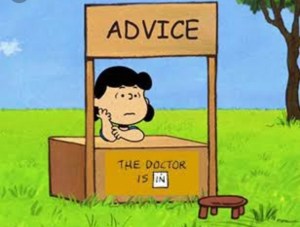
Recently, a friend of mine asked if I had any tips as she thought about her next role. She knew that I had been through a similar situation about a year ago and wanted to know what wisdom I had learned from the experience.

I also laugh a little to myself when I get these requests. I think it’s fun that people think I know what I’m doing as a job-seeker. As a recruiter, not a problem – I can give advice and suggestions all day long about how to recruit, as well as share what recruiters and hiring managers are thinking. It’s different when it’s personal. I often describe my career as “Forrest Gump-ing my way through life” because I wasn’t always the most thoughtful in my approach. I would work somewhere for awhile, decide it was time to leave, then find something else without a lot of planning. It typically worked out, but not always. And while I learned something from every job, I feel like I could have avoided some of the pain along the way if I had been smarter about it.

Thankfully, I was a LOT more thoughtful about my last move. As a result, I’m in a job I love doing incredibly interesting work with incredibly smart people. Finally.

So, to help you NOT be me, here are some of the tips I shared with my friend:

  1. Don’t search scared: If you still have a job while you’re searching, this is a little easier. If you don’t have a job, it can be hard to be patient and not panic about money. Hopefully you have a nice buffer and can feel okay taking the right amount of time to find what you want. This isn’t always possible, so if you need to take a contract position while you look for your permanent home, that’s okay.
  2. Know (generally) what you want: Just blindly looking for something that looks interesting is exhausting and makes it harder for people to help you network. There are some good free tools out there to help you narrow your focus. Or splurge for a session with a coach or super smart friend. Whatever you do, narrowing down your want list is necessary.
  3. Find like-minded people: I’m not talking culture fit. Find people who will appreciate you for YOU. I’m at the point in my career where I will not suffer fools for immediate coworkers, so I consider long and hard who I will be interacting with, whether I’ll learn anything from them, and whether they will get my sense of humor (and that list is shorter than you think).
  4. Don’t be afraid to ask for help: As shared earlier, I suck at finding jobs for myself, but I love helping other people find jobs (I’m so weird like that). Chances are, you have an AMAZING network of people who love you and want to help you find your dream job. Use it.
  5. Treat Yo’Self!: Yes, you’ll want to be smart about money until you’ve got your next gig figured out, but don’t begrudge yourself a pedicure. Or a trip, if it’s booked. Or a hair appointment. Or that damn cup of fancy coffee. You still need to love you.

So there you have it. Hopefully this helps you as you contemplate that next job search. It’s not an exact science. Everyone’s search is a little different, so grant yourself a little grace along the way.

If you have any advice to share, please do! And good luck to those who are looking for their next job. We’ve got your back.

Too much crazy

Today, another person I respect and adore decided to take a hiatus from social media. This is something like the third or fourth person (that I know of) in the last 6 months.

There are a lot of reasons people take time off from social media. Some want to spend more time with family. Others realize it’s keeping them from doing what they love (reading books, painting, overthrowing governments, etc.). And one very special person claims quitting Facebook it has helped him learn to move 10 lbs objects with his mind. (He’s totally lying – he’s only managed 4 lbs, and that’s being generous.)

The most common reason I’ve heard lately, however, is that there is just too much crazy.

People can’t seem to be civil anymore. The 24/7 news cycle has turned every little thing into an “event.” And many wake up in dread over what may or may not have been tweeted overnight.

They might have a point. There are numerous studies suggesting that quitting Facebook – even for just one week – has benefits. Middle school students may be particularly susceptible to issues with social media, with online bullying becoming a real danger for kids as young as 10. They’ve even come up with a new term – bullycide – for when a child takes his/her own life because of bullying. It’s heartbreaking.

I’ve contemplated taking a break. I haven’t because most of the people I know I communicate with online (#introvert). But I have cut back. And I find myself avoiding crazy as much as possible – it’s too exhausting. Not everything needs to be an argument, and not every post needs a dissenting opinion.

I think the way people are interacting online right now is a mix of opportunity and motive. Online comments lend anonymity and distance and accountability is almost nonexistent. And as for motive? There are a lot of people out there who have either felt they never had a voice and then found it, or have always had a voice and think everyone needs to hear it.

It’s unfortunate – we’re like kids who broke the expensive toy because we couldn’t respect it. Or because we played with it too much and it fell apart. I worry because I see how we interact online bleeding over into our real world interactions, and it’s getting ugly. I also worry because all the noise can block out all the good that the internet can enable.

I hope the crazy calms down. I hope those who are struggling with memories and feelings that the relentless news cycle brings are able to find peace. I hope we find a way to talk instead of yell.

I hope we keep finding funny cat videos to share online. (Thug Cat is THE BEST.)

I hope we find ways to remind each other that the world is a beautiful place and that people are worth saving.

If you need a break, take it. But please come back.

We need you.