The beauty (and danger) of rituals

The Beauty

There are two good routines (for lack of a better word) that I see every morning when I get to work.
The first is an older gentleman who walks through our campus every morning and evening. I’ve seen him nearly without fail, every single day, regardless of the weather. He walks with a pronounced limp, so it must take real determination to do it. I asked a coworker about him – apparently, he’s been on this route for YEARS and this is his exercise routine.  It’s definitely working, as I’ve seen the weight drop off. When I didn’t see him walking for a couple of weeks, I got worried…but he must have been out of town, because after the holidays, he was back at it. I really admire this guy. It couldn’t have been easy for him to get started, but he has stuck with it.
The second ritual I see takes place in the parking lot. Every morning, a minivan pulls up to the front door, and a female gets out from the passenger side, walks around to the driver side, and kisses the gentleman who is driving. Then she stands at the curb as he pulls away, and when he honks the horn in salute, she raises her hand in a farewell wave. And then she goes to work. I love it when I get to see this happen. I never want to find out the backstory because it’s such a lovely moment on its own, every day.

ritual

adjective rit·u·al \ˈri-chə-wəl, -chəl; ˈrich-wəl\

What is a ritual, really? The dictionary describes it as something always done in a particular situation and in the same way each time. It can be anything from a simple handshake upon meeting someone, to a highly complex series of phrases and behaviors over the course of a religious ceremony.tumblr_lqcgze7bGY1qfwcfh

We like rituals because it removes the anxiety over the unknown. We like knowing what’s expected of us at a certain time. It comforts us. It makes us feel smart. They also promote good habits (see story of man walking to exercise every day).

When used best, rituals promote a sense of belonging – they help define an organization or culture. They remind us that while we all are different people, we have past behaviors and expectations in common.


The Danger

The insidious side of rituals is that the more we do them, the harder it is to break them. In some ways, our brain likes repetition. Think of your brain as a snow-covered mountainside, with your actions or thoughts as skiers. Like skiers shooshing through the snow dig tracks and moguls into the snowfield, every time we reinforce an activity or behavior, it deepens the neural pathway in the brain. And sometimes those ruts get so deep, you can’t get out of them.

Think OCD.

Now think about your organization. Are there rituals that border on the ridiculous? Ones that are so ingrained that no one even know why they do it anymore, but feel like they have to or else?

You know that rituals have shifted to the “danger” side of the equation when you hear things like, “it’s how we’ve always done it” or “if it ain’t broke, don’t fix it.”

Rituals can damage innovation and growth. They can rob an employee population of imagination and acceptance of positive change. Rituals can keep a leader from being able to adapt to the needs of her people because she’s always managed that way. They can work an employee out of job because he can’t adapt to a new process.


The Balance

It takes diligence to ensure that rituals are helping, and not hurting, your team/department/organization.

Because rituals help foster a sense of community and belonging at at organization, you need to pay homage to the past while building new rituals for the future.

You need to monitor your rituals to see if they have morphed into something damaging. Are they making it difficult for new people to assimilate? Are they blocking your team from solving problems creatively?

Ritualize behaviors that promote good habits (quality assurance, compliance, etc.) and de-ritualize behaviors that promote creativity (problem solving, recognition, coaching, etc.).

By finding a balance between the beauty and danger of rituals, you’ll minimize the harmful moments – like a team refusing to change – and maximize the good moments – like a morning farewell wave to a loved one.

What rituals do you have in your workplace? Are they “beautiful” or “dangerous”? Share in the comments!
SHRM and the art of leadership

This is a slightly different post today, and it’s pretty HR focused, but stuff is going on in the HR world that highlights leadership. This “stuff” also highlights the fact that leadership can look and sound very, very different – and still be 100% leadership.

For the uninitiated:

SHRM (the Society of Human Resource Management) announced earlier this year that it was launching a separate new certification for HR professionals. HRCI (Human Resources Certification Institute) will continue to offer the existing certification. If you want to read more about all this, click here, here, or even here.

This post isn’t about the new certification.

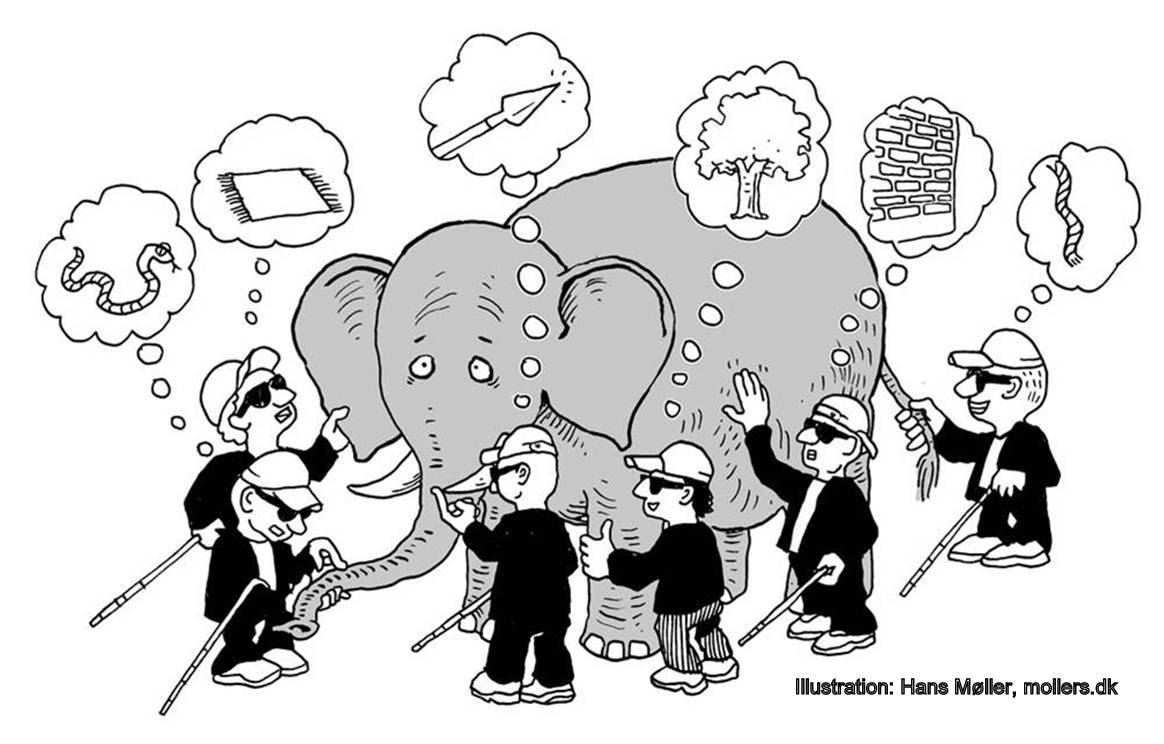
What I want to focus on is the way leaders in the HR community have stimulated conversation.6-blind-men-hans

On the one hand, you have the esteemed Laurie Ruettimann – her approach has been to ask some very pointed questions about the need, efficacy and impact of the new certifications. You can read her excellent article about it here.  Go ahead, read it.  I’ll wait. Done?  Good.

On the other hand, you have the also-esteemed Steve Browne – his approach has been to focus on what the future can look like, and the progress that has been made since the announcement first happened. You can read his excellent take on the situation here. We’ll wait. It’s cool.

Chances are, you were provoked, annoyed, or in fervent disagreement with one of them, rolling your eyes at their comments. Or you may have been smiling, nodding emphatically, or fist-pumping because you totally agree with their comments. Either way, you’ve been exposed to two different perspectives and you thought about where you stood.

That means these folks are Leaders with a capital L.

I don’t mean leadership is about arguing. Leadership is about making people think. Or asking the tough questions. Or being optimistic about possibilities.

Leadership isn’t just about what YOU want it to look like. It takes all kinds, all voices, all backgrounds.

I love that Laurie and Steve come from different points of view. And I love even more that they keep the conversation going.

This, my friends, is what leadership looks like.

Keep the conversation going.  Post a comment here, post a comment for Steve and/or Laurie.  Let’s talk!

You have to use your MIND (stay open to learning)

At a recent event in Cincinnati (shout out, DisruptHR!), a group of us went out to dinner and, as often happens at these types of gatherings, the conversation ranged all over the place – from discussing the state of local businesses to arguing whether or not I was morally obligated to share any of my dinner.  (The answer was no.)

In general, I didn’t really have a stake in any of the conversations going on (other than the dinner sharing), but suddenly I found myself stepping on a rather large soap box and had to be coaxed down…and it was all about whether or not kids should learn cursive in schools.

Surely you’ve read about it – cursive has been removed from the Common Core because of computers and all that cool tech stuff.  What a waste of time!  After all, these kids are in third grade…there is so much more that they should be learning.  Like how to eat paste.  Why would we possibly want kid to learn something new?

OfficeSpace_038Pyxurz

And there’s the crux of my soapbox.  Never mind that there is research that indicates cursive supports brain development.  What bothers me is that there are people out there who are PROUD that they have encouraged 2nd and 3rd graders to reject learning something.

Okay, fine…hardly any of us writes anymore, let alone write in cursive.  My cursive has been a hybrid of print and cursive for years.  But think about the process of learning cursive – it requires discipline, perseverance, patience, even a little artistic flair.  Are any of those things that we wouldn’t want kids to learn?

So…what does this have to do with leadership?  I think too many people in the business world are guilty of the equivalent of refusing to learn cursive because they think they don’t need it.  Development?  Bah!  I know everything you could possibly teach me!  I don’t need that – it’s a waste of time!

Learning is a lifelong practice…with emphasis on the word practice.  Your brain is begging you to keep creating new neural pathways to keep it young.  By being open to learning, you keep your brain primed to take in and process new information.  You shut that down, what good are you to your business?

Here are a few thoughts on how to keep yourself open to learning:

  • Avoid the urge to dismiss: Sometimes new things sound stupid.  And useless.  And a waste of time.  Find out if that’s true before you dismiss it entirely.
  • Embrace the challenge: Sometimes new things sound hard, so we want to avoid them by saying they’re stupid.  See the benefit in learning something new.
  • Find the nugget: Sometimes new things are kind of useless.  I bet you can find something in there you can use.  Maybe it’s a way to reframe your attitude.  Maybe it’s the process you underwent to learn it.  Maybe it’s simply the fact that you kept your mind open.

Always, always, ALWAYS be open to learning new things.  It’s how you stay relevant…and it’s how the world becomes a better place.

Live as if you were to die tomorrow.  Learn as if you were to live forever.
– Mahatma Gandhi