The thing about AI is…

OMG, I know. Yet another post about AI. It’s so annoying, isn’t it?

I know it’s annoying to a lot of you because I’m seeing so many LinkedIn and Threads posts complaining about how AI is taking over. There’s a growing number of people out there proudly proclaiming the fact that they have never used AI and it’s going to stay that way.

I get it. I think AI has a lot of issues, too. There’s evidence that it erodes critical thinking skills. Use of AI puts a massive strain on the environment, driving immense energy consumption, severe water depletion, and heavy carbon emissions. And then there’s the intellectual property theft that has already cost one AI provider a hefty settlement – and that provider is considered the “good guy.”

Underpinning these arguments is a general humanistic sense of existential dread. I think there there is general feeling that AI is stealing our souls – that the unique elements that make us us are too easily reproduced, at least superficially. We can no longer immediately believe a video clip of animals doing something cute. Even if it’s real, we assume it’s AI. LinkedIn posts are all starting to look alike. We are starting to point to proper grammar as an AI “tell,” even though there are a whole bunch of us who actually paid attention in English class and like our em-dashes and Oxford commas, thank you very much.

I don’t think AI is evil. It can’t be – it has no point of view. It is a tool. The point of view is provided by its creators.

I’m not here to rehash the pros and cons of AI. I’ve been doing that for a few years now. (You can read my perspective from 2023 here, and a follow up here.) What has caught my fancy about the recent discourse is the growing divide between AI champions and AI deniers. It’s getting incredibly antagonistic. And I get it, I really do.

I think both groups are wrong.

I don’t think we can ignore AI. The genie is out of the bottle, the toothpaste is out of the tube, and the horse has left the barn. It’s out in the world and unless we pull a Silicon Valley-style caper and kill off Son of Anton, I don’t think we can ever go back to the pre-AI days. And anyone claiming they will never use AI may need to add a disclaimer: you may never proactively use AI, but you’re probably using AI all the time. If you use GPS, you’re using AI.

I also don’t think AI is going to solve all our troubles. If we can leverage it to handle automation of tedious, repetitive activities with lower stakes, I love it. If it can be a way to rapidly test a theory or create multiple prototypes, let’s give it a shot. But all too often, I see AI being leveraged to do the things that make us uniquely human – creating art, writing stories, working through complex emotions. And ask any lawyer what they think about using it to handle legal issues (SPOILER: They hate it and will probably drop you as a client. Top tip: any chats in AI about your case are discoverable.)

All that being said, I believe you put yourself at risk if you get “left behind” on AI. I don’t think you need to embrace everything AI has to offer. I don’t think you need a paid prescription or that you need use AI to help you pack for your next vacation. You do yourself a grave disservice if you don’t keep up to date on the advances happening in AI, as well as the ripple effects it has on society, of which you are a member. It’s shaping the future of children, impacting the livelihood of thousands, and determining the content we consume.

Therefore, my advice to you is to learn about AI. Understand its capabilities and keep an eye on how others are using it. This is especially vital for those in the business world. AI providers are making all sorts of promises without fully knowing how to price what you might be buying, but some of those promises are being fulfilled. There may be some elements of AI that make sense for your business to adopt. Just do so with open eyes and questioning minds.

AI is a tool like any other, albeit a highly powerful and seductive tool. And like all tools, its impact is determined by those who wield it.

Maybe it’s time to make sure you’re one of those people.
When progress stops belonging to all of us

History shows us something important: most technological revolutions eventually became part of the public fabric of life.

The printing press didn’t just lower the cost of books, it broke down walls. Knowledge that once belonged to the elite began reaching merchants, farmers, and ordinary families. Literacy spread, ideas crossed borders, and entire movements (like the Reformation) were made possible because access was no longer locked away.

Consider the telephone. It started as a novelty for businesses and the wealthy, but within decades, phones were hanging on the walls of regular households. Distance shrank. Families stayed connected across miles. A tool once reserved for the few became an expectation for the many.

The same was true with electricity. At first, it powered factories and illuminated the homes of the rich. But within a generation, power lines stretched across cities and towns. Eventually, even rural households could flip a switch and change the rhythm of their lives. Electricity didn’t stay exclusive; it became essential.

And then the internet. The early days were clunky, noisy dial-up connections, but it wasn’t confined to Silicon Valley insiders for long. Schools, libraries, coffee shops, and homes all gained access. The internet didn’t just belong to tech giants; it belonged to anyone with a modem and a little patience for AOL’s screechy login tones.

Each of these revolutions had flaws. They created disruption, inequity, and sometimes exploitation. But over time, they moved outward. They became shared. They became ours.

That’s what makes Artificial Intelligence feel so different.

A revolution that isn’t spreading

Unlike earlier breakthroughs, AI isn’t marching toward universal access. Yes, AI is ubiquitous for end users. Even appliances seem to be “enhanced” with AI. But are consumers all we ever will be? Training today’s most powerful systems requires staggering computing power, mountains of data, and billions of dollars. That’s not something universities, small businesses, or hobbyists can replicate.

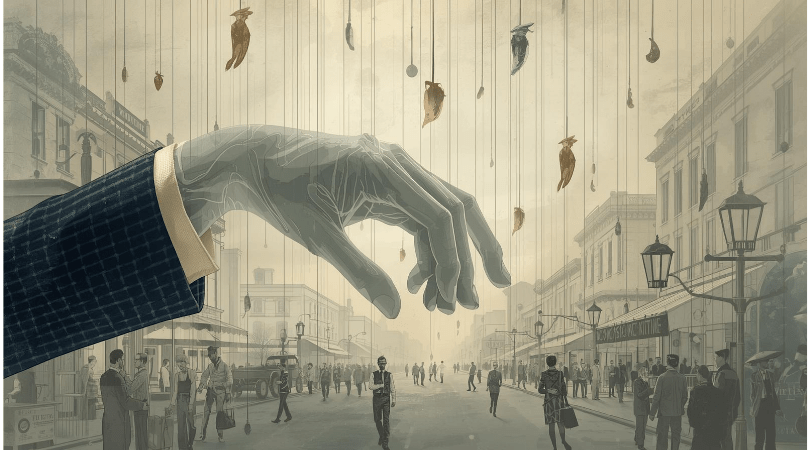
Training today’s AI systems requires computing power and funding that are out of reach for almost everyone. Right now, there are maybe four major players at the forefront: Microsoft (through OpenAI), Google (through DeepMind and Gemini), Anthropic, and Amazon. And if trends continue, that number could shrink to two. AI is concentrating in fewer and fewer hands. And that’s dangerous.

This is not a broad-based revolution. It’s consolidation.

When power and money gather in a few hands, the rest of us don’t just lose out on opportunity. We lose control:

  • A few voices dictate the future. Microsoft’s partnership with OpenAI means one company already wields outsize influence on how AI is integrated into businesses, education, and daily tools. Google’s models are quietly shaping search, advertising, and the flow of online information. Anthropic, funded heavily by Amazon, positions itself as the “safer” alternative, but at the end of the day, it’s still a private company answering to investors.
  • Wealth piles up at the top. OpenAI’s valuation hit tens of billions within a few short years. Google and Microsoft stock prices surged on the promise of AI. Meanwhile, the average worker is being told to “upskill” before their job becomes obsolete. That’s not shared prosperity, it’s extraction.
  • Fragility sets in. If two or three companies control the technology, what happens when one makes a catastrophic mistake? Or decides to cut corners in pursuit of profit? When power is concentrated, failure doesn’t just hurt a company, it destabilizes the system.
  • We lose our sense of ownership. Electricity, books, and phones became part of daily life that people could buy, use, and understand. With AI, we’re not participants, we’re customers at the mercy of a few gatekeepers.

This isn’t just about markets. It’s about the kind of society we’re building.

Why this should worry all of us

It would be easy to say, “This is a leadership problem,” or “It’s up to regulators.” And yes, leaders and policymakers carry a huge share of responsibility. But the truth is, this concentration of AI power impacts all of us.

As citizens, we risk losing democratic influence over how AI evolves. Do we want a handful of unelected executives deciding how the most powerful tools in human history are used?

As workers, we risk being replaced, monitored, or squeezed for efficiency gains that benefit shareholders, not employees.

As consumers, we risk being locked into ecosystems where one company controls the platforms, the data, and the outcomes, and we have no real alternatives.

As communities, we risk technologies being built without local values, cultural diversity, or public good in mind. It is in danger of becoming an echo chamber that regurgitates our own content back to us.

AI isn’t just another business tool. It’s shaping the future of communication, education, healthcare, and governance. And if we’re not paying attention, that future will be built for profit, not people.

And let’s be clear: AI carries enormous potential. It could accelerate medical breakthroughs, personalize education at scale, and help us tackle massive challenges like climate change or global poverty. Used responsibly, it could open new doors for creativity, innovation, and human connection in ways we’re only beginning to imagine. The power of the technology itself isn’t the problem. The problem is who controls it, how it’s developed, and whether its benefits will actually be shared.

We aren’t powerless

The genie is out of bottle. The toothpaste has left the tube. Use whatever idiom that makes you happy, but they all boil down to one thing – AI is here to stay. We need to be intentional about how we want AI to augment, not control, our lives. I’m not the fanciest expert, but some thoughts on how we can get started:

  • Policy and regulation. We know legislation lags innovation but that doesn’t mean we can’t set up some guard rails to save us from ourselves. Transparency and accountability aren’t optional.
  • Support open ecosystems. Open-source AI won’t rival the giants tomorrow, but it creates alternatives. It keeps innovation from being locked behind closed doors. It means educators, nonprofits, and smaller businesses can participate in shaping the field.
  • Treat AI like infrastructure. Just as we fund public roads, schools, and healthcare, we should treat AI as a public good. Imagine national or global initiatives focused not solely on profit, but on solving real-world problems like climate, healthcare, education.
  • Make conscious choices as leaders. Don’t assume “bigger” means “better.” Push vendors for transparency. Invest in alternatives. Reward diversity of thought and innovation, not just scale.
  • Demand accountability as citizens. Ask questions. Vote for representatives who understand technology and its risks – who want the benefits of AI but are wary of false promises. We need more transparency in legislative wheeling and dealing.

What the future holds

Responsibility isn’t just about steering the ship today. It’s about making sure the people who come after us inherit something better. It’s about our legacy. This moment isn’t just a “leadership” test – it’s a societal one.

AI will shape the future whether we like it or not. The only question is whether that future is written with us or for us. If power stays concentrated in the hands of a few, progress will no longer belong to everyone, it will belong to “them.”

We can’t afford to be passive. Leaders need to act. Citizens need to speak up. Workers need to demand accountability. Because if we don’t, we’ll look back one day and realize we handed over the next great revolution without ever insisting it be ours too.

It’s the week of #HRTechConf, y’all!!!!

This week, a whole bunch of people are descending upon Las Vegas for the 2018 HR Technology Conference. It’s a remarkably large conference that explores all aspects of how technology impacts business and people. You might think it’s just about product demos (and those will be there), but there’s so much more.

One thing I’m particularly excited about is the continued exploration about the intersection of human bias and artificial intelligence (in whatever way you want to to define it). Technology is a product of its creators, and its creators sometimes make horrible decisions. We are at an important crossroads – will we be able to use technology to enhance our human interactions or will we use it to avoid them?

I’ll be sharing my observations from the Expo Floor, the sessions, and all the interactions I’ll have with all the HR practitioner end users who are struggling to make sense of how to make technology work FOR them in the workplace.

Follow me on Twitter at @mfaulkner43 or all the people tweeting on the #HRTechConf hashtag this week. I’ll also be blogging from the conference, along with a group of incredibly talented and smart bloggers posting to the conference blog site.

Is there something you want to learn more about? Send me a DM and I’ll try to check it out!