How can you afford your Whac-A-Mole lifestyle? (hint: you can’t)

You’ve seen them.

Running from place to place.  Conducting drive-bys at every cube, leaving unclear action items in their wake – and frustrating employees everywhere.

These are the Whac-A-Moles. And they are hurting your business.

In case you’ve never been to a midway, Whac-A-Mole is an entertaining game in which the player (you) get to use a giant soft mallet to smack (whac) moles that pop out of holes at random intervals.  It’s oddly satisfying.

That little moment of happiness you feel when you bonk that mole on the head in a game is the same feeling that the Whac-A-Mole Leader gets when they run around the office reacting to every little thing.  I mean…I assume that it’s the same because I can’t imagine why you would want to work that way.  It sounds exhausting.

Just as exhausting as it sounds to BE a Whac-A-Mole Leader, it can be even worse to be AROUND the Whac-A-Mole Leader.  Any attempts at prioritizing your day goes out the window.  You rejoice when the Whac-A-Mole is out of the office or in an all day meeting (though you dread the next day when they’re back with action items).  It can make for a very frustrating work environment.

Think about the costs of Whac-A-Mole Leadershipwhac-a-mole-new-version

  • Lost Efficiency: When managers rush in and demand immediate action, the employees who receive that demand have to stop what they’re doing and respond.  Once they’re done, they then have to figure out where they were, which costs time and brain power.
  • Lost Vision: A manager who reacts may think they have a vision, but really they are just reacting to things that happen.  By reacting to everything happening rather than having a plan, Whac-A-Mole Leaders abdicate their strategic vision to the will of others.
  • Lost Credibility: Think about it. If you’re a Whac-A-Mole Leader, your team has no time to do their normal work and are forced to rush through the “emergencies,” and you don’t have your own vision – how much credibility do you think you’d have? Your team will think you have no real leadership of your own, and your peers will take advantage of you because they know you will whac any mole they throw at you.

There is hope for you yet

It is possible to break the Whac-A-Mole cycle, but you have to commit to it.  

FIrst, admit you have a problem.  Seriously.  If you think you DON’T have a problem or have been told you do by a couple of people and don’t believe it, ask to have a 360 feedback survey conducted.  That should give you enough perspective to realize how pervasive the issue is.

Next, wean yourself from the need to react to everything. Stop reacting and start thinking – about your vision, about your team’s priorities, about the true needs of the business.

Because if you continue to react to everything, the last thing you’ll react to is the fact you got fired.
Are you a reformed Whac-A-Mole Leader?  Did you survive one?  Share your stories in the comments!!

Efforts vs. Results: Do employees know the difference?

I recently read an article  day that referenced an infographic featuring the following statistic:

Nearly half (49 percent) of employees in a survey revealed that they would leave their current job for a company that recognized employees for their efforts and their contributions.

Really.  Nearly HALF of all employees would leave their job.

I know I’m cynical, but that seems awfully high, especially in a volatile economy.  So I reframed that statement (because I’m in HR and I know what reframing is), and I started thinking about whether or not the average employee would define recognition-worthy effort the same way management would.  I came to the following conclusion…

I don’t think they would.

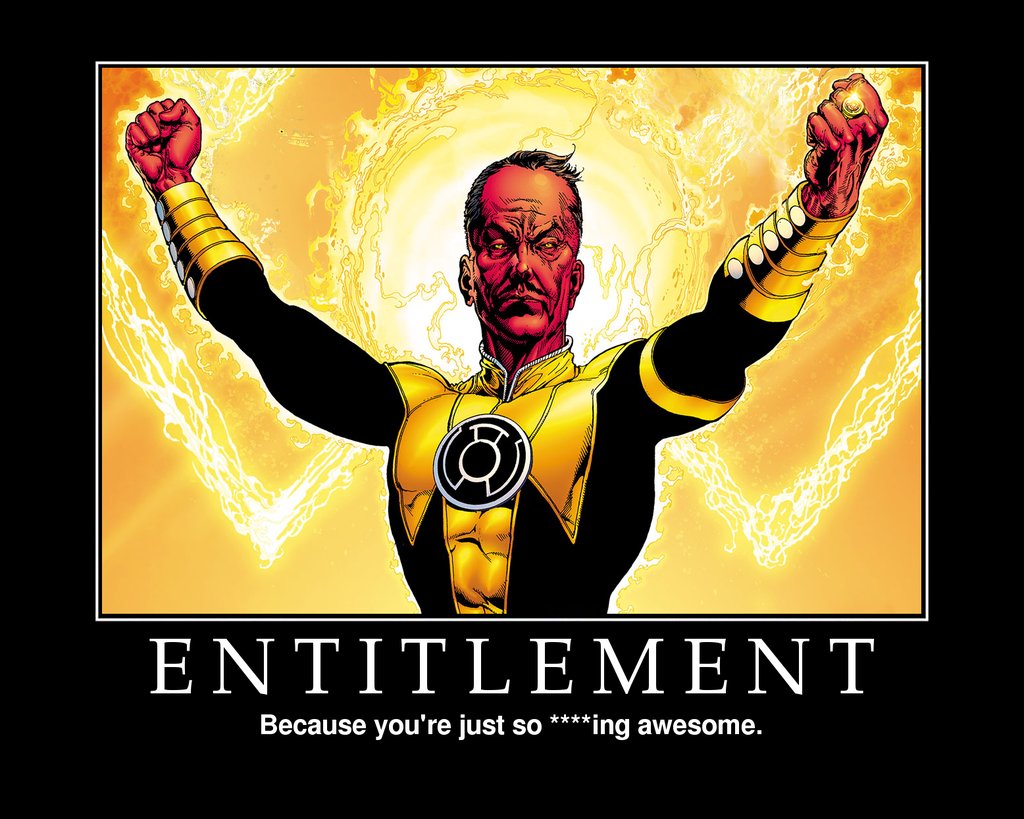
In my career, I’ve been a part of many a performance review process, helping managers and employees alike understand why we do them, how we do them, and what the different ratings mean.  And it never fails that there is a severe disconnect between what the employee sees a extra effort and what the manager would call DOING YOUR JOB.

entitlement1024

Here’s a quick reminder for employees about the difference:

DOING YOUR JOB:

  • Showing up on time every day
  • Completing your work by the assigned deadline and in a quality manner
  • Being a decent human being to coworkers


EXTRA EFFORT:

  • Teaching others to do their jobs better
  • Identifying a more efficient way to do a task
  • Going above and beyond for a customer

Really, it’s about the difference between EFFORT and RESULTS.  Effort is good – managers want to see effort.  It’s an indicator that employees give a damn.  But guess what – results pay the bills, which means managers are more likely to recognize employees whose efforts yield results.  As an employee, I need to be aware of what will benefit the business and ensure my work is truly “value add.”  And I also need to communicate what I’m doing to my manager to ensure I’m aligned with his/her expectations.

Managers, you’re not off the hook for this one.  If your employees feel like you don’t notice their efforts, that’s on you.  It’s your job to give clear expectations for results and to provide meaningful feedback to your employees year-round. Too often managers are afraid to have a difficult conversation, telling employees “that was a a darn good try” all year…only to rate them lower in the annual review because nothing got done.  On the other hand, things come up that are out of the employee’s control that can keep their efforts from yielding the expected results.  So be a human being and acknowledge that.

Lack of recognition by managers is a real problem in many organizations, and it CAN lead to employees wanting to leave for a better job.  I also think misconstrued ideas of what recognition should look like leads to unrealistic employee expectations.

What do you think? Are employees being greatly unappreciated? Are managers being unfairly maligned for not rewarding employees for just showing up?  Share your thoughts in the comments.

Are you serving ‘leadership a la carte’? Well, stop it.

Do you wish your boss would let you pick and choose which leadership behaviors you want?  What if your boss then chose to “charge” you for those services through overtime, extra projects, or even future raises?

What the what?

Allow me to explain.

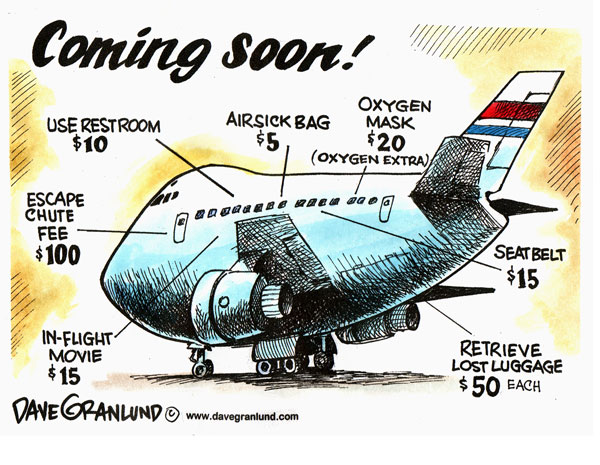
While browsing on LinkedIn, I read this article by Christopher Elliott which talks about the new a la carte approach to air travel – tickets are all that are guaranteed.  Luggage, carry-ons, even water are now added revenue, and gosh isn’t it wonderful? Because this lets customers pick and choose which services they want to pay for.  Which is what EVERYONE wants (anyway, that’s what the airlines would like you to think).

When people pay for a ticket, there are certain things they take for granted as part of the flying experience – such as an opportunity to bring your luggage.  Or drink some water.  Most people would be okay with paying a slightly higher airfare for the illusion that they are getting the experience they expected (see Southwest).air-fees-color-web

So let’s take this back to leadership…employees don’t always know what leadership behaviors they need from their supervisors.  As a result, they are seldom able to tell a manager how they are best led.  Ask any employee what kind of managing style they do best under, and at least 92.3% of them will say, “I hate micromanaging.”  First of all, many employees think being held accountable is micromanaging, and second of all, some employees NEED micromanaging until they learn the job.  So do we still think employees know what they need all the time?

As a leader, you’re responsible for adjusting your style to the needs of your employee – which means you better be able to apply a lot of different kinds of leadership.  And employees expect that of you – it’s part of the social contract of the manager/employee relationship, not a “nice to have”.  Employees will put up with a tougher workplace, longer hours, and provide discretionary effort (the “higher ticket price”) when they know they have a leader who has their back and will step in with the right approach when necessary.

If you suspect you’re an A la Carte Leader and want to change, try some of the following:

  • Schedule regular 1:1s with your employee (even if they don’t want it!)
  • Establish a level of trust by LISTENING (novel concept, I know)
  • Study different leadership models and styles to increase your toolbox (e.g., Situational Leadership, The Leadership Challenge, Strengths Based Leadership, etc.)
  • Accept that you are there to make your employees successful and provide the support they need

Employees don’t always know what they want exactly when they need it, but they DO know when their leader isn’t providing what they need.  Rather than thinking of yourself as an add-on, remember that you are part of the entire employment experience – employees expect and need your support.  And if you fail to give it to them, they WILL move on.

“The first responsibility of a leader is to define reality. The last is to say thank you. In between, the leader is a servant.” 
–Max De Pree