Life is not a highlight reel

Like so many of us in the corporate world, I use LinkedIn (sometimes grudgingly) to connect with others. Look, it’s not my favorite site in the world, but in many ways it’s a necessity, so I try to focus on the benefits. ANYWAY… I was scrolling through my feed the other day and realized how little of it felt unfinished. Everything was presented as a completed thought. The lessons were clear. The vulnerability was controlled. Even the hard stuff showed up only after it had been resolved, when it was safe to talk about. Some of the posts felt like they were just missing the “tonight, on a very special episode of Terry’s LinkedIn feed….”

Each post was a single moment in time, presented as if it stood on its own.

And it made me think about how much we’re being trained to see the world in fragments.

LinkedIn isn’t unique in this, but it’s one that hits the business world hardest. It takes long, messy careers and compresses them into highlight reels. It turns ongoing work into finished insights. It rewards confidence, clarity, and closure, even when none of those things are honest representations of real life.

On the cutting room floor

I should probably admit that I can overthink this type of thing. I was a history major, and that way of looking at the world tends to stick with you. You get trained early to be suspicious of tidy explanations and single moments presented as truth.

In history, context isn’t optional. A quote only makes sense when you know who said it, when they said it, and what was happening around them. An artifact on its own might be interesting, but without knowing how it was used or what problem it was meant to solve, it’s easy to get it wrong.

That’s probably why LinkedIn, and social media in general, often makes me uneasy.

Most things that matter don’t make sense in isolation. Careers, decisions, leadership, relationships, etc., are shaped over time by pressure, tradeoffs, and accumulated experience. The way we consume information online trains us to do the opposite. We take in a post, a screenshot, a clip, a “stitch” (and yes, I know putting that in quotes makes me look old) – each one detached from what came before and what followed. Over time that starts to feel normal, even sufficient.

It isn’t.

When we start treating fragments as facts, it becomes remarkably easy to draw confident conclusions from very little information. We forget something archaeologists and historians take for granted: meaning lives in the context, not the artifact.

And once the fragment starts to feel like the truth, it changes how we judge people. We become less generous with our assumptions. Quicker to decide we understand someone based on a moment that was never meant to carry that much weight.

What we miss in the edit

When we lose context, we lose patience…and empathy usually goes with it.

It becomes easier to assume intent instead of complexity. Easier to believe that someone else’s decision was obvious, careless, or self-serving because all we’re seeing is the outcome, not the constraints, the history, or the tradeoffs that led there. We react to the end of the story without having seen any of the middle.

What makes this harder is that social media doesn’t just encourage that kind of thinking; it actively trains us for it. The constant stream of short, emotionally charged moments rewards quick reactions over reflection. Our brains get used to novelty, speed, and certainty. We’re nudged toward snap judgments because they feel efficient and satisfying, even when they’re wildly incomplete.

So we get quicker to judge and slower to wonder.

That shows up everywhere – not just in leadership, but in how we relate to colleagues, friends, and strangers. How willing we are to extend grace. How quickly we write people off based on a moment that was never meant to carry that much weight. A post becomes a personality. A decision becomes a character flaw.

At the same time, we start editing ourselves.

If every moment can be isolated and judged, we learn to present only the most defensible versions of ourselves. We share conclusions, not process. Results, not uncertainty. We wait until things are resolved before we talk about them, because unresolved things require context…and context doesn’t suit the algorithm.

Over time, this creates a strange feedback loop. Everything feels more staged, so we trust less of what we see. And because we trust less, we harden our judgments even further. The system rewards polish, but it quietly erodes understanding.

Finding the Director’s Cut

I don’t think the answer is to stop using these platforms or pretend they don’t shape us. They do.

But I do think we can be more intentional about how we show up within them, and how we interpret what we see.

That might mean slowing down before forming an opinion based on a single post. Reminding ourselves that most of someone’s story is off-screen. Choosing curiosity over certainty when we don’t actually have enough information to justify either.

And when we’re the ones posting, it might mean resisting the urge to over-polish. Offering a little more context than the format encourages. Letting things be unresolved. Accepting that real life, real work, and real people are rarely as tidy as a feed would suggest.

Context doesn’t fix everything. But without it, misunderstanding becomes the default.

If people who study ancient civilizations know better than to judge meaning from a single artifact, maybe the rest of us can learn to sit with a little more uncertainty when all we’re seeing is a moment, carefully curated into a post.

It’s a matter of perspective

It’s June 2021 – roughly 13 months since life in the US pretty much stopped and we all wondered what the hell was next. Surely lockdowns wouldn’t last more than a couple of weeks. Surely people would recognize the public health was more important than politics. Surely we’d all be okay.

Well, some of those things are true. Lockdowns lasted a hell of a lot longer than two weeks (and many people around the world are still experiencing them). Many people recognized that wearing masks, social distancing, and getting vaccinated were an important part of helping society get past this…but certainly not all people felt that way, even those we assumed would be first in line. And while most people who got sick recovered, not everyone was okay.

While we were all in the middle of this, it was really hard to have perspective on what was going on. I know we took it a day, a week, a month at a time. As more people get vaccinated and society starts to open up, we’re stepping back into our routines – some with no hesitation at all, others with more caution. We’re sort of in the middle – we got vaccinated as soon as we could, we wore masks for a week or two after the CDC said we didn’t have to, and now we’ve pretty much gone back to our old lives. Admittedly, we have done so with increased social distancing and a permanent supply of hand sanitizer.

I don’t think, though, we have taken a moment to collectively look back at what we’ve been through – at the complete and utter stoppage of life as we knew it, and at the emergence of cautious optimism for the future. This hit home when I was finishing up transferring some newsletter posts to a website refresh at work. Nothing terribly profound in the activity – but as I moved from the most recent newsletter to those written back in January 2020, the change was striking.

Posts from January 2020 were so optimistic and forward-looking – new year, new focus, LET’S DO THIS. Then we started seeing the reality of what was going on, and posts were more about staying safe, providing resources, and simply surviving – both personally and professionally. The middle of the year was a complete 180-degree turn from where we had started the year, like we fell off a cliff. Recently, the focus is back to business, back to looking forward, back to the wider world.

As someone who majored in history (true story!), I am so curious as to how future generations will look back on this period of time. What records will survive? How will they judge the way things were handled? In 100 years, what will society even look like? Were we irretrievably traumatized by the harsh relief of many of our fellow citizens exposing their true selves? Were we inspired by the utter selflessness of so many of our fellow citizens continuing to fight for the truth and decency? What perspective will distance lend?

I hope we – and I mean the global ‘we’ – don’t move on too quickly from what has happened. I hope we take some time to look back and marvel at the highs and mourn the lows. I hope we see this for what it is – a real-world scenario of what might (and did) happen if the world population is threatened. And I hope we recognize we could have done better.

We need to do better.

We need perspective.

It’s time to start writing for me again

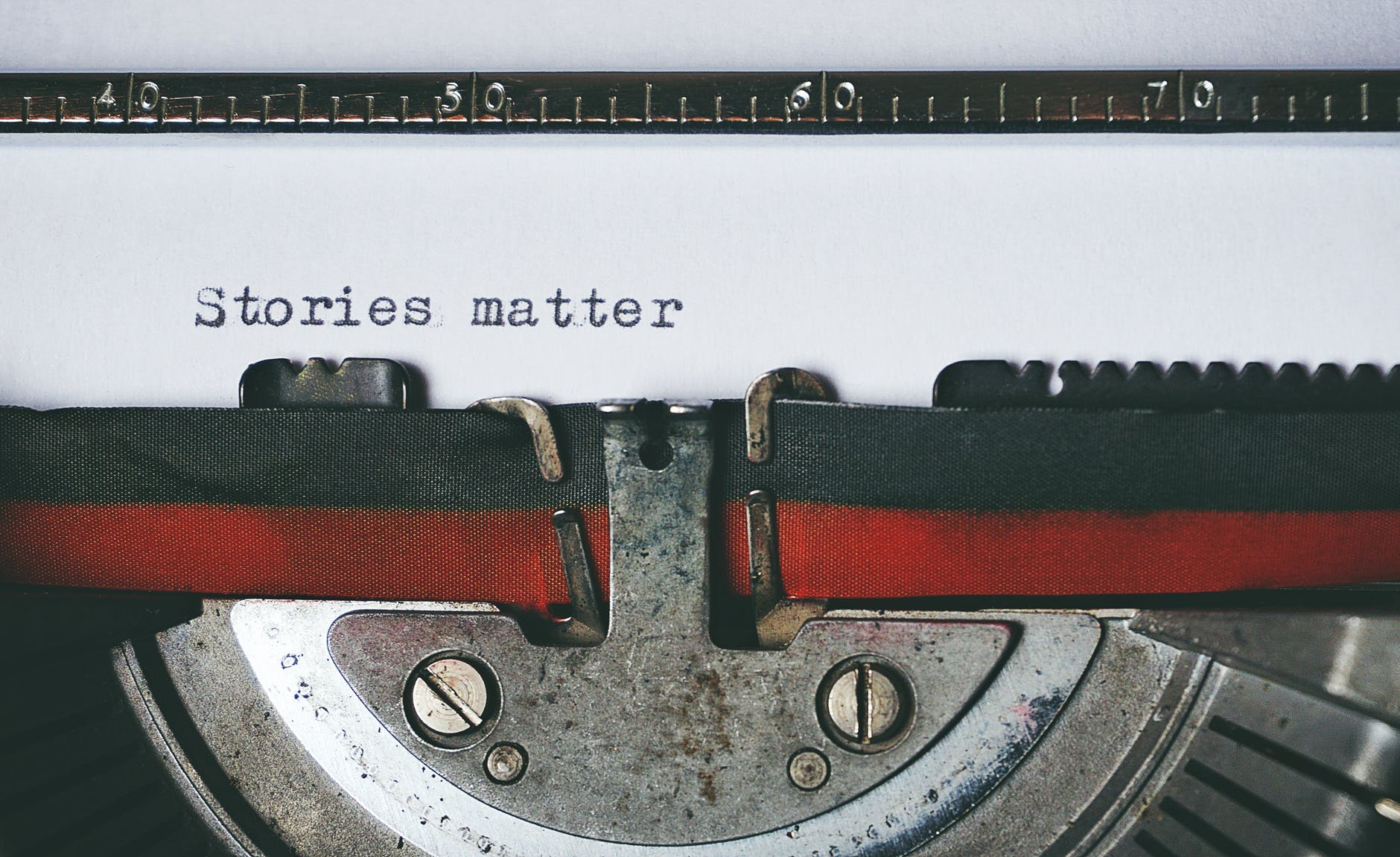
Picture of a typewriter with the words "stories matter" on the paper.

It’s been eleven months since I last posted on this site. Kind of stretches the claim in my bio that I author a blog, ya know?

It’s not that I haven’t been writing. I contribute to HR Examiner, ERE.net, and other one-offs as requested. I also write for newsletters and posts for the place where I work. I enjoy writing for all these different places, I really do! But for anyone who has ever done prescribed writing, you know it’s just not the same as writing for yourself.

It’s not that I haven’t had ideas for this blog during the last eleven months. Apparently, I have 25 drafts of posts in various degrees of completion, and that doesn’t count all the random ideas I’ve had while watching television or listening to the radio, or just musing on the human condition.

I just haven’t felt like finishing any of the posts.

Part of it is all the other writing I’ve been doing. Sometimes the word tank just runs dry. Part of it is the fact I really like my work and maybe I didn’t need to write to feel heard (I will most likely unpack that in a future post). I also think a big part of it is, just….well, LOOK AT WHAT IS HAPPENING. We have a lot going on between COVID and the crazy person who was supposed to lead us through it. It just felt like there were more important things to deal with.

Our dog, Bamboo (also known as Boo), died unexpectedly in February. She threw a series of blood clots and we had to let her go. It was terrible. Then COVID hit, and all the things I find solace in (travel, choir, lunch with friends) had to shut down. Then there was the uncertainty about jobs and the economy. I mean…that’s a lot.

But things are starting to look up. We were fortunate to get another puppy soon after we lost Boo. (Baloo was born the day Boo died – I like to think that was divine intervention). The work I do is still important, desired, and incredibly fulfilling. And for the first time in four years, we will have an adult in the Oval Office. Hope springs eternal.

So I’m going to start writing more regularly again. I may dust off one of those 25 drafts and finish it up. Or I might just delete the lot and start anew. I may even change the name of this web site. Who knows?

I just know that I’ve still got opinions and I want to share them.