The REAL Leader’s Legacy

I do a talk/training on the Leader’s Legacy. Basically, it discusses how leaders need to understand the shadow they cast across an organization and a culture, and helps them define and shape their legacy for the present and the future.

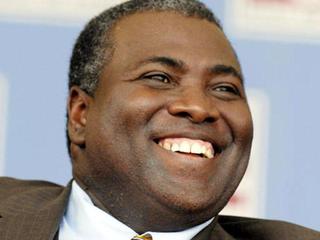
What I should do is just tell them to watch every Tony Gwynn interview.  And then listen to, watch, and read every single tribute being given to the man who died from cancer on Monday at the age of 54.

While Tony’s legacy as a player has been brought up, it is in passing…as though his greatness on the baseball diamond was a given.  What has stood out to me is the impact he had as a person.

Over and over again, sportswriters (and managers and players and fans) have shared personal stories of how Tony Gwynn made a difference in their lives.  That he took the extra moment to remember that the reporters asking him the questions were human beings.  And he treated them as such.

tony-gwynn-big-smile_zpsaa4e49a8

Buster Olney shared the story about a 19-year-old college student who approach Tony Gwynn for an interview for his small, one-man newspaper operation he published from his basement.  Tony saw he was wearing a Vanderbilt sweatshirt and said, “Hey, you should meet another guy I know who went there – he’s our beat reporter.”  And thus Tyler Kepner, now-writer for the NY Times, was introduced to Buster Olney.  There are so many amazing things about this story – 1) Tony took the time to do an interview for a 19-year-old college student; 2) Tony knew that Buster, who was a new reporter for the Padres at that point, graduated from Vanderbilt; and 3) Tony took the time to connect the two in a meaningful way.

Whatever legacy you think you’re leaving, ask yourself if you would have done the same in his shoes.

The world lost a good guy when it lost Tony Gwynn.

You are who you THOUGHT you were! (a question of identity)

If you’re like most people, your life has been one identity crisis after another.

  • When you’re a little kid, you might have wanted to be astronaut, a doctor, a firefighter, a police officer….a stunt car driver.
  • When you’re in high school, you freak out because you’re a freshman – bottom of the social ladder.
  • When you’re a senior, you feel invincible – because you aren’t those puny freshman anymore.
  • When you’re in college, you decide you’re going to major in chemistry…no, pre-med…wait, art history…aw, screw it – business.

And then you start your working life for real, and you realize you’ve been answering the question, “What do you want to be?”, instead of, “What do you want to do?”

139580 green
He knew what he was talkin’ about.*

In our culture, we have learned to equate our job/career with who we are.  You can argue the rights and wrongs of this approach, but it’s a fact of life for most people in the working world.  I’m not here to debate pros and cons.  I’m more interested in honestly facing the impact our identity obsession has on our career decisions, and how acknowledging that fact can help us make better ones.

  • The Company: Whether it’s when you’re first starting out or are 20 years into your career, the name of the company on your business card can influence your choice. Do you join Google, even though the job sucks?  Or do you join ABC, Inc. – a relative nobody, but a nobody who will challenge and engage you on a daily basis? Easy money says you take the cooler sounding company because you know you have the opportunity to grow in an awesome organization.

    And yet…companies like Google are targeted by recent college grads, but not because of their job now, but because it will help them get a better job later. [Note: Peter Cappelli shared this thought in a presentation I saw 6 years ago – still searching for the link!]  Be honest about whether this choice is a destination or a stepping stone to something else.

  • The Path: At some point, you may be faced with the choice between remaining an individual contributor or angling for the management track.  A lot of people have no desire to lead others.  They like what they do, the challenge of the work.  The idea of dealing with the drama of others makes some people break into a cold sweat.

    And yet…some people think if they don’t achieve manager status, they have some how failed.  Is it enough to be “just” an expert in your field, or do you feel like you have to “prove” something…and maybe give up a piece of what makes you happy?

  • Title: Those in the know will claim title doesn’t matter, just what you do; and that truly happy employees are unconcerned with such trivial things as what’s on their business cards.  Plenty of us in HR and recruiting have rolled our eyes at the “Manager of Accounts” title that amounts to little more than a glorified salesperson.

    And yet…how many of us have faced those same recruiters and had to answer ridiculous questions about why you “took a step back” just because a title isn’t as cool sounding as as the responsibilities you have?  (Seriously, recruiters – you know better than to assume every company uses the same title structure!) It would be disingenuous to not acknowledge the influence that title has on our decisions.

  • Industry: My background has been in a lot of different industries – some exciting (VOIP, startups, alternate energy) and some not thought of as innovative (event planning, insurance, utilities).  Each industry I’ve worked in has taught me fascinating things and challenged me in ways I didn’t anticipate.

    And yet…there have been times in my past where I have hesitated to share what industry I worked in because it wasn’t the “hot new thing.”  If your identity is tied to being forward-thinking, envelope-pushing, and an all-around rabble-rouser, there can be some cognitive dissonance around the industry you choose to work in.

Each of us has made at least one decision (or more) in our career based on how we’ll answer the question “what do I want to be?” If we think we aren’t considering the coolness factor of a particular opportunity, and the way others might react when we’re talking at cocktail parties, we’re just fooling ourselves.

The ultimate sign of confidence and self-actualization may be the ability to simply share what you do when talking about your job…and being who you truly are.

We know what we are, but not what we may be.
-William Shakespeare 


*Because it never gets old to watch Dennis Green do this.


Two months of crazy for one night of awesome (the benefits of getting “involved”)

Last night, we held the first DisruptHR event in Denver, CO.

I had attended the very first DisruptHR in Cincinnati, OH because Jennifer McClure and Steve Browne said I should.  Chris Ostoich, founder of BlackbookHR, corralled Jennifer and Steve to help him organize the event because they all believe that HR needs to move itself forward in its thinking and its approach.

Hell yeah.

When I got back to Colorado, I said, “We need this here.”  So I reached out to Shawna Simcik and Meredith Masse at Innovative Career Consulting, and we were off to the races.  They were all in – because they agreed that it’s time we start thinking about talent and processes in a whole new way.

After a lot of meetings, emails, cat-herding and coffee, we did it.  We looked at our creation.  And it was good.

I’m writing about this not because I think you need to know about DisruptHR (which you do) or should check out BlackbookHR and Innovative Career Consulting (which you should).  I’m writing about it because this was a true step forward in my personal development.  I’m not a traditional people person. I’m not the one who thinks conferences are super amazing.  I’m usually the Idea Rat with this type of stuff – thinking “somebody really should do a conference”.
victory_cat

I decided to get involved because I think this idea is important, dammit.  We need to get out there and challenge our leaders and our HR brethren to be forward thinking.  And since I’m a bit of a control freak, I decided to get involved by being a co-organizer, which meant getting out of the shadows (deep down, I might be a “puppet master”) and being front and center.

If you are toying with the idea “getting involved”, here are some things I learned and gained because of the experience. This way you can make an informed decision.

Lessons learned:

  • Focus your intent: Whatever the “event” might be (a conference, a meeting, a task force, a book club), make sure you know exactly what it stands for and what your goals are.  We went in knowing that we wanted to start to change people’s minds about HR.  We also know we wanted our sponsors to have access to like-minded folks and to build networks.  So we shaped the event (from marketing, to registration, to tone) with those outcomes in mind.
  • Find the right partners: I would NEVER have been able to pull this off without the right people to help me.  I sensed that Meredith and ICC had a similar “disruptive” approach to HR and talent, which is why I approached them to be a sponsor/co-organizer.  And they ran with it.  Their enthusiasm, support, and tenacity to make this work…just invaluable. And we all brought different skills to the table, which meant the event would be well-rounded and appeal to more than just one person.
  • Get AMAZING speakers: If you are planning a speaking event, you need speakers.  And boy did we have them.  They were enthusiastic, brave, knowledgable, funny, talented…seriously.  They were off the hook.  Thank you to – Kathleen Brenk, Daniel Horsey, Matt Rowe, Brian Fretwell, Melissa Case, Kristin Van Horn, Sean Shepard, Tanja Hinterstoisser, Ph.D., Jo McGuire, Damian J Guerin, CCP, SPHR, and Shawna Simcik.  Find these people.  Connect with these people.
  • Book an awesome venue: If you are planning a networking event with speakers, the venue needs to work! Think about the acoustics, the space, the flow, the seating, the parking…everything.  Equally important is a venue that understands what you’re trying to accomplish and will work with you to convey the right tone.  We had Casselman’s – and they were great to work with.  They suggested a mix of seating and setup that encouraged the networking we were looking for.  And they made sure our speakers could be heard.  Big win.
  • Choose the right topics: You’ve heard “content is king.”  The topics you choose for your event need to serve the intent of the event, as well as be entertaining and thought-provoking.  We worked closely with our potential speakers to find topics that would advance the thinking of HR and get people thinking about their processes in a new way.  Okay…actually, our speakers came up with them.  But we picked ’em.  So there.

Unexpected bonuses:

  • New friends and connections: The DisruptHR group has bonded.  We have been through some serious shit and came out the other side with a new group of friends.  The speakers are connecting left and right, we may have encouraged a couple to join Twitter (I’m looking at you, Jo!), and we have all gained new resources to help us think of new ideas and approaches.  It’s hard to make new meaningful connections.  We did it.
  • Chance to shift mindset: Seriously – how often can you say you have a chance to start a thought revolution?  The whole event aligns with my “brand” as a forward-thinker who likes to shake people out of their day-to-day…and I think we won a few converts.  I want to keep this going.
  • Sense of accomplishment: This whole event was SO outside of my comfort zone – between the planning, the networking, the “group work” (people who know me know that challenge), the marketing, the hosting, the speaking – there were a lot of firsts for me.  I was EXHAUSTED when it was over…and I was incredibly proud at not just what WE did, but what I did.  Challenges are good, so I am going to continue challenging myself and others.

This post may not seem like it’s about traditional leadership.  There isn’t anything about feedback, or dignity, or engagement, or anything like that.  It’s about continually pushing yourself and others to try something new, do something scary, and find a level of success that wasn’t guaranteed or possibly believed.

Huh.  Maybe it was about leadership.  How ’bout that.


Quick note:  Shout out to Stephanie Sigler – the first boss I had who really challenged me to be a leader and stop being a brat.  🙂 Thanks for being there last night!