2017 and the need for a plan

In general, 2016 kinda sucked.

I mean, there were some good things that happened. Captain America: Civil War was released. As was Rogue One, Deadpool, Star Trek: Beyond (I liked it), Doctor Strange…you know – decent movies. People were married and people were born, which I assume made several folks happy.

But there are a lot of you out there who have expressed your overall disgust with 2016. Too many amazing talents died (David Bowie, Alan Rickman, Prince, Gene Wilder, Garry Shandling, Arnold Palmer, John Glenn….it’s a depressingly long list). X-Men Apocalypse was released (good lord, that was awful). Discriminatory laws were passed around the nation, and then we went through that godawful presidential election that has left so many people in fear and despair for the future, or at the very least – not optimistic.

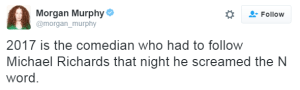
I think this tweet pretty much sums it up:

tweet

So who’s excited for 2017?

I am. But I’m not walking in with my eyes closed. I’m going to be prepared.

Glitchpath shared an approach that I think will work for 2017 – I’m going to do a premortem for my year. But I’m going to keep the scope small. I can’t worry about celebrities and movies (please don’t suck, Episode IIX or Dark Tower), so I’m going to focus on my workplace.

After thinking through that premortem, I’m building a contingency plan for things I think might happen so I’m ready for when they totally do. This isn’t a complete list (that would be a book), but I can bucket some of the areas of potential failure. This helps me think through a game plan to be ready for next year.

Plan A B or C Choice Showing Strategy Change Or Dilemma

  • Potential Failure #1: Employee Issues
    Let’s face it. Employees are great, but they bring on all sorts of variables that will throw your workplace into a tizzy. It could be performance issues, interpersonal issues, illness, turnover, business changes, etc. It’s a lot to plan for.

Contingency plan: Document all processes and cross-train as much as possible. Seriously, have a backup for your backups. Teach your team conflict management techniques (an no, that doesn’t mean “pretend it never happened”). Next, have open career goal discussions with each member of the team – are you happy? do you want to stay? if you stay, what can we help you do better? Be sure to set clear expectations with the team so there are no surprises. Work hard to cultivate a culture of trust and flexibility.

  • Potential Failure #2: Internal Customers
    Bless their hearts. We’re all on the same side, but for some reason, internal customers will occasionally go off the deep end and take you off the rails. They go around you to complain to those above you. Or they spread vague rumors about perceived problems. Issues can include unreasonable expectations, lack of response, not following the process, change in their business needs, budget constraints, etc.

Contingency plan: Build some good relationships. Create a responsive, adaptive, consistent communication cadence for all customers. Know your process and understand what you can and cannot compromise in the name of customer service. Share your process with your customers and outline roles and responsibilities on both sides.

  • Potential Failure #3: Executive Leadership
    You’ll notice that I put this group outside of internal customers. While executive leadership IS usually an internal customer, their real impact is greater because they are making decisions that touch on everything you do – how decisions are made, what can be communicated when, policy decisions, budgeting decisions, etc. There are so many potential pitfalls that I can’t possibly list them. They are legion.

Contingency plan: Find allies on the leadership team and build strong relationships. Leverage these relationships to learn about potential hidden agendas to help you navigate the politics of the situation. Develop an effective dashboard that quickly and easily communicates what’s happening in your team to leadership so you can build credibility and visibility.  KEEP YOUR BOSS IN THE LOOP AT ALL TIMES. (Nobody likes to be blindsided. Nobody.) And worst case scenario – win Powerball.

No, this isn’t an exhaustive list. There will still be crappy times ahead, and I can’t possibly plan for everything that can happen. Hopefully it gives you some idea of how I’m approaching 2017. I’m being proactive and cagey, instead of reactive and quick on my feet. I want to feel in control in 2017, rather than feeling like I survived the year.

So don’t mess with me, 2017. I know what I’m doing.

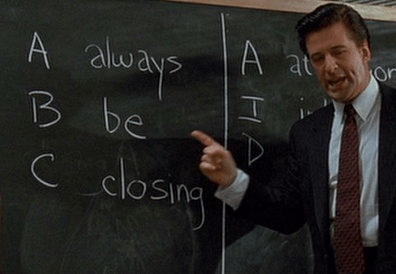
Always Be Curious (with apologies to Glengarry Glen Ross)

As you probably know, I have a day job. Yes, I actually work in human resources. For a real company and everything!

But I’m also fortunate enough to have the opportunity to speak at a handful of conferences and other events throughout the year. I enjoy doing this – it’s a great chance for me to visit other states and talk to fellow HR professionals about the struggles they’re facing and to share my experiences in the hopes we all walk away with a fresh perspective and some new ideas to try.

Well, that’s the idea, anyway.

The reality is that not everyone attends a conference with the intent to learn. Some are there just for the recertification credits. Some are there to hang out with their HR friends and hit the expo floor. Some are there to finally get a few days away from the kids so they can watch some RHONJ in peace, dammit! It’s not necessarily what the conference planners intended, but honestly, they’re pretty happy if people pay, show up, give the keynotes some attention, and fill out the feedback forms.

Speakers have a love/hate relationship with feedback forms. We do want to hear from our audience – we want to get better, we want to know what was meaningful to you, we want to hear that we’ve changed your life because you finally understand the new overtime regulations. (Okay, that last one was a bit tongue in cheek.) But seriously…we want some sort of validation that the time we spent building the presentation, practicing, traveling to the conference, and delivering the content was useful for someone. And most comments are very kind. You get the random comment about room temperature (sorry, we can’t control that) or the fact that someone doesn’t like the color of your dress (which is why I usually wear pants), but for the most part, it’s good feedback.

For the most part.

Inevitably, no matter what presentation I deliver or at what conference, there is at least ONE person who writes the comment: “I didn’t learn anything new.”

Really? Not a single thing? At all?

Listen, as a speaker, I’m usually a tough audience. Speakers end up seeing a lot of different sessions with different types of presenters, so you can get a little jaded. I admit it. But I walk into every session with the intent of taking away at least ONE thing I’ve learned from that person. Hell, if nothing else, I learned their name and what they do for a living.

But not this person. This person just says, “I didn’t learn anything new.”

This depresses me. Not because I worked hard to do research to include a lot of value-added data (which I always do), or because I shared my experiences in other orgs in hopes it helps (which I also do). It depresses me because a comment like that indicates that this person is not curious. They walk into every situation assuming they know everything and that there is nothing that anyone could possibly teach them.

Who wants to live life like that?

BE CURIOUS. Be open to new ideas and new experiences. Be open to new data. Be open to the fact that your carefully crafted world view might not be 100% accurate.

I’m not asking you to agree with everything you hear. In fact, I want you to question it, challenge it. That shows me you are thinking about it and are curious about how it ties into what you’re currently doing. It shows me you’ve internalized the idea and are considering it and may decide to reject it. At least you cared enough to hate it instead of dismissing it as “nothing new.”

So this is my challenge to you from now until the end of the year. Instead of dismissing something outright, think about it. Question it. Be curious about it. You might actually learn something new.

God forbid.

We’re all difficult to someone

On Monday’s #FailChat (on Twitter every Monday, 11am MT/1pm ET – join us!), we were discussing the challenge of managing difficult people (down, across and up) and examining our failures with it. Laurie Ruettimann made the comment that “When managing difficult people, assume you are also difficult. Helps a lot to be humble.” And she’s absolutely right. And because I have a pathological need to weigh in on everything, I responded with:

We are all difficult to someone. #failchat 

The comment got some likes and a couple of “yeps” and we moved on with the conversation.

I’m still stuck on my comment, because it’s true. No matter how charming we think we are, or how many people blow sunshine up our butts, to someone out there we are an archenemy. We are the Lex Luthor to their Superman. We are the Emperor to their Luke Skywalker. We are the Lucille Bluthe to their Michael. hilarious

It’s really hard to accept that.

After all, we work hard to build relationships. A lot of us try to be kind (or at least, not actively toxic), and we attempt to get through our day productively and with limited drama.

And yet, there are people out there who hate us.

“But,” you might say, “how can you possibly know that? Everyone likes me.”

Here’s the test: If you’ve ever had to say “no” to someone at work, you were being difficult to them.

Maybe not all the time and they probably got over it (we hope), but right then and there – you were difficult. You didn’t let them do something they wanted to do. In fact, you probably had a REALLY good reason to not let them do it. But still – difficult.

Think about it – how did you react the last time someone told you that you couldn’t do something…especially if it was a super cool idea! Did you think ill of that person? Did you accuse them of saying no out of spite. Did you get a teensy bit grumpy? Well, other people are thinking the exact same thing about you.

Don’t take it personally – we’re all difficult people. The best way to deal with it is to remember that the other person is coming from a different perspective. A couple of tips:

  • Find out why they think you’re difficult. Try not to discount the feedback automatically. It could be your approach. It could be they have their own issues. Get data and respond appropriately.
  • Explain your thinking. This can go a long way to changing your perceived difficulty. And on the plus side – if you can’t explain your thinking, there is a good chance that you ARE just being difficult out of spite.
  • Ask the other person why. Don’t dismiss something outright. Maybe their end goal is a really good one, but their proposed approach is bad. By knowing their why, you can help them find a better path.
  • Don’t try so hard to be liked. If the thought of being considered “difficult” distresses you, figure out why. If you’re certain your actions were done with the best outcome in mind, you’re going to be okay. It’s okay not to be everyone’s best friend.

“Difficult” is not a title. It’s not a trophy. It’s an adjective – and a common one, at that. So the next time you’re tempted to call someone difficult, just remember – you are, too.

And it’s all going to be okay.

I never give in to the temptation to be difficult just for the sake of being difficult. That would be too ridiculous.    ~ Jacques Derrida