Ode to #teamfaulkner (or, the one with the Hoosiers reference)

Not too long ago, I wrote about the importance of having a support network to keep you on track.

I have my own group – #teamfaulkner.

The concept was born out of the idea of having a personal board of directors.  (I don’t remember where I first heard about it, but this HBR article is a good overview.)  I had hit a point in my life and my career where I wanted to start thinking about the long-term, “what do I want to be doing for the rest of my career” questions, and I knew I wasn’t equipped to figure that all out on my own.  I figured I’d put together an advisory committee of people who knew me from various aspects of my life, and I would use them to explore what I might be when I grow up.  There wasn’t a timeline attached – it was basically an exploratory committee.  I figured I had lots of time.

Reality had other ideas, and my job went away as part of a restructure.

It happens.  It sucks when it happens, but it happens.  The good news is that I already had a ready-made support team as I contemplated my next move.
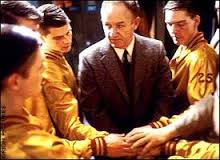
hoosiers#teamfaulkner helped keep me grounded after the surprise of the reorg.  They offered support and acted as a sounding board for different options.  They connected me to some amazing people who shared their thoughts on the state of HR and helped me explore various career paths.  They made me laugh (a lot).  They listened to me in my whiney moments.  They took time to reach out individually as needed.  They let me bounce ideas off them, sharing opinions on various interviews and job options.  They told me what they thought while still leaving room for me to think it through.  And they supported me when I decided on where to land.

They were great.  They’re still great.

One of the #teamfaulkner members asked what I thought about the whole process.  I asked for a little time to think about it, and this person said I should answer on my blog.  So I am. Here are a few things I’ve learned along the way:

  • I reached out to the right people: When I thought about putting this “board of directors” together, I wanted to pick people who knew me from a variety of viewpoints – people I’ve worked with, people who at one time worked for me, people I know primarily through the online community, consultants, practitioners, professors, all that stuff.  This variety of perspectives has been invaluable to me; almost like a short-hand for debating all sides of an argument.  Depending on the topic, they share a spectrum of opinions from conservative to “why the hell not?”
  • It’s okay to disagree with the #team: I wanted feedback, not an owner’s manual.  So when someone on #teamfaulkner suggests something I don’t really agree with, it’s awesome because even though I’m not going to take that particular piece of advice, I had to think about why and articulate that “why” to someone else, thereby thinking through the decision-making process much more thoroughly.
  • It’s better to be specific in my requests: I have found it most helpful when I ask specific questions or am more precise in describing what my issue is.  Shockingly, just saying, “I DON’T KNOW WHAT TO DO!!!” doesn’t elicit the most useful feedback.  I am also planning to ask #teamfaulkner to challenge me a little more.  Part of it could have been the circumstances (no one wants to kick a person when they are down), and part of it could have been the way I framed the questions.
  • It’s not just about me: Ostensibly, #teamfaulkner is all about me (after all, it’s named after me).  But what various folks have shared is that the group was helpful for them as well – whether it was practice coaching, learning from the advice of others, or being exposed to a new way of thinking through things.
  • I was unprepared for how much people would be willing to reach out and help: I’m a pretty independently-minded human being, which means I typically figure things out on my own.  (Some people would say I’m ‘stubborn’…but I don’t talk to those people any more. Haha.  Sort of.)  When I reached out to a cross-section of friends from different walks of life, I figured I’d get a post now and then…maybe a “like” on my Facebook group.  What I got was an amazing amount of support – thoughtful comments, emails, phone calls, texts, all that cool stuff.  I am still in awe of, and incredibly touched by, the level of personal outreach I’ve received from #teamfaulkner. (This is for you.)

Now that I’ve started my next adventure, a couple of folks asked whether that was the end of #teamfaulkner.  The answer – HELL NO.  I will continue to rely on this group to guide me in my career and personal development.   I want to keep making them visit the Facebook group and read silly posts.  I want to keep learning from this amazing group of people.   I want the group to continue to learn from each other.  I want to tell them when I think they’re full of crap, and I want them to tell me when I’m full of crap (which they totally will).

In short, I want to keep in touch.

#teamfaulkner started as an experiment in leveraging my network, and it has grown into more.  And I will continue to reach out to my team for as long as they will have me.  It’s been an interesting process for me, and one I recommend for others who are looking to gain insight into their development.  Who knows?  There may be a book in it one day.  (If the team is okay with it.)

It is literally true that you can succeed best and quickest by helping others to succeed.
~Napoleon Hill
 

Two months of crazy for one night of awesome (the benefits of getting “involved”)

Last night, we held the first DisruptHR event in Denver, CO.

I had attended the very first DisruptHR in Cincinnati, OH because Jennifer McClure and Steve Browne said I should.  Chris Ostoich, founder of BlackbookHR, corralled Jennifer and Steve to help him organize the event because they all believe that HR needs to move itself forward in its thinking and its approach.

Hell yeah.

When I got back to Colorado, I said, “We need this here.”  So I reached out to Shawna Simcik and Meredith Masse at Innovative Career Consulting, and we were off to the races.  They were all in – because they agreed that it’s time we start thinking about talent and processes in a whole new way.

After a lot of meetings, emails, cat-herding and coffee, we did it.  We looked at our creation.  And it was good.

I’m writing about this not because I think you need to know about DisruptHR (which you do) or should check out BlackbookHR and Innovative Career Consulting (which you should).  I’m writing about it because this was a true step forward in my personal development.  I’m not a traditional people person. I’m not the one who thinks conferences are super amazing.  I’m usually the Idea Rat with this type of stuff – thinking “somebody really should do a conference”.

victory_cat

I decided to get involved because I think this idea is important, dammit.  We need to get out there and challenge our leaders and our HR brethren to be forward thinking.  And since I’m a bit of a control freak, I decided to get involved by being a co-organizer, which meant getting out of the shadows (deep down, I might be a “puppet master”) and being front and center.

If you are toying with the idea “getting involved”, here are some things I learned and gained because of the experience. This way you can make an informed decision.

Lessons learned:

  • Focus your intent: Whatever the “event” might be (a conference, a meeting, a task force, a book club), make sure you know exactly what it stands for and what your goals are.  We went in knowing that we wanted to start to change people’s minds about HR.  We also know we wanted our sponsors to have access to like-minded folks and to build networks.  So we shaped the event (from marketing, to registration, to tone) with those outcomes in mind.
  • Find the right partners: I would NEVER have been able to pull this off without the right people to help me.  I sensed that Meredith and ICC had a similar “disruptive” approach to HR and talent, which is why I approached them to be a sponsor/co-organizer.  And they ran with it.  Their enthusiasm, support, and tenacity to make this work…just invaluable. And we all brought different skills to the table, which meant the event would be well-rounded and appeal to more than just one person.
  • Get AMAZING speakers: If you are planning a speaking event, you need speakers.  And boy did we have them.  They were enthusiastic, brave, knowledgable, funny, talented…seriously.  They were off the hook.  Thank you to – Kathleen Brenk, Daniel Horsey, Matt Rowe, Brian Fretwell, Melissa Case, Kristin Van Horn, Sean Shepard, Tanja Hinterstoisser, Ph.D., Jo McGuire, Damian J Guerin, CCP, SPHR, and Shawna Simcik.  Find these people.  Connect with these people.
  • Book an awesome venue: If you are planning a networking event with speakers, the venue needs to work! Think about the acoustics, the space, the flow, the seating, the parking…everything.  Equally important is a venue that understands what you’re trying to accomplish and will work with you to convey the right tone.  We had Casselman’s – and they were great to work with.  They suggested a mix of seating and setup that encouraged the networking we were looking for.  And they made sure our speakers could be heard.  Big win.
  • Choose the right topics: You’ve heard “content is king.”  The topics you choose for your event need to serve the intent of the event, as well as be entertaining and thought-provoking.  We worked closely with our potential speakers to find topics that would advance the thinking of HR and get people thinking about their processes in a new way.  Okay…actually, our speakers came up with them.  But we picked ’em.  So there.

Unexpected bonuses:

  • New friends and connections: The DisruptHR group has bonded.  We have been through some serious shit and came out the other side with a new group of friends.  The speakers are connecting left and right, we may have encouraged a couple to join Twitter (I’m looking at you, Jo!), and we have all gained new resources to help us think of new ideas and approaches.  It’s hard to make new meaningful connections.  We did it.
  • Chance to shift mindset: Seriously – how often can you say you have a chance to start a thought revolution?  The whole event aligns with my “brand” as a forward-thinker who likes to shake people out of their day-to-day…and I think we won a few converts.  I want to keep this going.
  • Sense of accomplishment: This whole event was SO outside of my comfort zone – between the planning, the networking, the “group work” (people who know me know that challenge), the marketing, the hosting, the speaking – there were a lot of firsts for me.  I was EXHAUSTED when it was over…and I was incredibly proud at not just what WE did, but what I did.  Challenges are good, so I am going to continue challenging myself and others.

This post may not seem like it’s about traditional leadership.  There isn’t anything about feedback, or dignity, or engagement, or anything like that.  It’s about continually pushing yourself and others to try something new, do something scary, and find a level of success that wasn’t guaranteed or possibly believed.

Huh.  Maybe it was about leadership.  How ’bout that.


Quick note:  Shout out to Stephanie Sigler – the first boss I had who really challenged me to be a leader and stop being a brat.  🙂 Thanks for being there last night!

I get by with a little help from my friends

Do you have a safety net?   Do you have a network of friends who can help you through tough times?  Do you have a group of folks who can talk straight to you and tell you when you’re being an idiot?

If you don’t, you need one.

Leaders have a tendency to try and do everything on their own.  As a result, they often suck at delegating, struggle to communicate their vision compellingly…and aren’t too good about reaching out for help when they need it. And of all people, leaders (especially CEOs) need to avoid isolation – it can negatively impact the business.

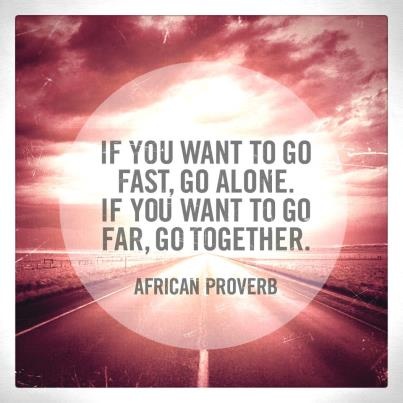
support_picture

Regardless of your level of leadership, you can benefit from having your own personal support team.  I know this from personal experience:

  • Venting: Life is not always cupcakes and unicorns, which means you’re going to need to be able to complain and rage from time to time.  Your support group will listen and not judge…well, not much.
  • Accountability: A good support group calls you on your crap. They can also help you clarify and achieve your goals.  It’s good to have people around who can keep you on track.  They can also suggest actions to take to help get you to the finish line.
  • Sanity Check: This is similar to “accountability” but it’s a little more focused than that.  Your support team is there to throw out the red flag when they see you about to do something incredibly stupid.  It’s great to have that voice of reason when things go crazy.
  • Wisdom: As much as you think you know everything, you don’t.  Your support team can use their collective knowledge to help you break through your issues and move forward. So find some smart people for your posse!
  • Laughter: When you pick your support team, make sure you pick ones who have the same sense of humor as you.  And aren’t afraid to say inappropriate things.  And who know REALLY good jokes.

Just remember: you don’t have to go through this alone. Find your team and conquer the world!

PS – Shout out to #TeamFaulkner!  You know who you are.  And you are awesome.

Do you have a support network? What do you use it for?  Share in the comments!