We’re all difficult to someone

On Monday’s #FailChat (on Twitter every Monday, 11am MT/1pm ET – join us!), we were discussing the challenge of managing difficult people (down, across and up) and examining our failures with it. Laurie Ruettimann made the comment that “When managing difficult people, assume you are also difficult. Helps a lot to be humble.” And she’s absolutely right. And because I have a pathological need to weigh in on everything, I responded with:

We are all difficult to someone. #failchat 

The comment got some likes and a couple of “yeps” and we moved on with the conversation.

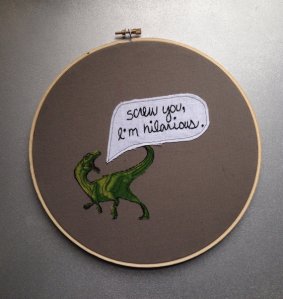
I’m still stuck on my comment, because it’s true. No matter how charming we think we are, or how many people blow sunshine up our butts, to someone out there we are an archenemy. We are the Lex Luthor to their Superman. We are the Emperor to their Luke Skywalker. We are the Lucille Bluthe to their Michael. hilarious
It’s really hard to accept that.

After all, we work hard to build relationships. A lot of us try to be kind (or at least, not actively toxic), and we attempt to get through our day productively and with limited drama.

And yet, there are people out there who hate us.

“But,” you might say, “how can you possibly know that? Everyone likes me.”

Here’s the test: If you’ve ever had to say “no” to someone at work, you were being difficult to them.

Maybe not all the time and they probably got over it (we hope), but right then and there – you were difficult. You didn’t let them do something they wanted to do. In fact, you probably had a REALLY good reason to not let them do it. But still – difficult.

Think about it – how did you react the last time someone told you that you couldn’t do something…especially if it was a super cool idea! Did you think ill of that person? Did you accuse them of saying no out of spite. Did you get a teensy bit grumpy? Well, other people are thinking the exact same thing about you.

Don’t take it personally – we’re all difficult people. The best way to deal with it is to remember that the other person is coming from a different perspective. A couple of tips:

  • Find out why they think you’re difficult. Try not to discount the feedback automatically. It could be your approach. It could be they have their own issues. Get data and respond appropriately.
  • Explain your thinking. This can go a long way to changing your perceived difficulty. And on the plus side – if you can’t explain your thinking, there is a good chance that you ARE just being difficult out of spite.
  • Ask the other person why. Don’t dismiss something outright. Maybe their end goal is a really good one, but their proposed approach is bad. By knowing their why, you can help them find a better path.
  • Don’t try so hard to be liked. If the thought of being considered “difficult” distresses you, figure out why. If you’re certain your actions were done with the best outcome in mind, you’re going to be okay. It’s okay not to be everyone’s best friend.

“Difficult” is not a title. It’s not a trophy. It’s an adjective – and a common one, at that. So the next time you’re tempted to call someone difficult, just remember – you are, too.

And it’s all going to be okay.

I never give in to the temptation to be difficult just for the sake of being difficult. That would be too ridiculous.    ~ Jacques Derrida 

 

A word about workplace clothing…

As a diehard fan of the now gone What Not To Wear, I fully accept the power of clothing to impact the way a person is perceived, but more importantly…how a person feels.

We’ve all had a moment where we put on a new pair of pants or a kickass blazer and thought, “I will OWN this day. Boom.”

We’ve all had that day where we put something on that we’re not super excited about and then spend the rest of the day fussy about how it fits, how it looks, how it feels.

And for some of us, we have an article of clothing that we absolutely love that’s slightly different from the mainstream – it could be shoes, it could be a button-down shirt, it could be socks, etc. Whatever it is, it is somehow magical and we love it. And we don’t really care if you love it, but we kind of hope you do because how could you not? IT’S AMAZING.blog

Then we run into coworkers who somehow feel like it’s their job to make comments about what you’re wearing. And those coworkers may think they’re being funny…but they’re not. They make you second guess what you look like and now you never feel like wearing that awesome tie again. Because now you’re that “tie guy.”

Look, I get that we all have different tastes. We all grew up with different backgrounds and socioeconomic levels – this impacts the way we dress and what we think looks fabulous. Shouldn’t we be celebrating this instead of judging it?

Here’s a rule of thumb: NEVER comment on something someone is wearing unless it’s to compliment them. Here are some examples of what that might sound like:

“That color looks great on you!”
“I like your tie.”
“I want to steal your shoes, they’re so cute.”
(That last one might just be something I tend to say…)

See? Not once did someone make a joke about the color, print, cut, or otherwise about what someone was wearing.

Do people sometimes show up in the office looking horrific in your eyes? OF COURSE THEY DO. Remember, we all have different tastes – one person’s treasure is another person’s nightmare. I, for one, don’t get shoulder pads. Then again, I have the shoulders of a football player and have never needed them. (The early 90s were a tough time for me.) But I don’t comment on it – why ruin someone’s happiness about how they look?

Unless someone’s dress is unsafe, unallowed, or impacting their ability to be successful – don’t worry about it. Compliment them, or just shut the hell up.

The world won’t end because someone wore white socks with black shoes.

Help is not a four-letter word

The more I see articles about how busy we all are or stressed we are or upset we are, and how it’s become some sort of weird badge of honor, the more I’m convinced Americans (because I live and work here) have a core problem.

We don’t know how to ask for help.

We like to think we are a resilient bunch, forged by the wilderness, every person for him/herself. We don’t need the support of others – we’re independent, dammit! After all, we left Europe because we wanted to do things OUR way. We fought the British because they wouldn’t recognize our rights to representation, so screw them! We’ll declare ourselves sovereign.Then we fought, scratched and hornswaggled (that’s a fancy way of saying tricked or lied) our way to the West Coast. There’s that “can do” attitude!

You hear it whenever people proclaim with pride they are “self-made.” You sense it when people keep it quiet that they’ve relied on public assistance or the kindness of strangers. And you see it when confused kids don’t raise their hands in school to ask a question.

It’s very bizarre to me, because while we ARE a nation of independent go-getters with a can-do attitude who like to pretend they can do everything themselves; we are also a nation of incredibly community-minded folks who band together to help those in need. Don’t believe me? Check out GoFundMe or CaringBridge and marvel at the capacity of humans to want to help others. But that makes us feel better because we’re OFFERING help, not really ASKING for it. I mean, look at how many of those sites are set up by someone other than the person who needs the help.

When you look around our society right now, it’s clear there are those who need help. It might be because of the floods in Baton Rouge (just because it stopped raining doesn’t mean their need is gone); maybe recent events have shaken them and they don’t know how to talk about it; maybe their water heater went out and they just can’t afford a replacement; maybe they deal with violence in their own home; maybe they suffer from depressionhelp

Take a look at the people you work next to every day. Do you know what they are dealing with? Would you know how to help them if they asked? Would they even ask? Now take a look at yourself. Chances are, you’re dealing with something. It could be as serious a cancer scare. Or it could be as simple as feeling overwhelmed by projects. Would YOU ask a coworker for help?

There are so many reasons we refuse to ask – ego, fear of losing credibility at work, cultural concerns about appearing weak, worried about putting others in an uncomfortable situation, honest belief that we can “handle it.” While these all feel valid in the moment, the reality is that none of them will kill you. It might make you and others feel awkward for a couple minutes, but that will pass.

If you work with people you think need to ask for help but don’t seem to be willing to do it, try one of the following techniques:

  • Ask for help first: I know, right?! So flipping obvious. And yet we don’t do it. This is especially powerful for leaders because it makes you vulnerable and proves to the team that asking for help is TOTALLY OKAY. In fact, it’s encouraged.
  • Shut up and listen: Your coworkers might be asking for help without saying the actual words. Maybe their complaints about being tired or stressed have increased. Maybe they’ve dropped some hints about deadlines. Pay attention to changes in how they talk and act.
  • Don’t make it about you: We LOVE to share stories about our own problems. We do it for (mostly) altruistic reasons; we’re trying to show “we’ve been there.” Guess what – they don’t care. Unless they point blank ask you if you’ve been in the same situation, don’t start talking about how tough it was when you had a hangnail, so you TOTALLY get why open heart surgery would be scary.
  • Specifically offer to help: Some people just aren’t going to ask for help. They think it’s somehow rude. Offer to help a very specific step in the process. “I can print out those reports and deliver them to the project team.” “I’ll go to this meeting and that will give you time to catch up on emails.” “How about I bring your family some dinner this Thursday so you can run to the hospital and see your grandfather?” This keeps the person from getting overwhelmed and keeps them from feeling like they’re putting you out because YOU offered.
  • Respect their wishes: Demonstrate your willingness to help through action, not words. If someone approaches you, give them your attention. If someone looks upset, just stay by them. If they say they want to be alone or don’t want to talk about it, tell them it’s okay…but you’re just down the hall if they need you. Everyone processes things differently – give them room to do that. But…
  • Don’t believe them when they say “I’m fine,” and they obviously aren’t: People in the midst of crisis may be in denial. If you see someone who is really struggling (disheveled appearance, changes in behavior), reach out. Take them to lunch. Let them know they are not alone…and they don’t have to be.

You can be independent, feisty, sassy, brilliant, powerful, successful…and still ask for help. You can be confused, frustrated, out of your depth, upset, angry, exasperated…and still OFFER help. That’s the beauty of being a human being. We are a walking contradiction. We are complicated. We are a mess. We are amazing.

We can all ask for help. We can all offer help.

You just have to do it.

Don’t be afraid to ask questions. Don’t be afraid to ask for help when you need it. I do that every day. Asking for help isn’t a sign of weakness, it’s a sign of strength. It shows you have the courage to admit when you don’t know something, and then allows you to learn something new. ~ Barack Obama