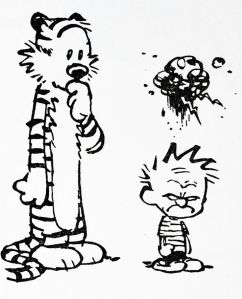
I hate your sunshine.

During a recent #Nextchat, the conversation turned to making sure current employees were honest about what life was like at the company when talking to candidates. I think I said something clever like, “Life isn’t always sunshine and rainbows at any org, no matter how great it is.” Then Anne Tomkinson (a co-host of the chat) said something even MORE clever, “And you also never know what is positive or negative to someone. They might hate your sunshine.”

And while my life goal is to now have a situation in which I can turn to someone and yell, “I HATE YOUR SUNSHINE!”, I also love what Anne said. Because she’s right. Something you find fantastic at work, another person may hate.

Let’s take open floor plans.

Some people love them – they think they foster creativity, collaboration, and create a bright, open atmosphere that makes the office great to be in. And then there are normal people who just want to be able to close a door and get some damn work done every once in awhile.

See? Someone hated your sunshine.

Leadership styles aren’t immune from this, either. You may think a hands-off approach is the best way to work. All employees want a manager who stays away until needed, right? Believe it or not, there ARE employees out there who want a little more direction and guidance on their day-to-day work and wouldn’t see it as micromanaging. They’d see that as support.

Sunshine hated once again.

As leaders, we have to be careful that we aren’t forcefeeding sunshine to our employees. We have to be aware of the different preferences in our workforce. We can’t always accommodate them (sorry, you can’t really wear pajamas all day…), but we can at least stop trying to get them to love the same things we do. Be realistic, for goodness’ sake.

That whole credibility issue leadership seems to have in so many organizations can be tied to our inability to recognize how our people actually feel about things that are going on at work. It’s OKAY for you to think it’s awesome that the cafeteria is moving to healthy food only. You can even tell people that you think it’s awesome. But don’t try to persuade people who hate the idea. Just say, “I get it. It’s not for everyone.” And move on.

Sunshine is subjective. As soon as leadership recognizes that, we’ll be in a better position to build trust and credibility with our teams.

And that should bring a little sunshine to all of us.


Author’s Note: If, like me, you immediately started singing Len’s Don’t You Steal My Sunshine upon reading this article’s headline, I truly apologize. It will take you roughly 72 hours to remove it from your brain. 


Broadway musicals and the lessons of succession planning

Recently, the producers of Dear Evan Hansen announced that its Tony Award-winning lead, a ridiculously talented Ben Platt, would be vacating the role on November 19. Platt originated the role through read-throughs, workshops, previews, and finally, a year on Broadway.

The show is a runaway hit, pulling in $1.5M a week and already providing its investors with a complete return on their investment (in a very short period of time for a small theatre on Broadway). While the show seems like it will be fine with a new lead, its continued success is uncertain and there has been no announcement of who will be taking over the lead.

For another show on Broadway, the continued success is known – it will not have any. Natasha, Pierre and The Great Comet of 1812 (heretofore known as The Great Comet because that name is just WAY too long) was nominated for 12 Tony Awards (3 more than the big winner Dear Evan Hansen). It starred Josh Groban, he of velvety-voice-with-little-inflection-but-everyone-loves-him fame. It was a rousing good time. It got a huge boost from the Tonys performance.

And then Josh Groban left the show.

Okieriete “Oak” Onaodowa (who originated Hercules Mulligan/James Madison in Hamilton) took over the role. People loved him, he had a wonderful debut. And about 3 weeks into his run, rumors started flying that Mandy Patinkin (Broadway royalty/Inigo Montoya) would take over the role. It was officially announced. And the backlash was loud and accusatory because Oak is black, Mandy is white, and the callousness of the move was jarring. Turns out, Mandy was horrified at what happened, and refused to take the role because of what happened to Oak – Mandy had been told Oak was cool with it…and Oak did not appear to be cool with it. Mandy’s out. Oak refuses to go back.

And now the show is closing less than a year after it opened because they have no “name” lead and advance sales plummeted.

So why would I spend nearly 400 words on the drama of a Broadway show’s missteps?

Because that could be your organization.

If you have talented, charismatic, AMAZING leaders in your organization and you haven’t planned for what happens when they leave, you could be The Great Comet.

Don’t be The Great Comet.

Because I’m an unabashed theatre nerd and have decided to run this metaphor into the ground, here are some lessons about succession planning you can learn from Broadway:

  • It’s not the actor, it’s the show:  If you rely on one person’s performance for your company’s success, you will fail. Make sure the team’s/unit’s/company’s work and systems are strong enough to stand on its own, regardless of who is in charge. You want that leader to enhance, not overtake, the work that is already being done. Hamilton, the cultural juggernaut that will probably play forever and ever, is able to survive cast changes all the time – because the book, music and staging is just SO DAMN GOOD. New cast members join in service to the show, and while you see their spin in the performance, it’s not about them. It’s about the outcome of the show.
  • Acknowledge that the original star can never REALLY be replaced and adapt: Having seen Ben Platt perform live, I am fairly confident that NO ONE will ever play that role to that level ever again. It is astounding. That doesn’t mean the next person will not be good. It just means they won’t be Ben. If they’re smart, they’ll try to find someone who can create the role in their own image, and adapt the show to that person’s strengths. Your company should do the same thing. If the last leader was well loved and well liked, acknowledge that. Then give them the opportunity to build and move on in their own image without changing the script.
  • Consider staggering your exits: If you know you have a cohort of leaders who might be leaving around the same time – whether it’s retirement or a spin-off or something else – you might negotiate with them to stagger their leaving (assuming you like their style). This will allow you to have stability throughout the transition, helping onboard the new leaders while providing consistency for the organization. Hamilton used this approach. Lin Manuel Miranda (Hamilton) announced he was leaving. Then Leslie Odom, Jr. (Burr) left (apparently to do Nationwide commercials). Then others in the lead roles left. But never all at once. It helped preserve the spirit of the show and passed on the cast’s culture to the next actors to join. That could work for you.
  • Have a long-term plan: Everyone leaves a company – whether they quit, get fired, or die. It’s the role of a leader to prep his/her replacement and plan that exit from the day they join. Lin Manuel Miranda has a group of trusted performers that he knows he can turn to take over roles. Javier Munoz was Lin’s understudy and replacement for In the Heights, and the same thing happened in Hamilton. Smooth transition. Who is YOUR Javier Munoz?
  • Don’t put all your eggs in one basket: One of the biggest myths in succession planning is that you pick ONE person to be your replacement and you’re done. This is known as “pre-selection” and will bite you in the ass. You want to be sure that person can actually do the job, so you want to make sure you’re developing them. But even more pressing is the fact that someone who is high-potential enough to be identified as your successor may not want to wait in your shadow until you leave – they could jump to another opportunity. On Broadway, many understudies are working on originating one role while backing up another (like with Dear Evan Hansen’s Colton Ryan). There is no guarantee they’ll be around to take over full time. Or life gets in the way – Javier Munoz has had two health issues (thankfully, he’s okay). The point is, identify a potential pool of successors and develop their skills. It gives the company more options at the time of transition.
  • Communicate appropriately: That whole Mandy/Oak thing? Totally could have been avoided if all the right players met at one point to talk long-term goals, communication strategy, and impact to Oak. People get nervous when their boss changes. Having a good communication plan can help alleviate that. Additionally, if you DO have multiple people who could potentially take the job, think about how you let those who did NOT get the position know. What feedback can you give? What career options can you share? And…are you prepared for the reality that they may leave because of it? Whatever the case might be, the last thing you want to do is have a communication issue that results in NO ONE taking the role.

There you have it – lessons from Broadway on how you might approach succession planning within your organization.

See? The arts DO apply to the “real world.” (Support the arts!!!)

Don’t you dare forget…a session with Kat Cole

[This post first appeared on the SHRM Blog on June 19, 2017]

Today saw the beginning of #SHRM17 in New Orleans, where 18,000 HR pros have descended upon the city for learning, fun, and reconnecting with old friends.

The shenanigans kicked off early in the morning with pre-conference workshops, but the sessions began in earnest after lunch, with concurrent sessions and SmartStage speakers. But the main event REALLY kicks off late in the afternoon, with the appearance of Juana Hart and our first keynote of the conference.

You have probably heard of Kat Cole – she worked at Hooters and learned the operations side of the business when the cook disappeared. Her hard work and inherent business sense led to her recommendation to be sent to Australia to launch restaurants there.  She became a Vice President at 26, and then moved over to Cinnabon to become President of the company at the age of 33. Her story is remarkable. She is remarkable.

Ms. Cole’s keynote was impressive – no slides, no teleprompter, just a woman telling her story and the lessons learned along the way. There were so many inspiring tales in the keynote. I have no doubt my fellow SHRM bloggers will cover many of them. There was one in particular, however, that stood out to me.

She had just finished sharing a major mistake she made early on at Cinnabon, and shared how that mistake led to lasting success. And then, she talked about how her mom keeps her grounded. Every day on her birthday, Ms. Cole’s mother sends her a card with the following reminder: Don’t you dare forget where you came from, but don’t ever let it solely define you.

This hit me on a personal level. Everyone carries the memories of where they come from with the through life. These experiences shape who we are and how we approach adversity. Some choose to overcome them and never look back. Others wallow in those experiences, using them as an excuse to stay stuck. Ms. Cole’s message from her mother is striking because it illustrates the power of remembering what got you through adversity, and then using it to move forward.

When we refuse to look back at who we were in the past, we fail to acknowledge the lessons we learned on that path. We don’t honor the person who made it through the wilderness. We pretend it didn’t exist. But that’s not really the case, is it? That person is always looking over our shoulder, whispering in our ear, holding us back or pushing us forward. It would be disingenuous to believe we aren’t still holding on to a part of the past, even as we look towards the future.

So why focus so much on this aspect – especially when it comes within the context of Human Resources? There are two reasons – one external, the other internal.

First, the external – we need to remember that each of the employees and leaders we work with are bringing their pasts to work. We have an opportunity to be that voice that says, “Yes, you ARE that person who dealt with a not-so-great past. But that doesn’t have to be who you are forever.” We can help these people move forward by reminding them of their strengths and working with leadership to recognize when humility and courage come together to make real change.

Second, the internal – HR needs to listen to that advice. For too long, we have wallowed in the belief that we have no influence. That no one will let us do anything. That we have fought like hell to get where we are today and it just doesn’t seem like it’s that far at all. And yet…look at how far we have come. We are no longer “personnel.” We have the ear of our CEOs. We may still struggle at times, but CHRO is a position that actually EXISTS in business – and it didn’t always. We have struggled and we will continue to struggle…but we have so much potential.

So my advice to you, #SHRM17 HR professionals – don’t forget where you came from….but DON’T YOU DARE let that solely define you.

Be more. Do more. Dare more.