I get by with a little help from my friends

Do you have a safety net?   Do you have a network of friends who can help you through tough times?  Do you have a group of folks who can talk straight to you and tell you when you’re being an idiot?

If you don’t, you need one.

Leaders have a tendency to try and do everything on their own.  As a result, they often suck at delegating, struggle to communicate their vision compellingly…and aren’t too good about reaching out for help when they need it. And of all people, leaders (especially CEOs) need to avoid isolation – it can negatively impact the business.
support_picture

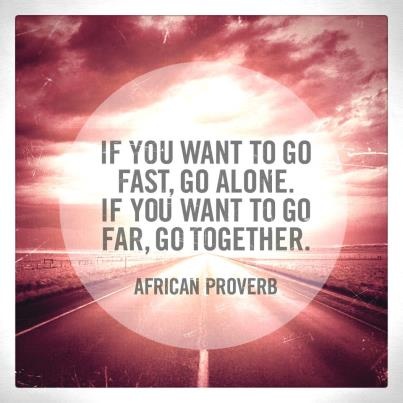
Regardless of your level of leadership, you can benefit from having your own personal support team.  I know this from personal experience:

  • Venting: Life is not always cupcakes and unicorns, which means you’re going to need to be able to complain and rage from time to time.  Your support group will listen and not judge…well, not much.
  • Accountability: A good support group calls you on your crap. They can also help you clarify and achieve your goals.  It’s good to have people around who can keep you on track.  They can also suggest actions to take to help get you to the finish line.
  • Sanity Check: This is similar to “accountability” but it’s a little more focused than that.  Your support team is there to throw out the red flag when they see you about to do something incredibly stupid.  It’s great to have that voice of reason when things go crazy.
  • Wisdom: As much as you think you know everything, you don’t.  Your support team can use their collective knowledge to help you break through your issues and move forward. So find some smart people for your posse!
  • Laughter: When you pick your support team, make sure you pick ones who have the same sense of humor as you.  And aren’t afraid to say inappropriate things.  And who know REALLY good jokes.

Just remember: you don’t have to go through this alone. Find your team and conquer the world!

PS – Shout out to #TeamFaulkner!  You know who you are.  And you are awesome.

Do you have a support network? What do you use it for?  Share in the comments!

To Burn or Not to Burn? (a question of bridges)

Early on in my career, I had one of those proud/not-so-proud moments (depending on how you look at it) while working for a small company as an “office manager” – you know, that all-inclusive title that pretty much means you have no authority but all the blame.  I dropped an F-bomb on the owner’s wife.  [It’s a long story, but basically she accused me of not caring enough about the job. Because I didn’t respond to her request in 3 seconds.  But I digress.]

I believe the exact phrase I used was, “F*** you and f*** this job.”  I grabbed my phone and my purse and made my dramatic exit.

After walking away from the building, the reality of what happened hit me and I called my husband and said, “I think I just quit my job.”  The thing was, I couldn’t afford to quit my job.  So…I turned around and went back to the office to figure it out.   So much for leaving in a blaze of glory.

Luckily, the owner’s wife apologized first, then I apologized, and we made it work until I moved on to complete my student teaching.  Despite the time that has past, I’ve never forgotten that moment, thinking back to it with a certain wistfulness every time I’ve moved on from a company.  But I have never reenacted that moment because I know there would be consequences.

man lighting fuse

Before you decide to lay waste to the past and leave in a dramatic fashion (like these extreme quitters), decide if it’s worth it by answering these questions:

  • Will I need a reference from anyone at this company?
    Obviously you would only select “friendly” references.  But any recruiter worth their salt will do what they can to find backdoor references – folks NOT on your friendly list – because they want the real scoop.  Those are the people you need to be thinking about.
  • Did I gain a significant amount of experience at this company that I will need to be able to refer to in the future?
    A job you had for a month or two might be okay to leave off the ol’ resume.  But what if you were there for 2 years?  Or 5 years? Or 15?  You’re going to need to be able to use that experience to sell your skills to a future employer.
  • Is it possible I may want to return to this company?
    Sean Connery claimed he would NEVER play James Bond again…and then came back to make, you guessed it, Never Say Never Again.  I get tough work environments, burn out, impossible bosses, etc.  The reality is that people move on, circumstances change, and time lends perspective.  Don’t risk future opportunity to for short-term satisfaction.
  • How small is my industry’s world?
    This is particularly important if you have a niche skill set – IT, legal, and yes, even instructional design, can fall into this arena.  Word of your behavior will get out.  And with social media, the range will be even further than you think.  If there’s a chance your exit may reflect poorly on you if told to a potential future employer, it’s a BAD idea to burn that bridge.
  • Am I an adult?
    Seriously, are you?  A true professional tries to address the issues at hand, and if that doesn’t work, he or she leaves like an adult human being rather than a 2-year-old or viral video wannabe.  Yes, it’s really entertaining to watch the videos of extreme quitters, and we all live vicariously through their efforts.  But what did it really change in those companies?  And where are those people today?  A few people did turn their moment of fame into a career, but most probably traded a moment of triumph for a professional lifetime of explaining away that YouTube clip.

There are times when burning bridges might make sense (companies engaging in illegal activities come to mind).  The point is, only you can make that choice – so make it a good one.

If you decide it’s totally worth it – go for it!  And please, film it so we can enjoy it, too.

Do you have story of a burned bridge to share?  Are there times when it DOES make sense to burn a bridge?  Let me know in the comments!

Snark is the New Cool…and that may not be cool

One of the things you may not know about me is that I’m a bit of a musical theater nerd.  What this really means is I tend to be a singing snob.  Yeah…I’m one of those people.  It doesn’t mean I think I can do it better than other singers, I just get annoyed when singing isn’t done correctly. (Note to teachers of young singers – STOP MAKING THEM SING OUT OF THEIR NOSES!!!!!  Thank you.)

So when a live broadcast of The Sound of Music was announced with Carrie Underwood, I wasn’t terribly excited.  Nothing against her voice – I’m just not a country fan and I think sometimes she can be a little wooden in her performance.  And I love Julie Andrews.  Therefore, I chose not to watch.

That doesn’t mean I didn’t read a bunch of the comments made on social media on the interwebs.  Seriously, y’all got creative.  And some of you were funny.  And a little mean.

snark1

I was listening to Seth Speaks on my satellite radio (On Broadway channel – enjoy!) and Laura Benanti was a guest (she played the Baroness on the NBC broadcast, and starred as Maria in the Broadway revival…and she is amazing).  She was sharing some backstage stories and such, and Seth asked her what she thought about the comments made against Carrie.  And Laura threw down on the haters.

“Snark,” Laura says, “is the new cool.”   She pointed out that here was a person with the courage to try something she’d never done before…live…in front of 18 million people.  Instead of applauding her for it, and celebrating the fact that a major network took a chance to bring a new, younger audience to Broadway and music, the Twitter-verse used it as a chance to show off how clever it is.

No snark?
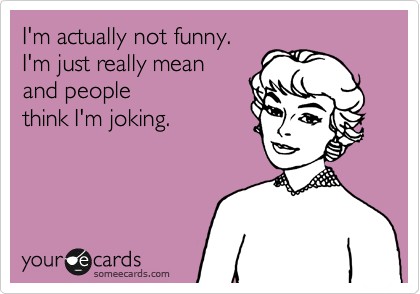
This stuck with me.  I love snark.  I enjoy the heck out of reading it, and I tend to engage heavily in the dishing out of said snark, too.  But Laura has a point – snark can get in the way of what you’re really trying to accomplish.  It can shut down people’s willingness to take a chance.  It can break down the feeling of “team”.  A lot of people who give snark can’t take it, so then you get a whiny snarker.  And while snark might be funny or make you look clever, is it adding anything of value to fix the perceived issue?  In short, snark can be extremely damaging.

What to do?
I’m not going to advocate going snark-free.  A little snark is like good satire – it points out that the emperor has no clothes and uses humor and shock to heighten awareness about a situation.  Matt Charney’s Snark Attack blog  is great!  So is Television Without Pity (spare the snark, spoil the network).  That snark IS cool.  And funny.  And thought-provoking. And change driving.

So if you consider yourself a snark aficionado (and who doesn’t, amiright?), use the next 30 days to pay attention to how and when you use it.  If your intent is pure and you’re working towards a greater good, snark away.  And a little snarkiness amongst friends can be fun!  But if you’re employing snark to put someone else down because it makes you feel better about yourself and you think it makes you look clever, stop it. You’re just being an asshole.