Making (HR) Leaders Better

[NOTE: I’m basically guest posting on my own blog.  One of the nicest, coolest people I know – Steve Browne – reached out to various folks to request a post on how we would make HR better.  And you just can’t let Steve down!] 

It’s been an interesting start to the year for a lot of businesses.  The economy is showing signs of recovering…then faltering….then recovering again. Companies say they’re going to add jobs, while others announce massive layoffs. There is uncertainty in the air, and that uncertainty leads to panicky employees. Add on top of that the fact that it’s annual performance review time for a lot of organizations and you have a recipe for trouble.

(Not like “zombie apocalypse” trouble. More like, “oh no, we’re out of coffee” trouble. But it’s the really GOOD coffee. And there are no Starbucks nearby.  And you’re walking into a 3 hour meeting.)

When unresolved panic meets feedback meets merit meets goal-setting, you get a perfect storm – one that HR must guide that ship through. Because whether you like it or not, people take their cues to how HR handles things.

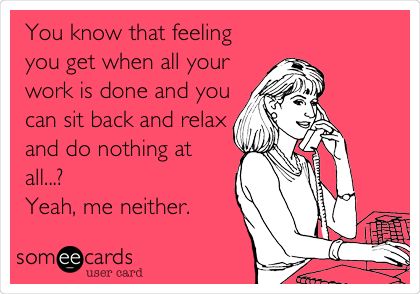
Through the years, I’ve made a lot of mistakes, and learned some important lessons, as an HR leader.  And lest you make a joke about an HR leader not being a “normal” leader (and there are plenty), keep in mind that HR leaders tend to face greater pressure and scrutiny for their leadership behaviors. Our mistakes sometimes echo more than the mistakes of others.  We are held to a higher standard because we should know better. Even though we’re human like everyone else.
ecard_HR

So how can HR leaders get better? A few thoughts:

  • Stop trying to get people to like/notice/appreciate/praise/[insert verb here] you: If you got into leadership for all the cupcakes and unicorns, you made a HUGE mistake. Leaders rarely get the day-to-day kudos, and HR hardly ever gets them. You need to be okay with that.  You need to understand that a job well done in HR leadership means you know you’ve done the right thing and you’ve done it correctly…and it’s okay that no one threw a parade.
  • Keep the lines of communication open: Employees get creative when nobody tells them anything (especially in times of high change). You should hear some of the whoppers coming out of employee break rooms!  Give them an avenue to voice their opinions, and share what you can as often as you can.  They may not always believe you, but later on they’ll appreciate the effort.
  • But don’t overshare: This is a common mistake of newer managers and HR professionals who are very close to their business partners.  You want to liked.  You want to help. And sometimes lapses in judgment cause a LOT of problems. HR in particular needs to present a united front.  If HR has been asked to keep a confidence and someone slips, two things happen – 1.) you’ve taught the business it pays to answer-shop, and 2.) you’ve lost credibility as an HR leader.
  • Seek alignment: We are all running in so many different directions and are easily pulled into our little corner of the HR world.  The best thing HR leaders can do for themselves is TALK TO EACH OTHER. What is everyone working on? How does it impact the other areas of HR? What are risks we might be overlooking in our own projects? Employees (HR and others) notice when HR leaders are not on the same page and they may try to take advantage of it.  Besides, we might get our work done more efficiently if we actually work together.
  • Build a (positive) support network: I’ve talked about building a personal board of directors before. I still highly recommend it. What I also recommend is that you seek out some people who are in your organization who totally get where you’re coming from…and will NOT resort to a bitch-fest every time you get together to chat. You know why I would write a post for Steve Browne whenever he asks?  Because he is the most positive HR professional I have ever encountered. Even in the darkest of situations and the most FUBAR implementations, he shakes it off and works to find a solution.  And I love that about him, and believe more of us need to be like that. Snark may be funny (and it totally is), but moving forward makes the HR world go round.
  • Meet people where they are: Okay, I totally stole this one from Steve, too, but I love it.  I think it was a quick line in a presentation he made but it has stayed with me as one of the best pieces of advice any leader – HR or otherwise – can accept. If you meet people where they are; be it their learning curve or change acceptance; you increase your chances of making a connection.  With that connection comes trust…and trust can move mountains.

So there you have it – a few suggestions on how HR leaders can make themselves, and ultimately their business, better.

HR Tip #007: ‘Not everyone is going to like you.’
                                                 ~ HR-Shield.com

What would you add to the list? Share in the comments below!

Finding balance in an unbalanced world

I struggle with the whole “work-life” thing.

I’ve never been good at moderation.  Typically, when I do something I go full-bore – if I’m focused, I’m VERY focused.  If I’m procrastinating, I am REALLY procrastinating. Seriously.  I rock at procrastination.

For many, this is a familiar feeling. We struggle with the demands of work.  We struggle with the demands of home. Hell, we struggle with the demands of a DVR backlog that just keeps growing.

It’s the little things that throw us off.

The only thing that really helps keep me sane is knowing that MOST people struggle with balance.

Leaders struggle to balance likability and accountability. Employees struggle to balance face time and results.

We all struggle with something.

Overwhelmed. Stressed. Frustrated. Burned out.

The stress of trying to maintain this balance impacts our health – so much so that sites like WebMD and the Mayo Clinic include tips on how to manage our lives.

The challenge with finding balance is that it is so specific to each person and where that person is in his/her life.barbwire-high-wire

Work-life balance for a single person just starting out might mean working long hours and never unplugging, answering emails at all hours of the night – even when on vacation. Work-life balance for a new parent might mean leaving right at 4:00pm every day, spending time with the kiddos, and then logging back in late at night to finish up…or even having the chance to work from home when possible.

You can switch those two scenarios and STILL be right. Because balance isn’t something you dictate to someone else – it’s something each person must find on their own.

As leaders, the best we can do is help our people find their balance while still achieving expected results (and results shouldn’t always require face time). This means setting realistic, adaptable goals; learning that setting all priorities to “high” is not practical; and accepting that life happens to us all.  Leaders should remove obstacles – not create them.

As employees, we can help ourselves by communicating our needs for balance, setting boundaries, and working with our leaders to find ways to ensure the work gets done without going insane. This means getting our work done in a timely fashion with high quality; being present when we are at work; and NOT taking advantage of our teammates who may have different definitions of work-life balance. Employees should provide suggestions – not excuses.

To illustrate the personal nature of finding balance, I want to share a few ideas I have for me.  Remember, these may or may not work for you – but hopefully it will get you thinking about how you can find your own balance:

  • Get moving: I am not what I would call an “exercise lover”, but I do notice lower stress and better energy when I have a regular exercise program.  So I do my best to run, work out, walk around, whatever it is. I’m hoping my new Up24 helps keep me on track in this respect.
  • Get organized: I’m pretty organized…but I don’t always act on that plan.  Because I can be so busy I end up doing nothing, I need to use my love of to do lists to my advantage.
  • Save my best for home: I’ve heard this from several colleagues – we give our all at work…to the point we are completely spent when we are with the people we love. Work will get what it needs to get done, but my “real life” deserves more.
  • Choose unbalance when it makes sense: As author Alain De Botton once said, “everything worth fighting for unbalances your life.” The operative word here is choose. Moving forward, innovation, change – all of these require some manner of unbalance, and I will decide when that’s the best path.
  • Do more stuff I enjoy: I like writing. I like reading. I like chatting with my network of online friends.  I like saving baby pandas on my iPad. I like going out to eat and having fun. I want to do more fun things, and fewer things I “have” to do. This is my motivation to do everything else on this list.

This isn’t everything I’m working on to find my balance, just a sample. But it’s a start.

Comparison is the thief of joy. ~Theodore Roosevelt

How are you finding balance in an unbalanced world? Share in the comments!

SHRM and the art of leadership

This is a slightly different post today, and it’s pretty HR focused, but stuff is going on in the HR world that highlights leadership. This “stuff” also highlights the fact that leadership can look and sound very, very different – and still be 100% leadership.

For the uninitiated:

SHRM (the Society of Human Resource Management) announced earlier this year that it was launching a separate new certification for HR professionals. HRCI (Human Resources Certification Institute) will continue to offer the existing certification. If you want to read more about all this, click here, here, or even here.

This post isn’t about the new certification.

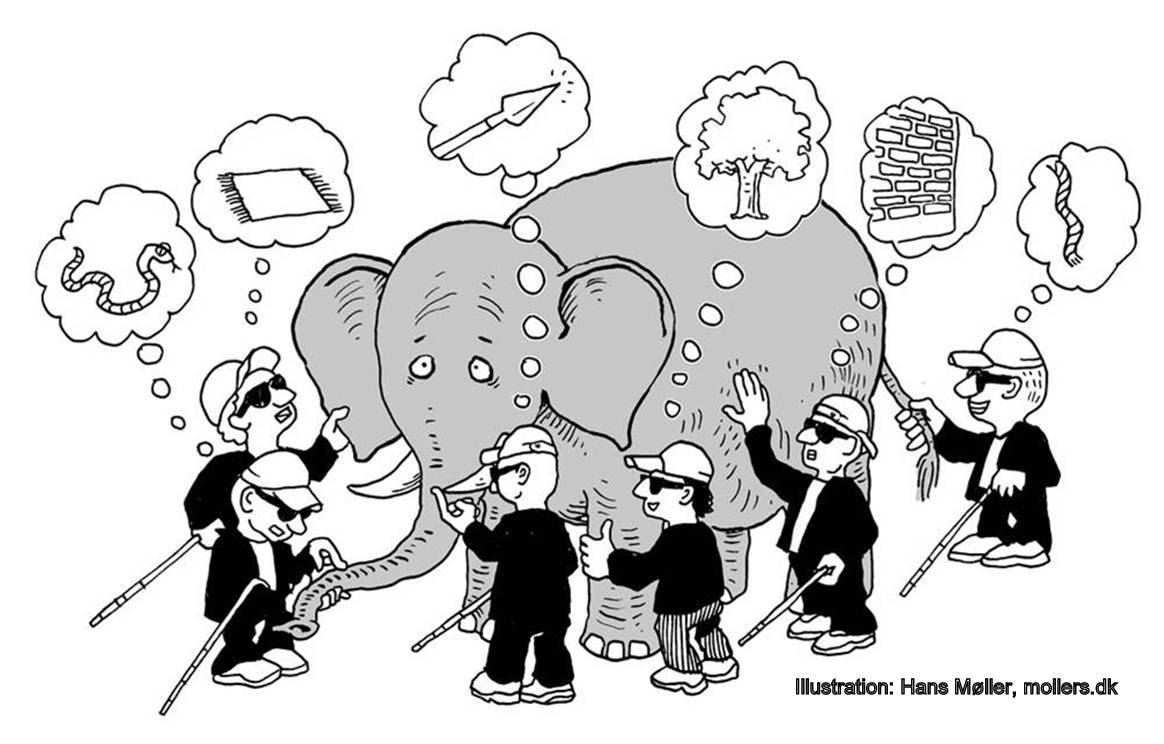
What I want to focus on is the way leaders in the HR community have stimulated conversation.6-blind-men-hans

On the one hand, you have the esteemed Laurie Ruettimann – her approach has been to ask some very pointed questions about the need, efficacy and impact of the new certifications. You can read her excellent article about it here.  Go ahead, read it.  I’ll wait. Done?  Good.

On the other hand, you have the also-esteemed Steve Browne – his approach has been to focus on what the future can look like, and the progress that has been made since the announcement first happened. You can read his excellent take on the situation here. We’ll wait. It’s cool.

Chances are, you were provoked, annoyed, or in fervent disagreement with one of them, rolling your eyes at their comments. Or you may have been smiling, nodding emphatically, or fist-pumping because you totally agree with their comments. Either way, you’ve been exposed to two different perspectives and you thought about where you stood.

That means these folks are Leaders with a capital L.

I don’t mean leadership is about arguing. Leadership is about making people think. Or asking the tough questions. Or being optimistic about possibilities.

Leadership isn’t just about what YOU want it to look like. It takes all kinds, all voices, all backgrounds.

I love that Laurie and Steve come from different points of view. And I love even more that they keep the conversation going.

This, my friends, is what leadership looks like.

Keep the conversation going.  Post a comment here, post a comment for Steve and/or Laurie.  Let’s talk!