Admit I’m right!!! The value of debate in a polarized world

This past week, Bill Nye (self-proclaimed “science guy”) and Ken Ham (head of the Creation Museum) debated the merits of creationism vs. science/evolution.  (If you want to watch it, you can do so here.)  There was a lot of hubbub on both sides of the aisle on this one, with the prevailing opinion being why bother?  Scientists, in particular, were not terribly supportive of Nye’s decision to participate, a fact reflected in their feedback that it wasn’t “a total disaster.”

The crux of the mindset is that since the two sides are SO far apart in interpretation and beliefs, there is no point in having a conversation about it.

Well, I say hogwash.  Or at the very least, I call shenanigans.

Our society is increasingly polarized – we are bombarded by a black or white rhetoric that feels bound and determined to force us to choose a side and do it now.  The internet has a hand in this – those with fringe beliefs can find like-minded individuals more easily than ever before.  And even better, you can filter out all the stuff you don’t believe in, thereby validating only your opinion.

argument5
With apologies to Bill Watterson – I love Calvin & Hobbes.

The value of debate depends on what your goal for the conversation is. If you want to instantly change the mind of someone who lives by deeply held beliefs – no, there is no point.  However, if you want to start the dialogue that will allow each side to develop empathy and understanding about the others’ point of view, debate can be incredibly beneficial.

I don’t know what the motivation was for Bill Nye and Ken Ham.  I suspect both sides wanted to try and explain their point of view while winning some folks over to their way of thinking.  (Given that the debate was held at the Creation Museum, I suspect Nye had a harder time of it.)  But I applaud them both for at least starting the dialogue – if not for their own beliefs, then for those who listened.

The mere fact that we as a society are talking about the debate requires us to consider our own beliefs, as well as the beliefs of others.  We are forced to consider the why behind our arguments, and weigh the merits of our whys.  And while we may seldom change our minds, we will sometimes concede that while we don’t agree with the other side, we can at least understand why they think that way.

The debate avoidance phenomenon is alive and well in the business world, too.  Here are some reasons we shy away from the conversation and some things to keep in mind to overcome them:

  • We think we’re Nostradamus: Ever notice how many psychics you work with? –  “Why even ask?  They’ll just say no.” “I’ll just put Ken into that position, no one else would want to try for it anyway.” “Feedback is useless because they just ignore it.”  If you can predict the future, go by a Powerball ticket already.
  • Conflict is icky: The core of every debate is a difference of opinion, and people seem to think that conflict means no one will like them or that the team doesn’t get along.  Remember – conflict is inherent to progress.  You can’t move forward without recognizing that the status quo needs to change.
  • People can be jerks: Not everyone debates professionally.  While most people can have a discussion about a difference of opinions like an adult, there’s always that one person who yells, or cries on command, or is incredibly passive aggressive.  Get over it. Say your piece, remind them about the goal of the conversation, and control what you can control (meaning you).  And remember: most of the time, they resort to these tactics because they want you to drop it – don’t fall for it!
  • What if I’m wrong?: It’s true – you may end up changing your position after the debate.  Oh, the terror!  You mean you were able to consider all sides of an issue and make an unbiased decision?  Yeah, we wouldn’t want that. [sarcasm – sorry!]

There are some concepts that we all just hang on to, regardless of the evidence.  Some call it faith, some call it fallacy, some call it lies, some call it conspiracy.  Whatever you call it, why not talk about it?  The only way we grow is to be exposed to new things…so go find a new thing and talk about it.

The worst that can happen is that you’ve had a conversation and maybe learned something new.  Isn’t that worth it?

Have you had a debate that gave you a new perspective? Share in the comments!


Missed opportunities, or what if you spent $4M and no one cared?

[Editor’s Note: Due to the horrible performance by this author’s team, the game itself shall not be discussed.  I mean, seriously – what the heck was that?!]

Every year, the Super Bowl audience breaks down to two camps – those who care about the game and those who care about the commercials.  Ever since Apple’s ‘1984’ ad aired, the Super Bowl has risen in prominence as THE place for companies to make a marketing impact.  With the increase of on demand entertainment, live sporting events on the level of the Super Bowl offer one of the few places where millions of eyes will be watching at the same time.  And given the mythical status some Super Bowl ads attain, this is one of the few times that people WANT to watch the commercials. So you would think companies would do their best to make the most of this moment.

Sadly, this year’s crop fell short.  In fact, recent years have revealed some lackluster attempts to get our attention.  We long for the days of EDS’s “herding cats” or the CareerBuilder chimps. Instead, we get a Maserati ad that everyone hoped was a horror movie trailer and others that made Joe Namath’s coat the highlight of the evening. [Ed. Note: The Budweiser Puppy/Clydesdale ad was still awesome.  Because….puppy.  Duh.]  Not exactly everyone’s idea of $4M well spent.

missed_opportunities

We’ve all had situations in which we had a great opportunity to make a positive impression…and fell flat on our face.  Or worse, made no impression at all.  By examining the possible mistakes made by this year’s Super Bowl ad companies, it’s possible you can avoid a similar problem when provided a high visibility stage upon which to make a statement:

  • Playing it safe:  A lot of the ads toyed with audacity, but couldn’t quite get there.  That $4M price tag might have kept companies from wanting to go too far out of the norm.  As a result, there was a lack of creativity.  And I’m not the only one who thought so.
    What it means to you: When you get a chance to play on the big stage, decide whether or not you want to swing for the fences.  If you’re going to take a risk, take a real risk.  A jazz instructor I knew once said, “If you’re going to make a mistake, make a mistake of passion.”
  • Not managing the message: If you followed the Twitter feed for Super Bowl ads, you saw a wide range of negative comments – some deserved (and funny), some bizarre and intolerant. As a result, the ad’s message was lost in the aftermath.
    What it means to you: It’s not possible to anticipate all reactions to the content, but it’s good to have a backup plan. When you take your moment in the sun, consider the audience, the possible response, and how you’ll handle any backlash.
  • Losing sight of the goal: This one can also be thought of as “Letting the size of the stage dictate your message”.  Bud Light, who has had some winners in the past, decided to feature a regular guy who doesn’t know he’s in a commercial – and not just any commercial, a Super Bowl Commercial.  So you ended up with Don Cheadle and a llama, and Arnold Schwarzenegger in inappropriate shorts.  And how is this about beer? Or even about the Bud brand?
    What this means to you: Just because you’re in a high visibility situation, it doesn’t mean you should forget why you’re there.  Whatever message you want to send, keep the core of that message.  What do you want people to remember – you and your message, or the fact that you had a dancing bear introduce you?

Chances are, your stage isn’t as big as what we saw on Sunday.  But every single time you have a chance to make an impression, you should think of it as your personal Super Bowl.  Seize the opportunity to tell your story, share your message, and be memorable – in a GOOD way.  Don’t spend the social equivalent of $4M just so people can say, “meh.”

 Do you have a story about how a time you made an impression on the big stage?  Share in the comments?

Are you serving ‘leadership a la carte’? Well, stop it.

Do you wish your boss would let you pick and choose which leadership behaviors you want?  What if your boss then chose to “charge” you for those services through overtime, extra projects, or even future raises?

What the what?

Allow me to explain.

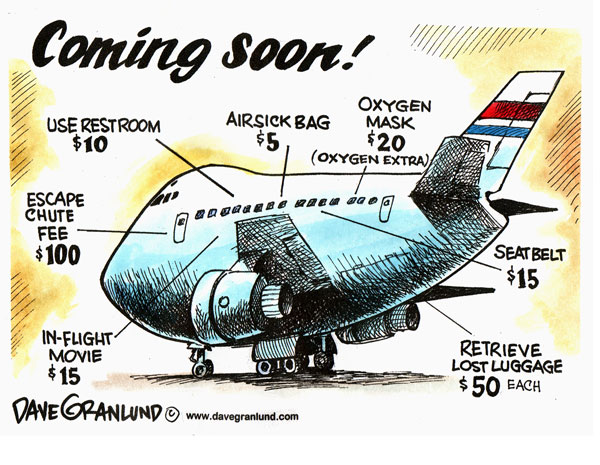
While browsing on LinkedIn, I read this article by Christopher Elliott which talks about the new a la carte approach to air travel – tickets are all that are guaranteed.  Luggage, carry-ons, even water are now added revenue, and gosh isn’t it wonderful? Because this lets customers pick and choose which services they want to pay for.  Which is what EVERYONE wants (anyway, that’s what the airlines would like you to think).

When people pay for a ticket, there are certain things they take for granted as part of the flying experience – such as an opportunity to bring your luggage.  Or drink some water.  Most people would be okay with paying a slightly higher airfare for the illusion that they are getting the experience they expected (see Southwest).air-fees-color-web

So let’s take this back to leadership…employees don’t always know what leadership behaviors they need from their supervisors.  As a result, they are seldom able to tell a manager how they are best led.  Ask any employee what kind of managing style they do best under, and at least 92.3% of them will say, “I hate micromanaging.”  First of all, many employees think being held accountable is micromanaging, and second of all, some employees NEED micromanaging until they learn the job.  So do we still think employees know what they need all the time?

As a leader, you’re responsible for adjusting your style to the needs of your employee – which means you better be able to apply a lot of different kinds of leadership.  And employees expect that of you – it’s part of the social contract of the manager/employee relationship, not a “nice to have”.  Employees will put up with a tougher workplace, longer hours, and provide discretionary effort (the “higher ticket price”) when they know they have a leader who has their back and will step in with the right approach when necessary.

If you suspect you’re an A la Carte Leader and want to change, try some of the following:

  • Schedule regular 1:1s with your employee (even if they don’t want it!)
  • Establish a level of trust by LISTENING (novel concept, I know)
  • Study different leadership models and styles to increase your toolbox (e.g., Situational Leadership, The Leadership Challenge, Strengths Based Leadership, etc.)
  • Accept that you are there to make your employees successful and provide the support they need

Employees don’t always know what they want exactly when they need it, but they DO know when their leader isn’t providing what they need.  Rather than thinking of yourself as an add-on, remember that you are part of the entire employment experience – employees expect and need your support.  And if you fail to give it to them, they WILL move on.

“The first responsibility of a leader is to define reality. The last is to say thank you. In between, the leader is a servant.” 
–Max De Pree