Missed opportunities, or what if you spent $4M and no one cared?

[Editor’s Note: Due to the horrible performance by this author’s team, the game itself shall not be discussed.  I mean, seriously – what the heck was that?!]

Every year, the Super Bowl audience breaks down to two camps – those who care about the game and those who care about the commercials.  Ever since Apple’s ‘1984’ ad aired, the Super Bowl has risen in prominence as THE place for companies to make a marketing impact.  With the increase of on demand entertainment, live sporting events on the level of the Super Bowl offer one of the few places where millions of eyes will be watching at the same time.  And given the mythical status some Super Bowl ads attain, this is one of the few times that people WANT to watch the commercials. So you would think companies would do their best to make the most of this moment.

Sadly, this year’s crop fell short.  In fact, recent years have revealed some lackluster attempts to get our attention.  We long for the days of EDS’s “herding cats” or the CareerBuilder chimps. Instead, we get a Maserati ad that everyone hoped was a horror movie trailer and others that made Joe Namath’s coat the highlight of the evening. [Ed. Note: The Budweiser Puppy/Clydesdale ad was still awesome.  Because….puppy.  Duh.]  Not exactly everyone’s idea of $4M well spent.

missed_opportunities

We’ve all had situations in which we had a great opportunity to make a positive impression…and fell flat on our face.  Or worse, made no impression at all.  By examining the possible mistakes made by this year’s Super Bowl ad companies, it’s possible you can avoid a similar problem when provided a high visibility stage upon which to make a statement:

  • Playing it safe:  A lot of the ads toyed with audacity, but couldn’t quite get there.  That $4M price tag might have kept companies from wanting to go too far out of the norm.  As a result, there was a lack of creativity.  And I’m not the only one who thought so.
    What it means to you: When you get a chance to play on the big stage, decide whether or not you want to swing for the fences.  If you’re going to take a risk, take a real risk.  A jazz instructor I knew once said, “If you’re going to make a mistake, make a mistake of passion.”
  • Not managing the message: If you followed the Twitter feed for Super Bowl ads, you saw a wide range of negative comments – some deserved (and funny), some bizarre and intolerant. As a result, the ad’s message was lost in the aftermath.
    What it means to you: It’s not possible to anticipate all reactions to the content, but it’s good to have a backup plan. When you take your moment in the sun, consider the audience, the possible response, and how you’ll handle any backlash.
  • Losing sight of the goal: This one can also be thought of as “Letting the size of the stage dictate your message”.  Bud Light, who has had some winners in the past, decided to feature a regular guy who doesn’t know he’s in a commercial – and not just any commercial, a Super Bowl Commercial.  So you ended up with Don Cheadle and a llama, and Arnold Schwarzenegger in inappropriate shorts.  And how is this about beer? Or even about the Bud brand?
    What this means to you: Just because you’re in a high visibility situation, it doesn’t mean you should forget why you’re there.  Whatever message you want to send, keep the core of that message.  What do you want people to remember – you and your message, or the fact that you had a dancing bear introduce you?

Chances are, your stage isn’t as big as what we saw on Sunday.  But every single time you have a chance to make an impression, you should think of it as your personal Super Bowl.  Seize the opportunity to tell your story, share your message, and be memorable – in a GOOD way.  Don’t spend the social equivalent of $4M just so people can say, “meh.”

 Do you have a story about how a time you made an impression on the big stage?  Share in the comments?
I get by with a little help from my friends

Do you have a safety net?   Do you have a network of friends who can help you through tough times?  Do you have a group of folks who can talk straight to you and tell you when you’re being an idiot?

If you don’t, you need one.

Leaders have a tendency to try and do everything on their own.  As a result, they often suck at delegating, struggle to communicate their vision compellingly…and aren’t too good about reaching out for help when they need it. And of all people, leaders (especially CEOs) need to avoid isolation – it can negatively impact the business.

support_picture

Regardless of your level of leadership, you can benefit from having your own personal support team.  I know this from personal experience:

  • Venting: Life is not always cupcakes and unicorns, which means you’re going to need to be able to complain and rage from time to time.  Your support group will listen and not judge…well, not much.
  • Accountability: A good support group calls you on your crap. They can also help you clarify and achieve your goals.  It’s good to have people around who can keep you on track.  They can also suggest actions to take to help get you to the finish line.
  • Sanity Check: This is similar to “accountability” but it’s a little more focused than that.  Your support team is there to throw out the red flag when they see you about to do something incredibly stupid.  It’s great to have that voice of reason when things go crazy.
  • Wisdom: As much as you think you know everything, you don’t.  Your support team can use their collective knowledge to help you break through your issues and move forward. So find some smart people for your posse!
  • Laughter: When you pick your support team, make sure you pick ones who have the same sense of humor as you.  And aren’t afraid to say inappropriate things.  And who know REALLY good jokes.

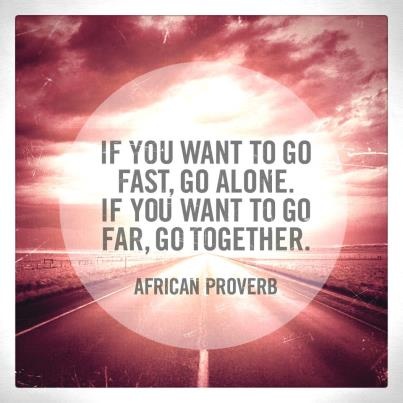
Just remember: you don’t have to go through this alone. Find your team and conquer the world!

PS – Shout out to #TeamFaulkner!  You know who you are.  And you are awesome.

Do you have a support network? What do you use it for?  Share in the comments!

Snark is the New Cool…and that may not be cool

One of the things you may not know about me is that I’m a bit of a musical theater nerd.  What this really means is I tend to be a singing snob.  Yeah…I’m one of those people.  It doesn’t mean I think I can do it better than other singers, I just get annoyed when singing isn’t done correctly. (Note to teachers of young singers – STOP MAKING THEM SING OUT OF THEIR NOSES!!!!!  Thank you.)

So when a live broadcast of The Sound of Music was announced with Carrie Underwood, I wasn’t terribly excited.  Nothing against her voice – I’m just not a country fan and I think sometimes she can be a little wooden in her performance.  And I love Julie Andrews.  Therefore, I chose not to watch.

That doesn’t mean I didn’t read a bunch of the comments made on social media on the interwebs.  Seriously, y’all got creative.  And some of you were funny.  And a little mean.

snark1

I was listening to Seth Speaks on my satellite radio (On Broadway channel – enjoy!) and Laura Benanti was a guest (she played the Baroness on the NBC broadcast, and starred as Maria in the Broadway revival…and she is amazing).  She was sharing some backstage stories and such, and Seth asked her what she thought about the comments made against Carrie.  And Laura threw down on the haters.

“Snark,” Laura says, “is the new cool.”   She pointed out that here was a person with the courage to try something she’d never done before…live…in front of 18 million people.  Instead of applauding her for it, and celebrating the fact that a major network took a chance to bring a new, younger audience to Broadway and music, the Twitter-verse used it as a chance to show off how clever it is.

No snark?
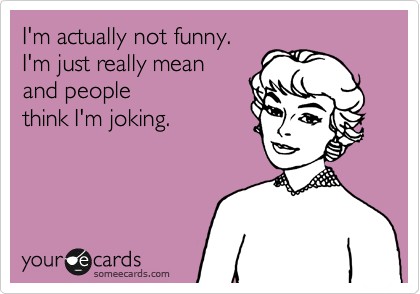
This stuck with me.  I love snark.  I enjoy the heck out of reading it, and I tend to engage heavily in the dishing out of said snark, too.  But Laura has a point – snark can get in the way of what you’re really trying to accomplish.  It can shut down people’s willingness to take a chance.  It can break down the feeling of “team”.  A lot of people who give snark can’t take it, so then you get a whiny snarker.  And while snark might be funny or make you look clever, is it adding anything of value to fix the perceived issue?  In short, snark can be extremely damaging.

What to do?
I’m not going to advocate going snark-free.  A little snark is like good satire – it points out that the emperor has no clothes and uses humor and shock to heighten awareness about a situation.  Matt Charney’s Snark Attack blog  is great!  So is Television Without Pity (spare the snark, spoil the network).  That snark IS cool.  And funny.  And thought-provoking. And change driving.

So if you consider yourself a snark aficionado (and who doesn’t, amiright?), use the next 30 days to pay attention to how and when you use it.  If your intent is pure and you’re working towards a greater good, snark away.  And a little snarkiness amongst friends can be fun!  But if you’re employing snark to put someone else down because it makes you feel better about yourself and you think it makes you look clever, stop it. You’re just being an asshole.