
Life is not a highlight reel

Like so many of us in the corporate world, I use LinkedIn (sometimes grudgingly) to connect with others. Look, it’s not my favorite site in the world, but in many ways it’s a necessity, so I try to focus on the benefits. ANYWAY… I was scrolling through my feed the other day and realized how little of it felt unfinished. Everything was presented as a completed thought. The lessons were clear. The vulnerability was controlled. Even the hard stuff showed up only after it had been resolved, when it was safe to talk about. Some of the posts felt like they were just missing the “tonight, on a very special episode of Terry’s LinkedIn feed….”

Each post was a single moment in time, presented as if it stood on its own.

And it made me think about how much we’re being trained to see the world in fragments.

LinkedIn isn’t unique in this, but it’s one that hits the business world hardest. It takes long, messy careers and compresses them into highlight reels. It turns ongoing work into finished insights. It rewards confidence, clarity, and closure, even when none of those things are honest representations of real life.

On the cutting room floor

I should probably admit that I can overthink this type of thing. I was a history major, and that way of looking at the world tends to stick with you. You get trained early to be suspicious of tidy explanations and single moments presented as truth.

In history, context isn’t optional. A quote only makes sense when you know who said it, when they said it, and what was happening around them. An artifact on its own might be interesting, but without knowing how it was used or what problem it was meant to solve, it’s easy to get it wrong.

That’s probably why LinkedIn, and social media in general, often makes me uneasy.

Most things that matter don’t make sense in isolation. Careers, decisions, leadership, relationships, etc., are shaped over time by pressure, tradeoffs, and accumulated experience. The way we consume information online trains us to do the opposite. We take in a post, a screenshot, a clip, a “stitch” (and yes, I know putting that in quotes makes me look old) – each one detached from what came before and what followed. Over time that starts to feel normal, even sufficient.

It isn’t.

When we start treating fragments as facts, it becomes remarkably easy to draw confident conclusions from very little information. We forget something archaeologists and historians take for granted: meaning lives in the context, not the artifact.

And once the fragment starts to feel like the truth, it changes how we judge people. We become less generous with our assumptions. Quicker to decide we understand someone based on a moment that was never meant to carry that much weight.

What we miss in the edit

When we lose context, we lose patience…and empathy usually goes with it.

It becomes easier to assume intent instead of complexity. Easier to believe that someone else’s decision was obvious, careless, or self-serving because all we’re seeing is the outcome, not the constraints, the history, or the tradeoffs that led there. We react to the end of the story without having seen any of the middle.

What makes this harder is that social media doesn’t just encourage that kind of thinking; it actively trains us for it. The constant stream of short, emotionally charged moments rewards quick reactions over reflection. Our brains get used to novelty, speed, and certainty. We’re nudged toward snap judgments because they feel efficient and satisfying, even when they’re wildly incomplete.

So we get quicker to judge and slower to wonder.

That shows up everywhere – not just in leadership, but in how we relate to colleagues, friends, and strangers. How willing we are to extend grace. How quickly we write people off based on a moment that was never meant to carry that much weight. A post becomes a personality. A decision becomes a character flaw.

At the same time, we start editing ourselves.

If every moment can be isolated and judged, we learn to present only the most defensible versions of ourselves. We share conclusions, not process. Results, not uncertainty. We wait until things are resolved before we talk about them, because unresolved things require context…and context doesn’t suit the algorithm.

Over time, this creates a strange feedback loop. Everything feels more staged, so we trust less of what we see. And because we trust less, we harden our judgments even further. The system rewards polish, but it quietly erodes understanding.

Finding the Director’s Cut

I don’t think the answer is to stop using these platforms or pretend they don’t shape us. They do.

But I do think we can be more intentional about how we show up within them, and how we interpret what we see.

That might mean slowing down before forming an opinion based on a single post. Reminding ourselves that most of someone’s story is off-screen. Choosing curiosity over certainty when we don’t actually have enough information to justify either.

And when we’re the ones posting, it might mean resisting the urge to over-polish. Offering a little more context than the format encourages. Letting things be unresolved. Accepting that real life, real work, and real people are rarely as tidy as a feed would suggest.

Context doesn’t fix everything. But without it, misunderstanding becomes the default.

If people who study ancient civilizations know better than to judge meaning from a single artifact, maybe the rest of us can learn to sit with a little more uncertainty when all we’re seeing is a moment, carefully curated into a post.
Happy John Jorgensen Day!

Every once in awhile, the blogger community likes to get together and say nice things about a person who sits behind the scenes, unheralded for their contributions to what’s going on.

Today, we celebrate the ultimate “behind the scenes” guy – John Jorgensen.

Who the heck is John Jorgensen, you ask?

John is an ardent SHRM volunteer, he teaches certification preparation, he is heavily involved in the ILSHRM state conference, and he will passionately discuss and defend anything HR.

John is a citizen of Joliet, IL (thereby firmly connecting him to the Blues Brothers), a Chicago Blackhawks fan (I actually had to look up Chelsea Dagger to understand what the heck he kept posting on Facebook!), a proud Iowa Hawkeyes alum (and unabashed fan), and loves all things college football – posting his picks every week on Facebook. He does pretty darn well, too. Anyone who knows John knows of his love of history, particularly centered around Gettysburg (seriously, just take the test already so you can be a guide, John!). John is a music fiend, sharing his musical loves across social media. And John has ALSO qualified for Jeopardy, which explains why his beloved Wednesday Trivia Team tends to do pretty darn well week after week.

But most importantly – John is a friend. He supports and promotes his circle of friends on social media, sharing links and opinions. He’ll call out people he thinks are making an ass of themselves. He reaches out and connects with folks all over the country, maintaining relationships in an age where shallow social connections are the norm. John has helped many fledgling speakers to the stage, recommending them for state conferences and being the ultimate cheerleader once you get there.

jorgensen
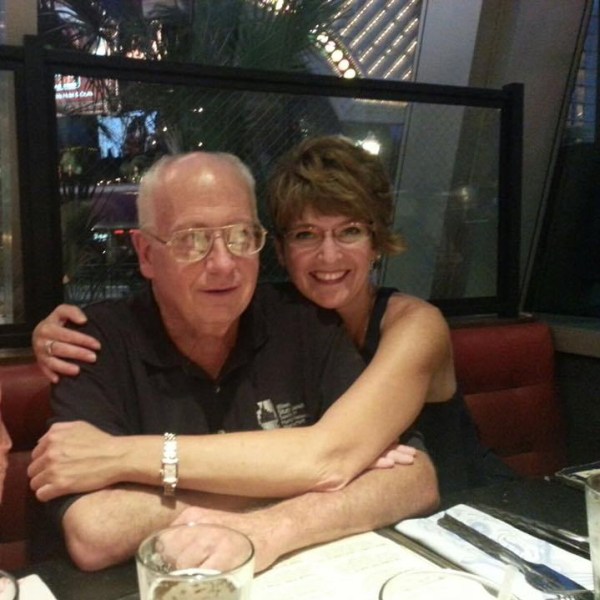
I love this picture. Heather Kinzie is about the only person who can ALMOST get John to smile for a picture.

Now, John doesn’t “cheer” in the conventional sense. There’s a running joke that you can never get a picture of John where he’s smiling. A few folks have come close – you can see a little twinkle in his eye! But don’t be fooled by that curmudgeonly exterior, for within beats a loyal heart. You only need to watch John at a conference to understand the depths of the friendships he’s forged. Hugs come from all sides. Long-time friends swap stories and jokes. Many a tasty lunch is shared.

John has made an impact to the HR community – one we may not always notice, but one we always appreciate.

So, John – happy YOU day. Thank you for your continued friendship.

And try to do a little better on those football picks, will ya?

The “problem” is not the problem

I apologize to those of you out there looking for a return to the leadership content I often post here. This post is fairly HR-centric…although there are definitely leadership underpinnings, because doesn’t everything have leadership underpinnings? That’s just a fancy way of saying I want to share some thoughts that may or may not pertain to you. Also, the title comes from a quote from Captain Jack Sparrow in the Pirates of the Caribbean: “The problem isn’t the problem. The problem is your attitude about the problem.”

So here we go.


The online HR community has been growing, which is a good thing. In the early days, there was a handful of HR pros out on social media, blogging, tweeting, doing their thing. That number has grown exponentially, resulting in a wider network for people to connect with others who are doing the same work and facing the same problems. There are more bloggers, more tweeters, more voices out in the universe sharing their thoughts. Not everyone agrees with everyone else, and I think that’s a good thing. Healthy conflict drives innovation. Let’s do it.

Then there was a hashtag.

When the #HRTribe hashtag first appeared, some people loved it, some people were indifferent, and some people were really bothered by it. In the early days, though, it wasn’t really talked about openly. It was sort of a “meh, whatever” situation. Hashtags come and go, no skin off anyone’s nose.

A little time goes by and some folks begin to voice their discomfort with the term. The reasons are varied – the idea of the need for any label at all is a bit off-putting; there’s an “us vs them” exclusionary mentality growing; the word “tribe” itself holds a specific meaning and is being misused in this context. Like I said…a lot of variety in those reasons.

For the record, I’m not a huge fan of the term. I’m hovering somewhere between uncomfortable with the word “tribe” and “why do you need a label” in my reaction to it. I’m not militant about it. I just don’t use the hashtag. Early on in the growth of it, I suggested that if people really wanted to make it “inclusive,” maybe they should stop tagging specific folks on Twitter because it was sending a different message than was intended. That seemed to be good. I moved on, once gain – not using the hashtag, but not getting all up in arms about it, either.

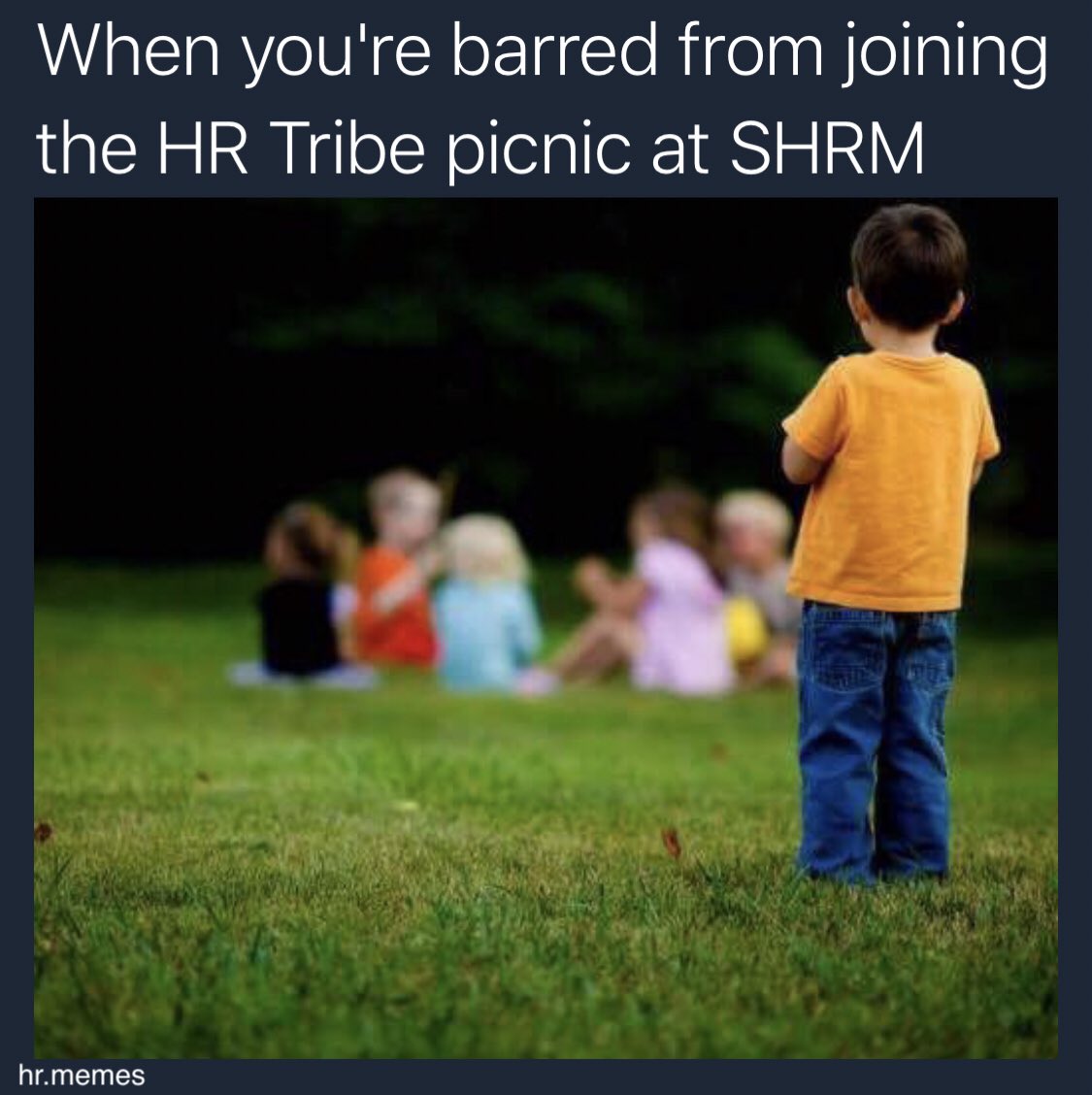
But then hrmemes (a satirical instagram/twitter account, by the way – sort of like The Onion) posted a fairly funny image about the #HRTribe stuff:

(Seriously – this is funny.)

The resulting discussion on Facebook was…enlightening. Suddenly, people who had stayed quiet about the issue started speaking out, and frankly, I was surprised at the number of folks who shared they had felt excluded because of the hashtag. That they felt like there was a wall put up between them and those who would use it. And that they were somewhat afraid to speak out because they didn’t want to “stir the pot.”

Huh.

Look, I’m okay with people wanting to feel like they are part of a community. If a hashtag helps you feel connected, great. Godspeed. #blessed. Whatever.

But there are things I’ve seen and heard that bother me. And it’s primarily around how those who are pro-hashtag are responding to those who have said they don’t like it.

This is what I said on the Facebook discussion, and I stand by it:

Here’s an observation from seeing the discussion on HR Tribe usage across all social media platforms. I keep seeing those who like the term dismiss the experiences or views of those who dislike the term. When specific examples of exclusion are given, they tend to be dismissed because the intent isn’t exclusionary. 

I get that.

And yet, here we are, a bunch of HR professionals who are supposed to listen to people’s stories and meet them where they are in their experiences…telling them they’re wrong. 

I’m bothered by that.

Regardless of how you feel about the use of the term, it’s the reaction of those around it that is starting to rub me wrong. Replace “I felt excluded” with “I felt harassed” and suddenly it takes on a different flavor, doesn’t it? 

No…HR Tribe is NOT an earth-shattering thing that we should lose our collective shit over. But maybe the way we’re talking about it should be.

Notice the focus – it’s not on the hashtag. It’s on the way we are talking about the hashtag.

I am disappointed that there are HR professionals dismissing the concerns of their peers in a manner that is disrespectful. I am bothered that some are HR professionals trying to convince someone who has shared their discomfort that it’s the other person’s fault that they misread the intention and that if they just tried it they would like it. I am seriously rolling my eyes when I see HR professionals reacting passive aggressively or rudely when someone has shared that they feel excluded because of the term.

How people are talking about this reflects how they would handle any controversial topic in the workplace. We are supposed to be a group of people that employees can go to and share their concerns. If someone came to you and said, “Ted from Accounting is making me feel uncomfortable,” should the response be, “Oh, Ted doesn’t mean anything by it. He’s just a friendly guy. You just misunderstood what he was doing”? I would hope not. And PLEASE don’t come at me and argue that a meme isn’t the same as harassment – yeah, I know. But it’s not a giant leap in logic, either.

Frankly, I’m shocked at the amount of passion and emotion around this thing. Some people have really doubled-down on their viewpoint. It’s a freaking hashtag. Yet it apparently has triggered some discussions that need to happen.

To be clear, there have been a number of people who love the hashtag who have said, “I get what you’re saying. Thanks for sharing. I’m still going to use it, but I will be more aware of how it makes people feel.” I love that. There are people listening, reflecting, and then making a conscious choice for a specific reason. There are also a number of people who have reached out and said, “I am glad someone said it. The tribe thing has bothered me for a long time but I didn’t want to say anything.” I love that, too. It means people want to have the conversation.

If we are going to be a profession that claims we can be a safe space for employees to bring forward their #metoo moments, or anything else that breaks the law, then we need to prove it. As Dominique Rodgers said during a Twitter conversation: If a group of kind, educated professionals can’t have this slightly awkward conversation, our nation has no hope for the much bigger awkward conversations that need to happen. Please don’t retreat. We value all perspectives. Promise.