Who engages the engagers?

In an earlier post,  I wrote about the importance of your employees caring about what they do – not just for discretionary effort, but some effort of ANY kind.  What I didn’t really talk about was whether or not YOU as a leader care,  and whether or not someone cares if you care.

It’s tough to be a leader/manager/boss.  The Man isn’t supposed to get tired or frustrated, and isn’t supposed to want to throw his hands in the air and say, “To hell with this.  Screw you guys…I’m going home.”  No, when you’re the Head Honcho, you are expected to maintain a level of polished professionalism and be a pillar of inspiration for your people in times of stress and woe.  After all, your ability to stay focused and on message in the good times and the bad is why you get paid the big bucks and why you have a “World’s Greatest Boss” mug on your desk.  As the boss, you are gifted with the remarkable talent of letting stress and disillusionment pass over you without any of it sticking on your Teflon-coated psyche.

Well, that’s a bunch of crap.  You and I both know that leaders can often hit burnout long before their employees do.  This is due to a number of factors:

  • The leaders know more about what’s going on than the average employee (and sometimes the news isn’t good)
  • The leaders are keeping the crazies at bay so the team can get some actual work done
  • The leaders ARE working hard to keep the team motivated and inspired during down times (and it’s really exhausting)

In some ways, it’s like being a secret agent (stick with me here).  Like a spy, leaders must compartmentalize their professional existence – there’s one persona for peers, there’s another for dealing with the boss, there’s another for handling stakeholders, and still another for interacting with employees.  Leaders must filter their communication for each audience, ensuring they are creating the right context and providing the appropriate information at the right time.  It’s no wonder that some leaders start to feel detached.

picard_engage
Yup. Cheesy Star Trek reference – “Engage.” What did you expect? Oh, and the title of this post is based on a ST:TNG episode. So there.

Engagement studies continue to support that the longer an employee/leader is with the company, the higher the engagement level.  They also suggest that those in leadership positions tend to be more engaged than those in lower levels (presumably because they have more visibility and autonomy).  However, when you look at the data, you also see that while engagement goes up, the number of people who are classified as “crash and burn” stays pretty constant.  This is worrisome, since we DO look to our leaders as voices of reason, sanity and stability when things go south.

I’ve talked before in passing about the fact that as you ascend in an organization, you tend to get less feedback and support.  This is particularly true when it comes to keeping you, the leader, engaged.  There seems to be this unspoken rule that once you’ve joined the management ranks, you no longer need someone else to help recharge your batteries – we gave you a promotion…it’s YOUR job to stay committed.

So what’s a disillusioned, disengaged leader to do?  A few suggestions:

  • Don’t let work be your only identity: Some leaders burn out because they make The Job their everything.  It’s not.  Find a hobby that lets you burn off some steam.  Exercise.  Take up knitting.  Be a LARP-er.  Whatever floats your boat.
  • Find an “engagement buddy”: There’s a good chance other leaders are feeling the same way you are and just need someone to talk to about it.  Find a trusted peer who knows you well enough to call you on your bullshit when you get whiny, and who you feel comfortable calling out when THEY get whiny.  I know from personal experience that this support system can get you through some really awful situations.
  • Regularly assess your engagement levels: Engagement isn’t an on/off switch.  it’s a continuum that changes often…sometimes minute to minute.  There are a lot of scales you can use to help assess where you are on that engagement continuum (seriously – Google it).  Pick one that works for you and self-monitor.  Neuroscience tells us that labeling a feeling or emotion helps us handle it better.  Label your engagement level so you can deal with it.
  • Talk to your boss: This suggestion isn’t for everyone, but hopefully you have the benefit of a leader who will listen to you when you have an issue like this.  Now, this isn’t a conversation that starts with you plopping your butt down in the chair and saying, “I HATE MY JOB.”  That probably won’t go well.  Start the conversation by stating that your goal is to continue to add value to the organization and that you’re concerned that you may be losing a little bit of that drive and need some feedback on how things are going.  Depending on your relationship, you might even share your engagement continuum scale, share where you see yourself more often than not, and then BE SOLUTION FOCUSED.  Come with some ideas on how you might re-engage, and share what you need from your leader.
  • Decide if it’s worth it: If your engagement levels are constantly in the “about to go postal” range, AND you aren’t getting the support you need, AND you see no end in sight…it may be time for you to decide whether or not you’re in the right role and/or right company.

No one said being a leader was going to be easy (hence the name of this blog).  So much of what leaders do must be intrinsically motivated, and it’s easy to forget to self-monitor your own state of engagement.  Take some time to keep the batteries charged – because if YOU’RE not engaged, your team will definitely see it.

What suggestions do you have for keeping yourself engaged?  Share in the comments below!

Put me in, Coach! (what you’re missing when you leave people on the bench)

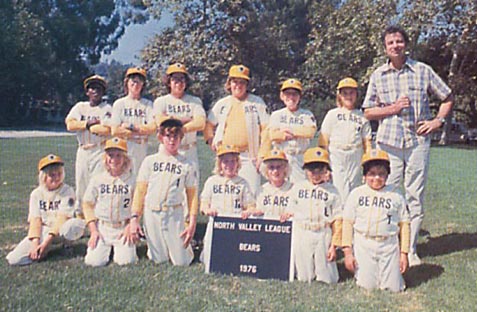
You know how in a lot of movies and TV shows, there always seems to be a plot twist in which the team finds itself in trouble and the dashing lead runs out of ideas…and then the goofy misfit they let tag along for the ride suddenly saves the day.  Take The Bad News Bears (but make sure it’s the 1976 version, ’cause the remake sucked).  This was a team of kids who shouldn’t have been able to do anything useful – they couldn’t hit, couldn’t throw, couldn’t field…and yet they managed to win a Little League championship.

My point here is that each member of your team has the potential to contribute something pretty awesome to your overall success.  And maintaining the status quo simply because you are in “if it ain’t broke, don’t fix it” mode can have some pretty big consequences to both your team and your business.

Here are a few reasons to get your people in play:

  • It keeps them engaged: It’s hard enough to get your employees to care about the day-to-day of their job.  Your employee might be secretly waiting to unleash his/her brilliance unto the universe…but you’ve got that person doing data entry because you’ve got bigger fish to fry.  According to a SHRM engagement study, 75% of respondents named “opportunities to use skills/abilities” as a top engagement aspect.  Surprisingly, no one listed “being left alone to try and figure out how to stay busy” as a top factor for engagement.  How ’bout that.

    bad-news-bears
    (Did you know Kelly Leak was played by Jackie Earle Haley? No kidding!)
  • You don’t know everything: You might think that everything is fine and therefore there is no need to get one of your resident experts involved, but guess what – you are not the expert, so it’s possible you don’t realize that your resident expert needs to be involved.  Your employees might bring a fresh perspective to an existing problem that allows you to reach a solution, and they get to feel awesome doing it.  Sounds like a win-win. Oh, and if your expert comes to you and suggests how you might be able to use him/her in a way that will add value, don’t brush them off.  It’s uncool.
  • Improves response time: We all know that the status quo is just WAITING to explode at some point.  By keeping your employees in the regular rotation, they are kept up to speed and can proactively help you respond to potential issues.  If you wait until things go south before bringing in your closer, you’re going to lose precious time bringing them up to speed, getting them focused, and hoping they don’t resent the fact that your lack of planning may have created their emergency.
  • Helps you keep ’em: The days of people just wanting to keep ANY job are over.  People understand that their job isn’t the be all, end all of their happiness, but they also know that they spend a lot of time at work and want to be relatively happy while they are there.  Remember that whole “opportunities to use skills/abilities” stat?  Turns out that is the NUMBER ONE factor for job satisfaction in that SHRM study.
  • Your business will be better: There’s been some talk in the research about “passion vs. engagement” (see this report from Deloitte for details).  Basically, the research argues that engagement is all well and good for a relatively stable world, but to be able to thrive in chaos, passionate employees are where it’s at.  Passionate employees improve your business results and set you up for the long term because these employees are willing to stay with you through the good times and the bad, and are excited to take on new challenges and move the company forward.

It’s not worth waiting until a crisis to involve your people.  Don’t make your people beg to be involved.  Chances are, most of them are sitting on the sidelines, just waiting for a chance to get in the game and contribute.

I don’t believe in team motivation. I believe in getting a team prepared so it knows it will have the necessary confidence when it steps on a field and be prepared to play a good game.
– Tom Landry

Have a suggestion on how to keep your people involved?  Or maybe a story about how YOU got in the game?  Share in the comments!

Honey badger don’t care…and why you’d better hope your people do

Ahhhh, the honey badger.  This wily little mammal nestled itself in our pop culture consciousness through the use of clever narration over a documentary film.  I love the honey badger.  But you know what?  Honey badger don’t care.  He doesn’t need my love.  Honey badger just doesn’t give a shit.

The thing is, most of us are NOT honey badgers.  We care a LOT about things…some are important (like the safety of loved ones), some aren’t (like the jerk who cut you off in traffic).  Human beings are an emotional species that tends to act on those emotions.  That’s why we’re always talking about “finding our passion” and “following our bliss” and other fluffy stuff that telegraphs  the fact that we tend to only work hard at something when we give a damn about it.

Call it whatever you want – be engagement, mojo or flow – but really what it comes down to is caring.  Engagement studies from BlessingWhite and TowersWatson (why don’t these firms ever have spaces anymore?) provide analysis around attraction and retention drivers, and basically all of them fall into two buckets – what’s in it for me? and why should I care?  (I’ll break these buckets down in a future post.)

honey_badger

Engagement definitions almost always include the concept of “discretionary effort”, or going above and beyond what is expected.  And companies need employees who are willing to give discretionary effort because they’re the ones who typically move a project over the finish line, get a company unstuck, and generally make the workplace better.

What I’m talking about is flat out EFFORT.  Do employees CARE enough to do the bare minimum of their jobs? Are they willing to work a full day at an acceptable level of effort and intensity?

Think about your workplace (or a past workplace).  What are most of the people doing most of the time?  If you have employees who CARE, you’ll hopefully see competent people doing their jobs, coming in on time and also leaving right when they are supposed to.  Occasionally you’ll see the over-achievers and ultra-engaged burning the midnight oil.

But what if employees don’t CARE?  I don’t mean the fully disengaged, out to bring down the company people.  Just…folks with jobs who don’t particularly worry about how well or what they’re doing. People wander in a few minutes late every day; they linger over longer lunches; they “sneak out” a couple of minutes early.  These seem like minor offenses…but what can they lead to?

    • Box-checking projects through the company because “it’s above their pay grade” to question its value
    • Incredibly quiet, low energy workspaces
    • A gradual erosion of morale
    • A culture of mediocrity
    • An exodus of A players
    • Dogs and cats living together…mass hysteria!!

It’s hard to be fanatically engaged ALL the time.  People need to take a break now and then, and that’s okay.  But hopefully in their downtime, they still give a darn about what they do.  They ask the right questions, push back when appropriate, and make good decisions based on critical factors – not because they are highly engaged, but because they care about the company, their job, and doing the right thing.

So while engagement is important and helps drive your business and retention of talent, don’t forget about the simplicity and power of having employees who simply CARE.

The thing is, Bob, it’s not that I’m lazy, it’s that I just don’t care.

– Peter Gibbons

How do you get your employees to care? How do you know your employees care?  Do YOU care?  Leave a comment below.  HONEY BADGER WANTS TO HEAR FROM YOU!!!