Put me in, Coach! (what you’re missing when you leave people on the bench)

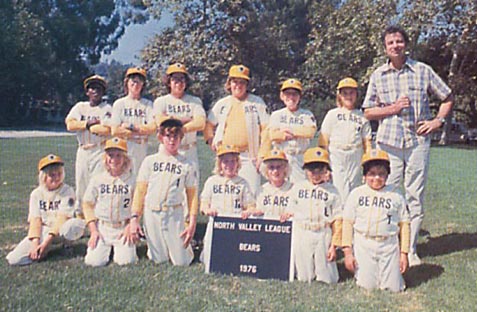
You know how in a lot of movies and TV shows, there always seems to be a plot twist in which the team finds itself in trouble and the dashing lead runs out of ideas…and then the goofy misfit they let tag along for the ride suddenly saves the day.  Take The Bad News Bears (but make sure it’s the 1976 version, ’cause the remake sucked).  This was a team of kids who shouldn’t have been able to do anything useful – they couldn’t hit, couldn’t throw, couldn’t field…and yet they managed to win a Little League championship.

My point here is that each member of your team has the potential to contribute something pretty awesome to your overall success.  And maintaining the status quo simply because you are in “if it ain’t broke, don’t fix it” mode can have some pretty big consequences to both your team and your business.

Here are a few reasons to get your people in play:

  • It keeps them engaged: It’s hard enough to get your employees to care about the day-to-day of their job.  Your employee might be secretly waiting to unleash his/her brilliance unto the universe…but you’ve got that person doing data entry because you’ve got bigger fish to fry.  According to a SHRM engagement study, 75% of respondents named “opportunities to use skills/abilities” as a top engagement aspect.  Surprisingly, no one listed “being left alone to try and figure out how to stay busy” as a top factor for engagement.  How ’bout that.

    bad-news-bears
    (Did you know Kelly Leak was played by Jackie Earle Haley? No kidding!)
  • You don’t know everything: You might think that everything is fine and therefore there is no need to get one of your resident experts involved, but guess what – you are not the expert, so it’s possible you don’t realize that your resident expert needs to be involved.  Your employees might bring a fresh perspective to an existing problem that allows you to reach a solution, and they get to feel awesome doing it.  Sounds like a win-win. Oh, and if your expert comes to you and suggests how you might be able to use him/her in a way that will add value, don’t brush them off.  It’s uncool.
  • Improves response time: We all know that the status quo is just WAITING to explode at some point.  By keeping your employees in the regular rotation, they are kept up to speed and can proactively help you respond to potential issues.  If you wait until things go south before bringing in your closer, you’re going to lose precious time bringing them up to speed, getting them focused, and hoping they don’t resent the fact that your lack of planning may have created their emergency.
  • Helps you keep ’em: The days of people just wanting to keep ANY job are over.  People understand that their job isn’t the be all, end all of their happiness, but they also know that they spend a lot of time at work and want to be relatively happy while they are there.  Remember that whole “opportunities to use skills/abilities” stat?  Turns out that is the NUMBER ONE factor for job satisfaction in that SHRM study.
  • Your business will be better: There’s been some talk in the research about “passion vs. engagement” (see this report from Deloitte for details).  Basically, the research argues that engagement is all well and good for a relatively stable world, but to be able to thrive in chaos, passionate employees are where it’s at.  Passionate employees improve your business results and set you up for the long term because these employees are willing to stay with you through the good times and the bad, and are excited to take on new challenges and move the company forward.
It’s not worth waiting until a crisis to involve your people.  Don’t make your people beg to be involved.  Chances are, most of them are sitting on the sidelines, just waiting for a chance to get in the game and contribute.

I don’t believe in team motivation. I believe in getting a team prepared so it knows it will have the necessary confidence when it steps on a field and be prepared to play a good game.
– Tom Landry

Have a suggestion on how to keep your people involved?  Or maybe a story about how YOU got in the game?  Share in the comments!

Honey badger don’t care…and why you’d better hope your people do

Ahhhh, the honey badger.  This wily little mammal nestled itself in our pop culture consciousness through the use of clever narration over a documentary film.  I love the honey badger.  But you know what?  Honey badger don’t care.  He doesn’t need my love.  Honey badger just doesn’t give a shit.

The thing is, most of us are NOT honey badgers.  We care a LOT about things…some are important (like the safety of loved ones), some aren’t (like the jerk who cut you off in traffic).  Human beings are an emotional species that tends to act on those emotions.  That’s why we’re always talking about “finding our passion” and “following our bliss” and other fluffy stuff that telegraphs  the fact that we tend to only work hard at something when we give a damn about it.

Call it whatever you want – be engagement, mojo or flow – but really what it comes down to is caring.  Engagement studies from BlessingWhite and TowersWatson (why don’t these firms ever have spaces anymore?) provide analysis around attraction and retention drivers, and basically all of them fall into two buckets – what’s in it for me? and why should I care?  (I’ll break these buckets down in a future post.)

honey_badger

Engagement definitions almost always include the concept of “discretionary effort”, or going above and beyond what is expected.  And companies need employees who are willing to give discretionary effort because they’re the ones who typically move a project over the finish line, get a company unstuck, and generally make the workplace better.

What I’m talking about is flat out EFFORT.  Do employees CARE enough to do the bare minimum of their jobs? Are they willing to work a full day at an acceptable level of effort and intensity?

Think about your workplace (or a past workplace).  What are most of the people doing most of the time?  If you have employees who CARE, you’ll hopefully see competent people doing their jobs, coming in on time and also leaving right when they are supposed to.  Occasionally you’ll see the over-achievers and ultra-engaged burning the midnight oil.

But what if employees don’t CARE?  I don’t mean the fully disengaged, out to bring down the company people.  Just…folks with jobs who don’t particularly worry about how well or what they’re doing. People wander in a few minutes late every day; they linger over longer lunches; they “sneak out” a couple of minutes early.  These seem like minor offenses…but what can they lead to?

    • Box-checking projects through the company because “it’s above their pay grade” to question its value
    • Incredibly quiet, low energy workspaces
    • A gradual erosion of morale
    • A culture of mediocrity
    • An exodus of A players
    • Dogs and cats living together…mass hysteria!!

It’s hard to be fanatically engaged ALL the time.  People need to take a break now and then, and that’s okay.  But hopefully in their downtime, they still give a darn about what they do.  They ask the right questions, push back when appropriate, and make good decisions based on critical factors – not because they are highly engaged, but because they care about the company, their job, and doing the right thing.

So while engagement is important and helps drive your business and retention of talent, don’t forget about the simplicity and power of having employees who simply CARE.

The thing is, Bob, it’s not that I’m lazy, it’s that I just don’t care.

– Peter Gibbons

How do you get your employees to care? How do you know your employees care?  Do YOU care?  Leave a comment below.  HONEY BADGER WANTS TO HEAR FROM YOU!!! 


I’m a peacock!!! (what to do when your boss won’t let you flap your wings and fly)

Development.  Growth.  Character building.  Resume expansion.  Skillz.

As employees, we are looking for more than a paycheck when we come to work.  We  hope the job is some sort of means to an end, whether it’s fulfilling our lifelong dream of being a CEO, or simply a chance to “pay our dues” or “learn something new” on the way to that mythical “perfect” job out there.

So when our manager keeps us from growing on the job, it gets us miffed.  Some might even say snippy. Or, in extreme cases, terribly vexed.

There’s data that support the general annoyance felt by employees whose growth has been stymied.  Engagement studies continue to indicate that career development is a key engagement factor for most employees.  In fact, less than half of all employees believe they have career opportunities with their current employer.  Interestingly enough, another key engagement factor is trust in leadership…so if you have a manager who lied about the development opportunities your position offers, you’re probably not terribly engaged at the moment.   And now we’re backed to being terribly vexed.

The good news is that you don’t need 100% buy-in from your manager in order to grow.  I happen to subscribe to the belief that employees should own their own development, and as such, it is up to us to find ways to demand a chance to flap our wings and fly.  (It’s a reference to The Other Guys.  You’re welcome.)

See?  He's not flying.  And he's sad.
See? He’s not flying. And he’s sad.

Without further ado, here are some suggestions on how you can “encourage” an uncooperative boss into helping you grow and develop:

  • Be specific about your requests: This is slightly more than just “ask for it” (which is still good advice, but may not work with this type of boss).  You need to know what it is you want to accomplish with your development.  If you say to me, “I want to develop.  Develop me.”, I wouldn’t want to help you either.  It’s too vague!  Get some specificity.  If you are looking for more budgeting experience, ask your boss if you can sit in on a financial review meeting.  If you want eventually to be a manager, volunteer to lead a few projects.  Just mapping out some specific development goals for yourself will help move you in the right direction.
  • Help your coworkers on projects outside of your skill set: This is an awesome way to grow…and to get brownie points for “teamwork”.  Yes, you’ll have to figure out the best way to prioritize your time so you still get your work done if your boss isn’t fully on board, but you’ll be amazed at how much you can learn from your teammates.  Each of us brings unique skills and experience to the table, and there is no cost to learning from each other.
  • Seek out a mentor in another department: Let’s face it – sometimes you take a job that isn’t the greatest because of the opportunity to work for a certain company.  But now you’re stuck in that department because your boss doesn’t care about your career development.  Unless you are physically chained to the desk, you can move about the office, building relationships in different departments and asking for advice and guidance from others.  (If you ARE physically chained to a desk, you may want to call HR.)  Seek out the people who already are what you want to be when you grow up and learn from them.
  • Volunteer with a local industry-specialized membership chapter: An excellent way to build your network within your industry is to belong to and volunteer with a local chapter of that industry’s organization (e.g., SHRM).  This will allow you to stay current in the latest and greatest within your chosen profession, you’ll meet lots of amazing people, make some great friends, and build your brand.  And you get to brag about the fact you volunteered.
  • Read: And that means more than just browsing the headlines on Yahoo! or glancing at your Twitter feed.  Pick a topic you’re interested in, that’s relevant to your development goals, and hunt down some great books…and commit to reading them!  (Here’s a list to get you started.)  I LOVE to read, so this one seems like a no brainer to me…but I know some folks would rather gouge their eyes out then sit still and read a book.  I get that.  So try an audio book (you can get them from libraries, iTunes, whatever).  If they make a movie from it, watch that (worked for Freakonomics).  Subscribe to some industry magazines.  Just find a way to stay up to date in a meaningful way that makes you think.

This is just a short list of things you can do to keep you growing and learning even if your boss seems determined to keep you stagnant.   Hopefully you see that it doesn’t take much to overcome the perceived obstacle of an uncooperative manager – each of us makes a choice about our own engagement.  Don’t settle for whining about your lack of growth – flap your own damn wings and fly!

Have a suggestion on how to harness your inner peacock?  Share in the comments!