Secret to success? Answer the question that’s asked

Business meetings can be evil things – long, aimless, soul-sucking gatherings where little is accomplished yet much is said.

You can point to a number of reasons:

  1. No one made an agenda
  2. Everyone is on their smartphones, checking email
  3. Someone brought donuts

Okay…maybe it’s not the donuts.  But if you pay attention, you’ll notice a pattern as people talk (and talk and talk).

No one answers any questions.

Oh sure, when someone asks a question, another person inevitably says something that’s supposed to sound like an answer.  There may be big words, emphatic gestures, perhaps even an attempt to gain buy-in (“Right?”).  Rarely, though, is the answer one that matches the question.

And yet…every so often…a hero emerges.

Someone who heard the question, considered it, and…miracle of miracles…ANSWERED IT ON ITS OWN MERITS.

This person looks like a freakin’ genius.

IF-YOU-COULD-8bclg7

Why would something as simple as answering a question matter?

  • It shows you listened: By addressing the concerns of the asker, you demonstrated an ability to pay attention rather than sing that little song to yourself in your head.  Listening = good.  Singing SexyBack in your head = bad.
  • It shows you care: Okay, it doesn’t make you a saint or anything, but addressing someone else’s concerns rather than advancing your own agenda is perceived as teamwork, leadership, and/or smartness.
  • It moves the meeting forward: Think about the circular nature of most business meetings. Sally says a general statement about how a process doesn’t work, Johnny asks what specifically isn’t working, Ted launches into a monologue about the state of technology in Western Europe…and then Sally mentions how the process doesn’t work.  If Sally or Ted would have said, “Well, Johnny, when you launch the workflow, it goes to the wrong person,” there’s a good chance the group could move on to solutions.  Instead, Ted got on a soapbox and Sally is rending her garments, keening about the process. [Ed. Note: Drama much?]

So how do you make sure you answer the question asked?

  • Pay attention: I know, right?  Be more obvious.  But it’s the truth.  And if there is an awkward pause because you suspect someone asked you a question and you weren’t listening, admit it and ask them to repeat the question.
  • Rephrase: Oldie but goodie.  This doesn’t mean you REPEAT the question, especially if it’s short (“so, you’re asking me if I ski?”). If the question is complex or not well-asked (it happens), take a moment to say something like, “I want to be sure I understand what you’re asking..”
  • Keep it short: The longer you talk, the more likely you are to get off on tangents.  Stick to the point and make yourself shut up once you’ve addressed the matter at hand.
  • Confirm: After you finish answering the question, ask, “Did that answer your question?” That way, the asker can get additional clarity without having to interrupt the next person who starts talking.

I know.  It’s pretty obvious.  But as we all know, common sense isn’t always common practice.

Next time you’re in a meeting, pay attention to the questions asked and the answers given.  Chances are, the person who actually answers the question that is asked is on the fast track to success.

Have a question you want answered? Ask it in the comments!
Labor Day Reminder – (Co)Workers Matter

According to Wikipedia,

Labor Day in the United States is a holiday celebrated on the first Monday in September. It is a celebration of the American labor movement and is dedicated to the social and economic achievements of workers. It constitutes a yearly national tribute to the contributions workers have made to the strength, prosperity, and well-being of their country.

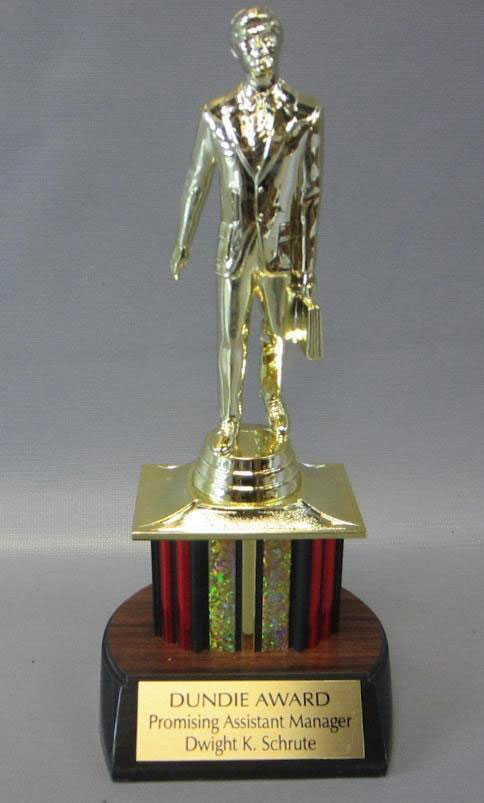
As you go about your preparations for a three-day weekend (hopefully), don’t forget to thank the people you work with and recognize the contribution they make.

dundee

Leaders, I know your employees sometimes drive you insane.

Employees, I know your leaders can make you want to poke your eyes out.

But the reality is we are all in this together.  No matter what kind of work you do, your organization, your industry, the people you work with shape your day-to-day experience.  They help determine whether or not you are in a good culture or a bad one.  They may lift you up when you’re feeling down, or help pop that ego when it gets a little too big.  They are your cheerleaders, your mentors, your sounding boards, your cranky neighbor who just wants those darn new hires to get off their lawn.

And yes…sometimes your coworkers are truly terrible.  And they contribute to an awful environment.  And they make you question whether it’s worth it.

But I wager that there is ONE person in your professional life who makes a difference.  That person deserves to hear from you.

So to everyone in my professional life – THANK YOU for your contribution to my strength, prosperity and well-being.


Now go eat some damn hot dogs.


Have a safe and fun Labor Day Weekend, everybody!

Efforts vs. Results: Do employees know the difference?

I recently read an article  day that referenced an infographic featuring the following statistic:

Nearly half (49 percent) of employees in a survey revealed that they would leave their current job for a company that recognized employees for their efforts and their contributions.

Really.  Nearly HALF of all employees would leave their job.

I know I’m cynical, but that seems awfully high, especially in a volatile economy.  So I reframed that statement (because I’m in HR and I know what reframing is), and I started thinking about whether or not the average employee would define recognition-worthy effort the same way management would.  I came to the following conclusion…

I don’t think they would.

In my career, I’ve been a part of many a performance review process, helping managers and employees alike understand why we do them, how we do them, and what the different ratings mean.  And it never fails that there is a severe disconnect between what the employee sees a extra effort and what the manager would call DOING YOUR JOB.

entitlement1024

Here’s a quick reminder for employees about the difference:

DOING YOUR JOB:

  • Showing up on time every day
  • Completing your work by the assigned deadline and in a quality manner
  • Being a decent human being to coworkers


EXTRA EFFORT:

  • Teaching others to do their jobs better
  • Identifying a more efficient way to do a task
  • Going above and beyond for a customer

Really, it’s about the difference between EFFORT and RESULTS.  Effort is good – managers want to see effort.  It’s an indicator that employees give a damn.  But guess what – results pay the bills, which means managers are more likely to recognize employees whose efforts yield results.  As an employee, I need to be aware of what will benefit the business and ensure my work is truly “value add.”  And I also need to communicate what I’m doing to my manager to ensure I’m aligned with his/her expectations.

Managers, you’re not off the hook for this one.  If your employees feel like you don’t notice their efforts, that’s on you.  It’s your job to give clear expectations for results and to provide meaningful feedback to your employees year-round. Too often managers are afraid to have a difficult conversation, telling employees “that was a a darn good try” all year…only to rate them lower in the annual review because nothing got done.  On the other hand, things come up that are out of the employee’s control that can keep their efforts from yielding the expected results.  So be a human being and acknowledge that.

Lack of recognition by managers is a real problem in many organizations, and it CAN lead to employees wanting to leave for a better job.  I also think misconstrued ideas of what recognition should look like leads to unrealistic employee expectations.

What do you think? Are employees being greatly unappreciated? Are managers being unfairly maligned for not rewarding employees for just showing up?  Share your thoughts in the comments.