SHRM and the art of leadership

This is a slightly different post today, and it’s pretty HR focused, but stuff is going on in the HR world that highlights leadership. This “stuff” also highlights the fact that leadership can look and sound very, very different – and still be 100% leadership.

For the uninitiated:

SHRM (the Society of Human Resource Management) announced earlier this year that it was launching a separate new certification for HR professionals. HRCI (Human Resources Certification Institute) will continue to offer the existing certification. If you want to read more about all this, click here, here, or even here.

This post isn’t about the new certification.

What I want to focus on is the way leaders in the HR community have stimulated conversation.6-blind-men-hans
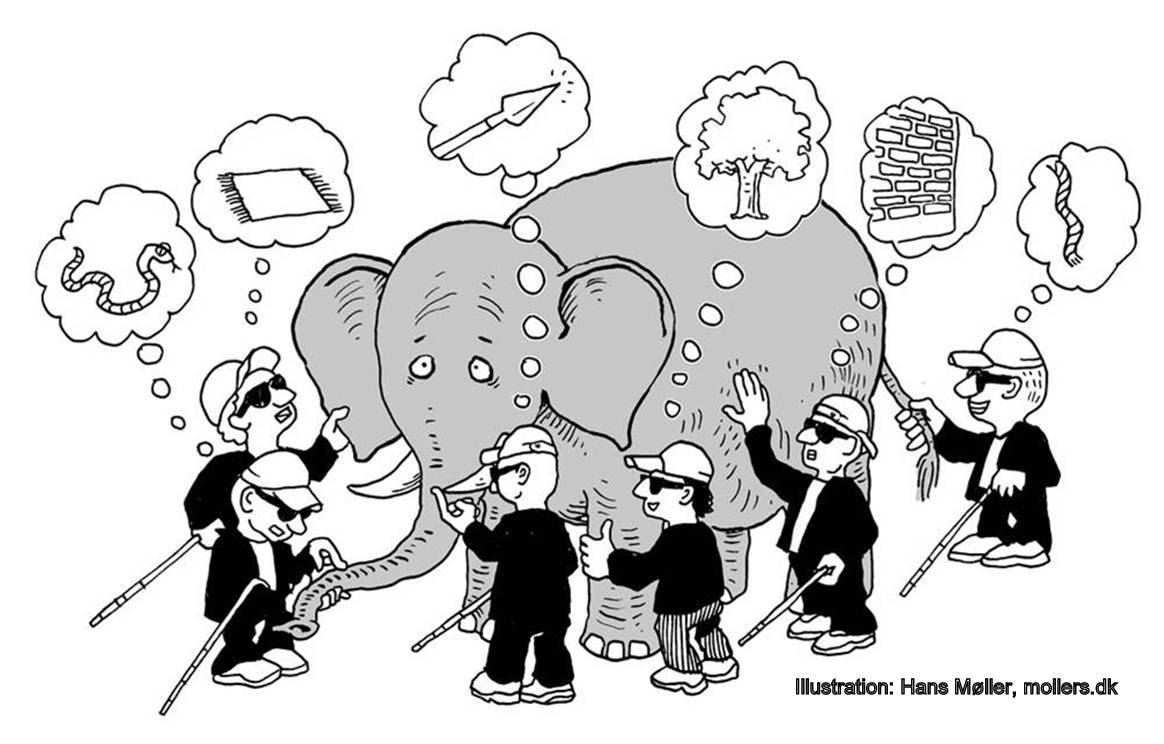
On the one hand, you have the esteemed Laurie Ruettimann – her approach has been to ask some very pointed questions about the need, efficacy and impact of the new certifications. You can read her excellent article about it here.  Go ahead, read it.  I’ll wait. Done?  Good.

On the other hand, you have the also-esteemed Steve Browne – his approach has been to focus on what the future can look like, and the progress that has been made since the announcement first happened. You can read his excellent take on the situation here. We’ll wait. It’s cool.

Chances are, you were provoked, annoyed, or in fervent disagreement with one of them, rolling your eyes at their comments. Or you may have been smiling, nodding emphatically, or fist-pumping because you totally agree with their comments. Either way, you’ve been exposed to two different perspectives and you thought about where you stood.

That means these folks are Leaders with a capital L.

I don’t mean leadership is about arguing. Leadership is about making people think. Or asking the tough questions. Or being optimistic about possibilities.

Leadership isn’t just about what YOU want it to look like. It takes all kinds, all voices, all backgrounds.

I love that Laurie and Steve come from different points of view. And I love even more that they keep the conversation going.

This, my friends, is what leadership looks like.

Keep the conversation going.  Post a comment here, post a comment for Steve and/or Laurie.  Let’s talk!

Control Yourself (or face the Wrath of Dilfer)

It’s funny how Trent Dilfer keeps saying things that relate to being a person in the modern workplace.

And people say sports analogies are overused. (They are, but stick with me here.)

In his post-game analysis of the “game” between Green Bay and Chicago, Trent Dilfer referenced the fact that an athlete can’t control who they play, when they play, or the conditions in which they play.  But they CAN control three things:

  • Their attitude
  • Their effort
  • Their energy

After dropping this knowledge bomb, Trent went on to rip into the Bears.

Regardless of your feelings about football, the Packers, the Bears, or even Trent Dilfer, the point he made is incredibly applicable to each of us working in the corporate jungle.

control

We don’t always have full control of with whom we work, the environment in which we work, the traffic in which we drive, the customers we serve, or the load of craziness that gets dumped on our desk every single day.

We do, however, have control over how we respond to it.

How you choose to control what you can control is up to you.  The point is…CONTROL it.  You won’t always be successful, but at least you won’t have any excuses.  Don’t set yourself up for embarrassment.  (I mean, 6 TDs in the first half, guys?? For shame, Bears.)

So my challenge to each of us as we make the final push towards the holidays and year end is to make our New Year’s Resolutions early.

I will check my attitude at regular intervals throughout the day, and ensure I’m controlling it and not the other way around.

I will put forth the appropriate effort in my work. If I’m working too hard on unimportant things, I will fix it.  If I’m not working hard enough on important things, I will figure out why…and I will fix it.

I will take care of myself to ensure I have the energy for both work and home, and I will prioritize my energy for the things that matter most.

Stay focused.  Keep control.  Do your best. Own the outcomes.

And don’t give Trent Dilfer a reason to make this face.

TD_frown


‘Do you want to play Questions?’ (your secret weapon)

Have you ever read/saw Rosencrantz & Guildenstern Are Dead?  It’s an amazing play turned into a very good movie about two of the throwaway characters in Hamlet whose claim to fame is that they are outwitted by the brooding prince and executed in England.

In one scene, the two play a game called “Questions” – they must, not so surprisingly, only speak in the form of questions. Hesitation, statements, or non sequiturs are not allowed.  If someone goofs, the other person scores a point (or forfeits, or however you want to play it).

In the play, the scene is meant to further illustrate the limits of language and futility in seeking existential knowledge.  But what it also does is remind us of the POWER of asking questions.

As leaders and as employees, we can benefit from playing our own version Questions when holding important conversations or when confronted with a potentially sensitive situation.  These conversations are filled with potential land mines – your innocent statement or observation could set the other person off because you didn’t know where they were coming from.If-you-ask-cp1weq

Forcing yourself to focus on questions rather than statements has a number of benefits.  You signal you’re willing to listen. Good questioning invites the other person in.  Questioning indicates you’re seeking understanding, rather than imposing your interpretation of events. When you ask questions, you actually have to listen to what the other person is saying, so that your next question makes sense in the context of the conversation.  And an added bonus, asking questions increases the chance that the other person might find their own solution.

There is, however, an art to using the questioning technique effectively.  After all, simply asking “How did that make you feel?” or “So you’re saying that customer was rude to you?” can sound condescending if that’s all you say.  Just follow the Questions rules:

  • No statements: Move the conversation forward with a question rather than your own statement. [And yes, I know that you will have to use SOME statements.  Just try to minimize them.]
  • No repetition: Stay engaged, pay attention.  If you find yourself repeating the other person’s words back to them, or ask the same question over and over, RE-ENGAGE.
  • No synonyms: It’s just a fancy way of repeating.  Show off.
  • No rhetoric: The intent of the questions is to seek clarity, not to stump the other person.  Does this mean every question you ask will be answered? No. But you should give them a fair chance.

So the next time you are in a scenario that could get messy, try following Rosencrantz and Guildenstern’s example.  Give yourself a deduction every time you break the rules and see how it turns out.  You might be surprised that all it took to defuse the situation was a few good questions.

“Words, words. They’re all we have to go on.”
― Tom Stoppard, Rosencrantz and Guildenstern Are Dead