Finding your voice (or…writer’s block sucks)

Full disclosure: I’ve started and stopped about 5 different posts today.

I come up with a title, write a sentence or two, and then stare at the computer.  Or my phone. Or the TV (Chopped is on, people!). It sucks. It’s frustrating. I hate it.

Rather than fight through and try to write a post that refuses to be written, I hit “save draft,” open a new window, and start writing a new post.

Lather. Rinse. Repeat.

I take this approach because forcing words down on the page results in a crappy product.  Stephen King once said that you should first write for yourself, then worry about the audience. He also says that you need stick to your own style because that’s the only way you’ll have truthiness – and I think he’s right.  I have to write in a way that feels true to my voice and my weird perspective on things or else the story and meaning falls flat.Stephen King

And so I keep changing my approach, trying on different topics to see if one “fits” better today so I can write the whole darn thing.

Writer’s block in leadership is sort of like this, but instead of trying to write a post that just won’t be written, you end up unable to lead –  saying the same things over and over again to your employees the exact same way and then end up surprised that they STILL aren’t changing their behavior.

You can break your “leader’s block” by following Stephen King’s advice. Rather than trying to go “by the book” and follow someone else’s leadership model or process to the letter, you need to first lead for yourself…then worry about your employees. Find your own voice and perspective – and the employees will respond.

Ask yourself:

  • Why am I a leader? Do I like being a leader?
  • Assuming I DO like being a leader, what do I like about it?
  • What do I think a leader’s job IS? Am I doing that job?
  • What are some aspects of other leaders I admire? How can I incorporate it into my personal style?

None of these questions is a cure for leader’s block on its own. It’s the equivalent of practicing your writing until your own perspective shines through. Leaders grow through experience, through trial and error. You owe it to yourself – and your employees – to break through your block and find your voice. Keep trying; keep leading; keep exploring.

Lather. Rinse. Repeat.

You learn best by reading a lot and writing a lot, and the most valuable lessons of all are the ones you teach yourself. – Stephen King

Failure is ALWAYS an option

There are those who would say “Failure is not an option.”

There are those who believe if you can go 60 seconds without making a mistake, you can go another 60 seconds, and then another, and then another…and therefore you should never make a mistake because all you need to do is string together a lifetime of 60 seconds of mistake-proof life.

There are those who berate their people for failing. Who chastise them in public, in private, or both.

FailureAnd to those people I say – you’re wrong.
Failure IS an option.  In fact, it is a necessity.

Without failure, we wouldn’t know what doesn’t work as we strive towards innovation.

Without failure, we wouldn’t appreciate the sweetness of success.

Without embracing our own failures, we teach our children that failure is unacceptable. And we wonder why children are either type-A stress balls or failure-avoiding underachievers.

Without learning from our failures, we are doomed to repeat them.

Learning HOW to fail is as important in learning how to win. In fact, it’s probably even more important because if you’re taking risks and living a big life, you will fail far more often than you will succeed.

So yes – failure is an option. So is success.  So is mediocrity. So is a life lived in quiet desperation.

Now ask yourself:

Are you brave enough to fail?

Finding balance in an unbalanced world

I struggle with the whole “work-life” thing.

I’ve never been good at moderation.  Typically, when I do something I go full-bore – if I’m focused, I’m VERY focused.  If I’m procrastinating, I am REALLY procrastinating. Seriously.  I rock at procrastination.

For many, this is a familiar feeling. We struggle with the demands of work.  We struggle with the demands of home. Hell, we struggle with the demands of a DVR backlog that just keeps growing.

It’s the little things that throw us off.

The only thing that really helps keep me sane is knowing that MOST people struggle with balance.

Leaders struggle to balance likability and accountability. Employees struggle to balance face time and results.

We all struggle with something.

Overwhelmed. Stressed. Frustrated. Burned out.

The stress of trying to maintain this balance impacts our health – so much so that sites like WebMD and the Mayo Clinic include tips on how to manage our lives.

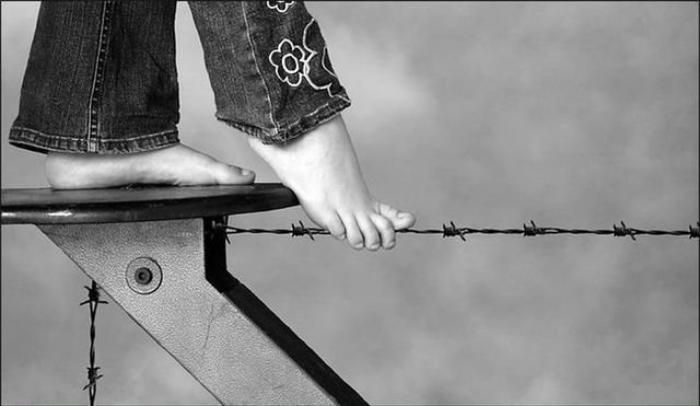
The challenge with finding balance is that it is so specific to each person and where that person is in his/her life.barbwire-high-wire

Work-life balance for a single person just starting out might mean working long hours and never unplugging, answering emails at all hours of the night – even when on vacation. Work-life balance for a new parent might mean leaving right at 4:00pm every day, spending time with the kiddos, and then logging back in late at night to finish up…or even having the chance to work from home when possible.

You can switch those two scenarios and STILL be right. Because balance isn’t something you dictate to someone else – it’s something each person must find on their own.

As leaders, the best we can do is help our people find their balance while still achieving expected results (and results shouldn’t always require face time). This means setting realistic, adaptable goals; learning that setting all priorities to “high” is not practical; and accepting that life happens to us all.  Leaders should remove obstacles – not create them.

As employees, we can help ourselves by communicating our needs for balance, setting boundaries, and working with our leaders to find ways to ensure the work gets done without going insane. This means getting our work done in a timely fashion with high quality; being present when we are at work; and NOT taking advantage of our teammates who may have different definitions of work-life balance. Employees should provide suggestions – not excuses.

To illustrate the personal nature of finding balance, I want to share a few ideas I have for me.  Remember, these may or may not work for you – but hopefully it will get you thinking about how you can find your own balance:

  • Get moving: I am not what I would call an “exercise lover”, but I do notice lower stress and better energy when I have a regular exercise program.  So I do my best to run, work out, walk around, whatever it is. I’m hoping my new Up24 helps keep me on track in this respect.
  • Get organized: I’m pretty organized…but I don’t always act on that plan.  Because I can be so busy I end up doing nothing, I need to use my love of to do lists to my advantage.
  • Save my best for home: I’ve heard this from several colleagues – we give our all at work…to the point we are completely spent when we are with the people we love. Work will get what it needs to get done, but my “real life” deserves more.
  • Choose unbalance when it makes sense: As author Alain De Botton once said, “everything worth fighting for unbalances your life.” The operative word here is choose. Moving forward, innovation, change – all of these require some manner of unbalance, and I will decide when that’s the best path.
  • Do more stuff I enjoy: I like writing. I like reading. I like chatting with my network of online friends.  I like saving baby pandas on my iPad. I like going out to eat and having fun. I want to do more fun things, and fewer things I “have” to do. This is my motivation to do everything else on this list.

This isn’t everything I’m working on to find my balance, just a sample. But it’s a start.

Comparison is the thief of joy. ~Theodore Roosevelt

How are you finding balance in an unbalanced world? Share in the comments!