Put me in, Coach! (what you’re missing when you leave people on the bench)

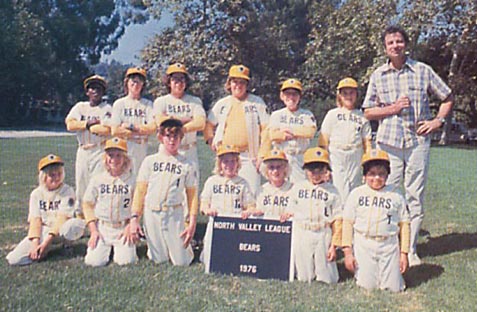
You know how in a lot of movies and TV shows, there always seems to be a plot twist in which the team finds itself in trouble and the dashing lead runs out of ideas…and then the goofy misfit they let tag along for the ride suddenly saves the day.  Take The Bad News Bears (but make sure it’s the 1976 version, ’cause the remake sucked).  This was a team of kids who shouldn’t have been able to do anything useful – they couldn’t hit, couldn’t throw, couldn’t field…and yet they managed to win a Little League championship.

My point here is that each member of your team has the potential to contribute something pretty awesome to your overall success.  And maintaining the status quo simply because you are in “if it ain’t broke, don’t fix it” mode can have some pretty big consequences to both your team and your business.

Here are a few reasons to get your people in play:

  • It keeps them engaged: It’s hard enough to get your employees to care about the day-to-day of their job.  Your employee might be secretly waiting to unleash his/her brilliance unto the universe…but you’ve got that person doing data entry because you’ve got bigger fish to fry.  According to a SHRM engagement study, 75% of respondents named “opportunities to use skills/abilities” as a top engagement aspect.  Surprisingly, no one listed “being left alone to try and figure out how to stay busy” as a top factor for engagement.  How ’bout that.

    bad-news-bears
    (Did you know Kelly Leak was played by Jackie Earle Haley? No kidding!)
  • You don’t know everything: You might think that everything is fine and therefore there is no need to get one of your resident experts involved, but guess what – you are not the expert, so it’s possible you don’t realize that your resident expert needs to be involved.  Your employees might bring a fresh perspective to an existing problem that allows you to reach a solution, and they get to feel awesome doing it.  Sounds like a win-win. Oh, and if your expert comes to you and suggests how you might be able to use him/her in a way that will add value, don’t brush them off.  It’s uncool.
  • Improves response time: We all know that the status quo is just WAITING to explode at some point.  By keeping your employees in the regular rotation, they are kept up to speed and can proactively help you respond to potential issues.  If you wait until things go south before bringing in your closer, you’re going to lose precious time bringing them up to speed, getting them focused, and hoping they don’t resent the fact that your lack of planning may have created their emergency.
  • Helps you keep ’em: The days of people just wanting to keep ANY job are over.  People understand that their job isn’t the be all, end all of their happiness, but they also know that they spend a lot of time at work and want to be relatively happy while they are there.  Remember that whole “opportunities to use skills/abilities” stat?  Turns out that is the NUMBER ONE factor for job satisfaction in that SHRM study.
  • Your business will be better: There’s been some talk in the research about “passion vs. engagement” (see this report from Deloitte for details).  Basically, the research argues that engagement is all well and good for a relatively stable world, but to be able to thrive in chaos, passionate employees are where it’s at.  Passionate employees improve your business results and set you up for the long term because these employees are willing to stay with you through the good times and the bad, and are excited to take on new challenges and move the company forward.
It’s not worth waiting until a crisis to involve your people.  Don’t make your people beg to be involved.  Chances are, most of them are sitting on the sidelines, just waiting for a chance to get in the game and contribute.

I don’t believe in team motivation. I believe in getting a team prepared so it knows it will have the necessary confidence when it steps on a field and be prepared to play a good game.
– Tom Landry

Have a suggestion on how to keep your people involved?  Or maybe a story about how YOU got in the game?  Share in the comments!
It’s good to be the king…except when it isn’t

You’ve heard them, those fateful words mumbled by frustrated employees under their breath when they’re angry. You, in fact, may have mumbled the words yourself at one time or another.

“I don’t know why the boss looks so stressed. She’s got it made.” Or…

“He has no idea what he’s doing.” Or the ever-popular…

“Well, when I’m in charge, that would NEVER happen.”

Right. Because being the boss is the easiest job in the world. That’s why everyone is so darn good at it. (Yes. That was sarcasm, for those of you scoring at home.)

Listen, I get why so many people get mad at their boss. There are some really bad ones out there. And there are some good people out there just trying to do their best in a crappy situation. Sometimes it really does suck to be in charge. Here are some reasons why The Man deserves a little slack now and then:

  • It’s lonely at the top: Yeah, when you’re promoted you get an office (usually) and a parking space (occasionally). But think about what you lose – you are no longer “one of the gang”. You have to be very careful about what you say and to whom you say it, particularly the higher up you go in the company. This can be a pretty jarring shift. And you feel like you’re cut off just when you need someone to talk to the most.
  • Bosses have to fire people: Only the most evil, psychopathic bosses are unaffected by firing people. Even when it’s absolutely the right thing to do and it’s best for the company (and even the employee), firing people is awful. Yes, you can get through it professionally and with empathy, but it still impacts you before and after the fact.f_bomb
  • There’s a LOT more accountability: Back in the day, when you were a hot shot individual contributor, you could get away with only being responsible for your own stuff and getting out of the way when others failed. Well, guess what – as the boss you don’t get to do that any more. Now, you’re responsible for the results of the TEAM…and YOUR boss is going to hold you accountable for their actions. This can lead to a lot of sleepless nights and uncomfortable staff meetings if you’re not on the ball and managing your people appropriately.
  • Other People’s Problems (drama): Remember how sometimes you would just walk into your boss’s office and “vent” – dumping your problems on his/her shoulders? Yeah…now people try to dump their problems on you. And even if you have amazing deflecting skills, you’ll still have to listen to their issues because there may be an obstacle buried in that rant you need to help remove so your employee can be successful. And you know how sometimes two team members get into a turf war over something as stupid as who gets the good whiteboard markers? Before you were the boss, you were allowed to walk away…even laugh at it. Now, you’ve got to deal with it because it’s impacting the overall performance of your team and you are responsible for your team’s results. Fun, huh? (You can still laugh at it, though. Just do it out of earshot.)
  • People expect you know know EVERYTHING that’s going on..and share it: The truth is, many bosses are just as much in the dark about the whys and whats as most employees. Butin a lot of cases, they DO know what’s going on but can’t share the information because it’s confidential. Employees don’t care. They want info and they want it now! As a boss, you have to be able to balance the challenges of transparency and confidentiality. And that can be very tiring, especially if you’ve forgotten to check with your boss about what the message should be.

Don’t let this list scare you – there are are lot of cool thing about being a boss. You get to see people reach their full potential; you have more opportunities to impact what is going on in the workplace; you are personally challenged; etc. And yes, you often get a kick ass office. But for every high, there is a low. For every perk, there is a challenge. Just try and remember that your boss is a human being and even he/she has crappy days. Most bosses are just doing the best they can.

What are some challenges you’ve faced as a boss that you wish your employees understood better? Share in the comments!

10 (really!) things leaders do that make me happy…or at least not cry

In my last post(s), I shared a number of things that leaders do that make me cry.  I figured it would only be fair for me to spread a little love into the universe and share some of the good things that leaders do (believe it or not, good things DO happen in the workplace).

I’ll admit…it was tough to not just write the opposite of the last list.  So I tried to think of some unique behaviors that positively impact the business and its people.  Don’t agree with them?  Think I’m missing a few?  Let me know in the comments!!

  • Has the team’s back: A lot of times, all an employee wants to know is that their manager went to bat for them.  When a leader fights for their team (whether it’s to stand up for an idea, speak up against a questionable policy, or push back when someone else tries to throw an employee under the bus), the team notices.  It makes a difference…and it shows that a leader understands the impact he/she can have on the team.
  • Collaborates across departments: So much of climbing the corporate ladder seems to stem from building an empire and then protecting your little fiefdom.  That’s why it’s so refreshing to see leaders who throw all that aside and work for the betterment of the entire company by reaching out across functional lines and work together towards a common goal.  (*sniff* I promised myself I wouldn’t cry!)
  • Challenges their people…the right way: Since a big part of what I do focuses on people development, I am always so happy when I see a leader willing to take a chance and give an employee a stretch assignment with the right amount of support.  It shows the leader believes in the employee, and it also shows that the leader isn’t willing to let an employee settle for “okay”.  Yay, leader!
  • Listens more than they talk: This is so hard for most people.  We like to talk about ourselves and listen to how darn smart we are.  So a leader who has learned how to wait and truly listen is one worth knowing.  When you listen as a leader, you encourage creativity, build morale, and make yourself smarter becausehappy_kitty you’re allowing your brain some time to process the input it’s receiving.  It’s AMAZING how different a team meeting is when the leader shuts up.
  • Hires people smarter than they are: It’s often said that Bill Gates wasn’t the smartest guy in the room…but he was pretty darn smart at surrounding himself with people who were better than he was at certain things.  (Ballmer it NOT this.  Just so we’re clear.)  A leader who hires smart people shows he/she is knowledgable about his/her limitations and is comfortable with them.  It’s about success…not ego.
  • Has a personality: Sometimes it feels like somewhere along the way it was decided that “executive presence” means being boring.  How wonderfully inspiring – you’re going to bore your people to death, but gosh darn it, didn’t you do it professionally?  I like a leader who isn’t afraid to show you who they are.  It gives others the permission to do the same, and helps build an important rapport and trust that will get a team through the tough times.  So fly a little freak flag now and then!
  • Sets boundaries: Showing personality doesn’t mean hitting every happy hour with the crew and posting buddy pics on Instagram.  I have worked with a number of managers who I call my friend…but while we worked together, there were definite boundaries around what was on or off limits in discussions about work and/or liberties taken.  I respected the heck out of these people while I worked for them (and still do) because their ability to set boundaries protected both them AND me – I knew they wouldn’t try to exploit our friendliness for their gain, just as they knew that I would understand why they couldn’t share everything.
  • Knows the difference between ‘fair’ and ‘the same’: Some of the most effective leaders I’ve seen understand this.  ‘Fair’ means considering each situation on its own merits, and acting accordingly.  ‘The Same’ means managing to the lowest common denominator.  Yes – consistency is important (I think about 1000 HR ladies just fainted, so I need to be clear about this).  But is it fair to make some exceptions now and then for an outstanding employee who has always gone above and beyond and works 55 hours a week without complaint?  I think so.  And here’s a hint: smart leaders seem to instinctively know how to set expectations and hold people to them BEFORE making exceptions.  Interesting, don’t you think?
  • Shows humility: Remember when Barry Sanders (RB for Detroit, for those of you who actively avoid sports) would score a touchdown?  He handed the ball to the official and then walked to the sidelines.  He acted like he’d been there before, would probably be there again…and understood that getting a touchdown meant he was doing his job – no more, no less.  (For more on Barry’s approach, here’s a great article from ESPN.)  Leaders can learn a lot from a guy like Barry Sanders.  Yes, celebrate your wins!  You and your team both deserve a moment of rest and reflection.  But the best leaders are ones who thank those who did the leg work, appreciate those who lent support, and acknowledge that sometimes it’s about being in the right place at the right time.  Just be authentic when you do it, okay?  False humility can do more damage than outright boasting.
  • Brings cupcakes and/or other assorted snacks: People like food.  ‘Nuff said.

So there you have it.  An ACTUAL list of 10 things that leaders do that make me happy.  Agree?  Disagree?  Got something to say?  Share it in the comments!

The best executive is the one who has sense enough to pick good men to do what he wants done, and self-restraint enough to keep from meddling with them while they do it.
~Theodore Roosevelt