Not every hero wears a cape

Sometimes you hear a story about a person that makes you stop in your tracks and think, “Whoa. I could never do what that person is doing.”

Last night, I saw a story on the news about Darius Matsuda, a soon-to-be sophomore in high school who is visiting local middle schools to tell his story about growing up with autism. He shares with the students his experiences – including being forced into a circle with another boy while the others chant “Fight! Fight! Fight!” He explains what it’s like to live with autism – how it impacts your sensitivity to sound, light, and your ability to make friends.

It’s a powerful, personal story, and he’s already told it nine times to kids not that much younger than he is. All in the hopes that kids learn a little compassion for their fellow students, and understand that just because someone is different doesn’t mean they’re lesser than. Darius is going for Eagle Scout, and this is his service project.

This kid is amazing. Talk about putting yourself out there.

I bet that if we look hard enough, we all have someone like Darius around us. Someone with a story to tell, who has learned lessons in their life and are willing to share them. Not because it will help them…but because it will help those who come after them.

These are the heroes in your community and in your workplace. Listen to their stories. Learn their lessons.

Nice work, Darius.


If you want to learn more about autism and how to get involved, visit the Autism Society website

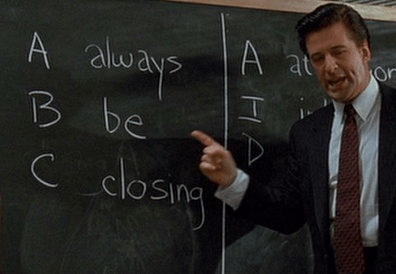
Always Be Curious (with apologies to Glengarry Glen Ross)

As you probably know, I have a day job. Yes, I actually work in human resources. For a real company and everything!

But I’m also fortunate enough to have the opportunity to speak at a handful of conferences and other events throughout the year. I enjoy doing this – it’s a great chance for me to visit other states and talk to fellow HR professionals about the struggles they’re facing and to share my experiences in the hopes we all walk away with a fresh perspective and some new ideas to try.

Well, that’s the idea, anyway.

The reality is that not everyone attends a conference with the intent to learn. Some are there just for the recertification credits. Some are there to hang out with their HR friends and hit the expo floor. Some are there to finally get a few days away from the kids so they can watch some RHONJ in peace, dammit! It’s not necessarily what the conference planners intended, but honestly, they’re pretty happy if people pay, show up, give the keynotes some attention, and fill out the feedback forms.

Speakers have a love/hate relationship with feedback forms. We do want to hear from our audience – we want to get better, we want to know what was meaningful to you, we want to hear that we’ve changed your life because you finally understand the new overtime regulations. (Okay, that last one was a bit tongue in cheek.) But seriously…we want some sort of validation that the time we spent building the presentation, practicing, traveling to the conference, and delivering the content was useful for someone. And most comments are very kind. You get the random comment about room temperature (sorry, we can’t control that) or the fact that someone doesn’t like the color of your dress (which is why I usually wear pants), but for the most part, it’s good feedback.

For the most part.

Inevitably, no matter what presentation I deliver or at what conference, there is at least ONE person who writes the comment: “I didn’t learn anything new.”

Really? Not a single thing? At all?

Listen, as a speaker, I’m usually a tough audience. Speakers end up seeing a lot of different sessions with different types of presenters, so you can get a little jaded. I admit it. But I walk into every session with the intent of taking away at least ONE thing I’ve learned from that person. Hell, if nothing else, I learned their name and what they do for a living.

But not this person. This person just says, “I didn’t learn anything new.”

This depresses me. Not because I worked hard to do research to include a lot of value-added data (which I always do), or because I shared my experiences in other orgs in hopes it helps (which I also do). It depresses me because a comment like that indicates that this person is not curious. They walk into every situation assuming they know everything and that there is nothing that anyone could possibly teach them.

Who wants to live life like that?

BE CURIOUS. Be open to new ideas and new experiences. Be open to new data. Be open to the fact that your carefully crafted world view might not be 100% accurate.

I’m not asking you to agree with everything you hear. In fact, I want you to question it, challenge it. That shows me you are thinking about it and are curious about how it ties into what you’re currently doing. It shows me you’ve internalized the idea and are considering it and may decide to reject it. At least you cared enough to hate it instead of dismissing it as “nothing new.”

So this is my challenge to you from now until the end of the year. Instead of dismissing something outright, think about it. Question it. Be curious about it. You might actually learn something new.

God forbid.
Doing the “correct” thing isn’t always right

Recently I read a story about a restaurant manager who received complaints about a mother and her autistic child. Policy would have dictated that he move the duo to another part of the restaurant, away from the other patrons who were being disturbed. But after one question from the mother, he decided not to. He told them to have an awesome day. He high fived the child. He went back to work.

In his words: Sometimes doing the right thing does not make everyone happy; just the people who need it the most.

Good for you, Tony Posnanski. You rock. You recognized the needs of this mother who had been through this before but just wanted a normal experience with her child. That’s what we call managerial courage – you didn’t hide behind a policy or the bottom line. You assessed the situation and made a judgement call.

justice

This is what leadership looks like. It looks like a person who is aware of policy and procedures. Who listens to the needs of ALL customers. Who assesses things on a case-by-case basis, makes an “executive” decision and stands by it.

We need more leaders like that.

Policies and procedures have their place, but they’re no match for the human touch. People need to reach out to people and engage with them on a one-to-one basis. As my friend Steve Browne often says, you have to meet people where they are. And sometimes that means breaking policy and doing something that just makes sense.

Lord forbid we do something that makes sense.

We all have something in our handbook that HAS to be there because we think we can’t trust employees and managers to make the right decision in the moment. Sometimes it’s dress code. Sometimes it’s bereavement leave. Imagine a world where we let it slide that an employee is in a pair of jeans because there’s 2 feet of snow out but they still busted their butt to be in the office that day. Or we let an employee take bereavement leave for a dear family friend who was like a parent, but gosh darn it, that relationship isn’t listed as covered in the policy.

So as you go about your day-to-day at work, don’t be so quick to say “no,” or “we aren’t allowed to do that.” Think about the person you’re dealing with – the PERSON – and respond in kind. After all, policies and procedures keep us sane, keep us legal, keep us on the right side of compliance.

But our empathy and adaptability makes us human.


Think we need more humanity in the workplace? Join me at the WorkHuman 2016 Conference in Orlando, May 9-11, 2016. To register, go to  and use promo code WH16MF300 for $300 off.