HR is burned out…why leaders should care

This week I am attending the WorkHuman 2015 Conference in Orlando, Florida. The goal of this conference is to help companies find ways to create a community of support and positivity that brings greater meaning to everyone’s work lives.  I’ll share what I learn here and on Twitter (@mkfaulkner43 #WorkHuman). 


Any time you go to an HR-related conference, you meet amazing people, are exposed to new (and old) ideas, and get a sense of what life is like in others’ work worlds.

You also inevitably hear complaints.

This is not unique to an HR conference. Get any two people who work for a living together and they will start complaining about their office, or their boss, or some process they hate. It’s human nature to vent, and conferences are a breeding ground for it because this is a new group of people who has never heard our stories before. And we love a fresh audience.

What does strike me at the more recent HR conferences I’ve been to is that the stories have moved away from the “You won’t believe what this employee did” variety to more of the “I don’t think I can do this anymore” variety. HR professionals are feeling stretched thin, trying to juggle the ongoing demands of changing regulations and administration with the increased pressure to be strategic and bring value, and oh, by the way – plan the company picnic.

In short – HR is burned out.Oxygen Mask
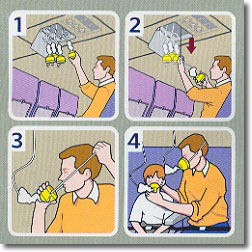
They are sick of hearing about how they are the problem. They are sick of hearing about how employees are their problem. They are sick of employees complaining about their bosses, and they are sick of hearing managers complain about their employees.

They’re also tired. HR people don’t always get a full night’s sleep.

So why does this matter to leaders? Why should you care if HR is burned and cranky?

Because that HR person needs to have your back. They need to help advise you on the right decisions to make. They need to help you balance dollars and humanity. They craft the strategy that helps attract and retain your talent, and they hold you accountable to those promises you made during that all team meeting. They also help you deliver difficult messages with grace, keep egg off your face (if you let them), and have some pretty great ideas about how to help the business reach the next level of awesomeness.

And if HR is burned out…they may be less inclined to do those things for you. Sure, they’ll make sure the employees are paid and legal, but you won’t get all the extras that you take for granted.

In a morning keynote, Arianna Huffington spoke elegantly about the power of renewal – of putting the care of ourselves first so that we can facilitate the care of others. She compared it to: “In case of emergency, place your own oxygen mask before assisting others.” It results in better health, better innovation, better creativity, and better productivity.  It results in RESULTS.

HR is often the worst at taking its own advice. We work through lunch. We come in early and on weekends, we stay late to meet with employees afraid to meet during business hours. We respond to emails at all hours of the night because an executive forgot to tell us something that we really need to know before that meeting in the morning. We do this because many of us are martyrs who think we have to. And we do this because we care that things are done to expectations.

This comes at a cost.

Leaders – don’t take HR for granted. Help them set the example that the rest of the organization can follow. Tell them to go home on time. Tell them to stop responding to emails. Don’t enable their need to please. Help them set boundaries…and then allow them to KEEP those boundaries. No one gets to break that rule. No one.

In the end, you will have more effective HR, more effective employees, and a more successful business.

And HR conferences will be filled of fun stories again, instead of good people at the end of their tether.


Self-fulfilling prophecies and the danger of labels

Read through the following scenario and pay attention to how you interpret it:

An employee, Shaun, shows up very late on a Friday morning. Shaun typically isn’t a morning person and has been a couple of minutes late once or twice in the past – but never like this. He is bleary-eyed, disheveled, and appears to be having trouble concentrating. He is in his early 20s, the same as a group in the office that likes to go out and party on Thursday nights. When you ask Shaun what’s going on, he is evasive, fumbling for answers that would make you happy. 

A week ago, you had a similar incident occur in which the employee actually had a hangover and had accidentally deleted an important spreadsheet and was trying to cover it up. And there have been a lot of system issues lately that you believe are caused by your employees not knowing what they’re doing and creating extra records that don’t need to be there.

Know how you’d react? It wouldn’t be surprising if you assumed Shaun is just like the other employees of his generation. After all, you’ve read all about their work-life balance YOLO lifestyle. You’re in the know. Time to act – right?

But there’s more to the story:

When pressed, Shaun tells you that he knew that the system slowdown was affecting everyone’s productivity, and he decided to stay late on Thursday to remove the extraneous records that were slowing down the system. It took longer than he thought it would, and he didn’t want to get in trouble for not telling you.

Dang it – your label failed you.

The Power of Labels

In 1968, third grade Iowa schoolteacher Jane Elliott wanted to teach her students about the work of Dr. Martin Luther King and the dangers of racism – the worst kind of labeling. How do you get children to understand such a high level concept? By letting them experience LABELS. She started the day by explaining that blue-eyed children are smarter, prettier, and all around better than brown eyed children. After lunch, she changed it and and explained it turns out that brown-eyed children are smarter and better.

The speed with which these children accepted the roles into which they were assigned – aggressor and victim – is terrifying. It is even more terrifying when you consider that Jane Elliott was completely transparent about what she was doing with the children. She explained it’s an exercise. She explains what she wanted them to learn. And yet, the labels were SO strong, the children’s performance in learning exercises went DOWN when they were the “dumb” group. [Watch A Class Divided for the entire documentary. It’s amazing and well worth your time.]

label-maker1

So why do I bring this up?

Because labels are powerful – and we use them ALL THE TIME.

We talk about generations (Do you know how to recruit Millennials? Are you ready for the ennui of Gen X? Do you care what Generation Z will do???). We talk about high potentials. We talk about “difficult people.” We talk about A Players, B Players, engineers, IT, HR, “leaders”, “followers” – all of them labels. And each of these labels comes with preconceived notions about the person who has that label can and cannot do.

Listen, I get that labels can help. We have to categorize things in order to process the amount of information we encounter every day. But we also have to be aware of the impact our labels have.

Words Matter

As a leader, the labels you place on your employees are especially powerful, and are most often given within the first day of meeting a person. A “promising employee” or “hard worker” tends to get more benefit of the doubt than a “slow worker” or “troublemaker.” It’s even worse when an executive labels an employee they’ve met once. I’ve known an employee who carried the label of not being terribly smart because on her very first day, an executive asked her a question about a process she didn’t know the answer to. ON HER FIRST DAY. This employee was very smart, and very capable – and every talent discussion we had to combat the baggage of a label given after a 5 minute interaction.

Sadly, the leader’s reaction to an employee based on a label is nowhere near as dangerous as the employee’s reaction to the label the leader applied. Just like the children in A Class Divided, employees who have been labeled high potential often perform better (or fade under the pressure of expectation), while “difficult” employees make more errors, because others interpret their actions differently – or because the employees themselves believe they are the label you’ve given them*.

The same goes for employees labeling leaders. “She’s mean” or “He’s a pushover” colors the behavior of leaders because it shades the way others perceive the leader. With the prevalence of 360s in today’s business world, these labels gain more and more power, impacting the leader’s self-confidence – or potentially reinforcing BAD behavior – as each cycle of feedback simply reinforces the self-fulfilling prophecy.

Think

Labels are going to be with us for a long time. They helped us survive as we evolved (this berry = good, sharp pointy teeth = bad). They allow us to thin-slice data. Unfortunately, they also allow employees and leaders alike to be lazy – to apply labels rather than get to know the people they interact with.

Leaders, when you go back to your teams take an honest look the expectations that you hold for each of your employees. Employees, take a hard look at the way you talk about your leader.  And ask yourself, am I responding to a person?

Or to a label?

[*For more on the power of suggestion and stereotypes, read Dan Ariely’s work.]

Get To vs. Have To: The employee’s dilemma

I’m writing this on a Sunday evening while watching playoff hockey waiting for Game of Thrones to start and trying to figure out why our dog has become endlessly fascinated by a piece of paper on an end table. In short, it’s a lovely evening and I’m happy that I get to do this.

I bring this up because as the weekend winds down, people are lamenting the fact that they “have to” go to work tomorrow. (Don’t believe me? Check your Facebook/Twitter/Instagram feeds.) And thus we are confronted by the dichotomy all employees deal with at work – what they “get to do” vs. what they “have to do.”

“Have to” is all the work employees tend to complain about – answering emails, attending recurring meetings, data entry, making phones calls, paying invoices…all the tasks that fulfill the basic functions of their job descriptions.

“Get to” is the work that employees say they want – stretch goals, new projects, visibility, variety, excitement…all the things that a new and different from the day-to-day. swivel chair

In short, “have to” is the work we get paid for, “get to” is the work that engages us.

What’s interesting is how quickly the “get to” turns into “have to” for so many employees. What was once new and exciting gets absorbed into the background as just another thing you work on in your job.

This phenomenon is known as the hedonic treadmill (or hedonic adaptation, if you must be specific) and refers to our singular ability to return to a relative level of happiness (or unhappiness) following a positive or negative event in our lives. Basically, if you’re a happy person, you’ll still be a happy person even after undergoing a setback. But if you’re a negative person, you’ll still be a negative person even if you win the lottery.

Let’s apply this to work. If you (generally) like your job, the “have to” doesn’t bring you down too much. The “get to” is a nice perk, but you don’t really need it because you’re already in a good place.  Chances are, you’re probably more engaged (or at least satisfied – NOT THE SAME THING) than the average person. If you (generally) chafe against your job, the “get to” won’t be enough to change your tune.

So if you are more of a Grumpy Cat than an Oprah (The Secret), how do you maximize the “get to” moments at work?

  • Keep your eye on the prize: Work will feel less “have to” if you find ways to help you reach your long term goals. Working an office day job but really want to be an agent? Look at your internal relationship building as honing your networking skills.
  • Take control of your “have to”: Be efficient and work your way through your “have to” list every day so it doesn’t weigh on you. Talk to your boss about restructuring your “have to” if you’re approaching burnout. One of the reasons “have to” brings us down is because we don’t have control over it. Try to get some.
  • Think of the “get to” as a reward, not a right: Remember, “get to” is development and growth. It’s not something that you should take for granted or sit back and wait for it to come to you. Be proactive and ask for the “get to”. Now it’s something you’ve earned, which can extend your happiness about the “get to.”
  • Check your attitude: Granted, people will land somewhere on the spectrum between Pippi Longstocking and Chicken Little, and it’s okay to know who you are. But if you find yourself unable to appreciate the “get to” in your life, find out why. Maybe you need more sleep, maybe you need some perspective, maybe you need therapy. Whatever it is, figure it out.

The reality is that the “have to” work will never ever go away. The trick is to find enough “get to” work to keep it interesting.

And try to have a good week, everyone!