Apparently your cat hates you…and your employees might, too

You may have seen it online or in the news lately – there’s a study that claims your cat hates you, or at the very least, doesn’t really care if you’re there or not.

My first thought upon reading the article…you needed a study to learn this?  Seriously, just own a cat.  [Full disclosure: I’m a dog person.  But cats have been in my life from time to time.  Hence the dog. :)] The level of disdain even the most “loving” cats have for their owners is remarkable.  Awe-inspiring, even.

Shortly after that, I thought how similar this behavior can be to employees.  I’m inclined to believe that employees also have an “anxious avoidant” attachment style – they really don’t care if their leader is present or not present.  Not in a positive way, anyway.  Sure, employees may care to avoid an abusive or incompetent leader.  But just like a cat who snubs the owner who feeds them and gives them a loving home, employees may turn their nose up at a leader who cares about his/her employees.

grumpy_cat
If you don’t know Grumpy Cat, you are missing out!!

Leaders, try not to take it personally.  There are a number of factors that play into this dynamic:

  • Employees are hard-wired to hate “The Man”: Well, maybe not hate.  Perhaps “intense distrust” is a better term.  By and large, authority figures have it rough in the workplace.  Ask any popular employee who was promoted and then spurned as a pariah – it can be tough to be the king.
  • Leaders kinda feel the same way about their employees: Just like employees are hard-wired to hate “The Man”, there are a number of leaders who look at the privilege of leading with a sort of resignation.  They know it’s important, it’s just….tiring sometimes.
  • Leaders struggle with boundaries: There are many leaders out there who just don’t get the balance between BFF and hard ass.  This can lead to credibility issues with the team that cause employees to wish “the man” wasn’t around.
  • Most employees don’t really need a manager: Of course, teams need a manager.  They need someone to help run interference, be their champion, set the vision, etc.  But on a day-to-day basis, not so much.  Think I’m wrong?  Next time your manager is out of the office, take note of how much work you get done.


So what do you do to combat this indifference?  We might be able to learn a lot from cat owners:

  • Don’t try too hard: Most cat owners know that when the cat wants to interact with you, he/she will do so.  Create an environment that is conducive to interaction, exercise some patience, and see what happens.
  • Catnip works: In this case, catnip can be rewards and recognition.  Make your employees’ interactions with you positive and you may see them more often.  Figure out what motivates your employees, help them achieve that, and you should see an improvement in your relationships.
  • Know what baggage they bring to the table: As anyone who has ever adopted a shelter cat knows, some of these guys come with serious issues.  Sometimes employees do, too.  Maybe they had a crappy manager 3 jobs ago and you’re paying the price.  Patience, positive reinforcement, and a good dialogue can help overcome that.
  • Some people just aren’t cat people: If it really bothers you that your employees don’t like you, or don’t think you’re cool, or don’t want to hang out with you…maybe you aren’t the leading kind.  Re-examine your motives for getting into a leadership position in the first place – if they are still pure and you just need an attitude adjustment, do it!  If not, that’s okay, too.  Just don’t subject your employees to a non-leadership ready leader.

Do you have any advice for the leader whose employees are a little too cat-like in their attachment?  Share in the comments below!

I would like to see anyone, prophet, king or God, convince a thousand cats to do the same thing at the same time.
– Neil Gaiman
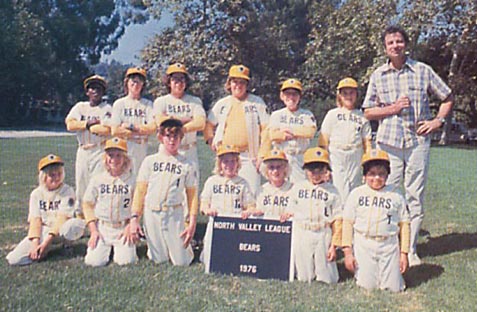
Put me in, Coach! (what you’re missing when you leave people on the bench)

You know how in a lot of movies and TV shows, there always seems to be a plot twist in which the team finds itself in trouble and the dashing lead runs out of ideas…and then the goofy misfit they let tag along for the ride suddenly saves the day.  Take The Bad News Bears (but make sure it’s the 1976 version, ’cause the remake sucked).  This was a team of kids who shouldn’t have been able to do anything useful – they couldn’t hit, couldn’t throw, couldn’t field…and yet they managed to win a Little League championship.

My point here is that each member of your team has the potential to contribute something pretty awesome to your overall success.  And maintaining the status quo simply because you are in “if it ain’t broke, don’t fix it” mode can have some pretty big consequences to both your team and your business.

Here are a few reasons to get your people in play:

  • It keeps them engaged: It’s hard enough to get your employees to care about the day-to-day of their job.  Your employee might be secretly waiting to unleash his/her brilliance unto the universe…but you’ve got that person doing data entry because you’ve got bigger fish to fry.  According to a SHRM engagement study, 75% of respondents named “opportunities to use skills/abilities” as a top engagement aspect.  Surprisingly, no one listed “being left alone to try and figure out how to stay busy” as a top factor for engagement.  How ’bout that.

    bad-news-bears
    (Did you know Kelly Leak was played by Jackie Earle Haley? No kidding!)
  • You don’t know everything: You might think that everything is fine and therefore there is no need to get one of your resident experts involved, but guess what – you are not the expert, so it’s possible you don’t realize that your resident expert needs to be involved.  Your employees might bring a fresh perspective to an existing problem that allows you to reach a solution, and they get to feel awesome doing it.  Sounds like a win-win. Oh, and if your expert comes to you and suggests how you might be able to use him/her in a way that will add value, don’t brush them off.  It’s uncool.
  • Improves response time: We all know that the status quo is just WAITING to explode at some point.  By keeping your employees in the regular rotation, they are kept up to speed and can proactively help you respond to potential issues.  If you wait until things go south before bringing in your closer, you’re going to lose precious time bringing them up to speed, getting them focused, and hoping they don’t resent the fact that your lack of planning may have created their emergency.
  • Helps you keep ’em: The days of people just wanting to keep ANY job are over.  People understand that their job isn’t the be all, end all of their happiness, but they also know that they spend a lot of time at work and want to be relatively happy while they are there.  Remember that whole “opportunities to use skills/abilities” stat?  Turns out that is the NUMBER ONE factor for job satisfaction in that SHRM study.
  • Your business will be better: There’s been some talk in the research about “passion vs. engagement” (see this report from Deloitte for details).  Basically, the research argues that engagement is all well and good for a relatively stable world, but to be able to thrive in chaos, passionate employees are where it’s at.  Passionate employees improve your business results and set you up for the long term because these employees are willing to stay with you through the good times and the bad, and are excited to take on new challenges and move the company forward.

It’s not worth waiting until a crisis to involve your people.  Don’t make your people beg to be involved.  Chances are, most of them are sitting on the sidelines, just waiting for a chance to get in the game and contribute.

I don’t believe in team motivation. I believe in getting a team prepared so it knows it will have the necessary confidence when it steps on a field and be prepared to play a good game.
– Tom Landry

Have a suggestion on how to keep your people involved?  Or maybe a story about how YOU got in the game?  Share in the comments!

Honey badger don’t care…and why you’d better hope your people do

Ahhhh, the honey badger.  This wily little mammal nestled itself in our pop culture consciousness through the use of clever narration over a documentary film.  I love the honey badger.  But you know what?  Honey badger don’t care.  He doesn’t need my love.  Honey badger just doesn’t give a shit.

The thing is, most of us are NOT honey badgers.  We care a LOT about things…some are important (like the safety of loved ones), some aren’t (like the jerk who cut you off in traffic).  Human beings are an emotional species that tends to act on those emotions.  That’s why we’re always talking about “finding our passion” and “following our bliss” and other fluffy stuff that telegraphs  the fact that we tend to only work hard at something when we give a damn about it.

Call it whatever you want – be engagement, mojo or flow – but really what it comes down to is caring.  Engagement studies from BlessingWhite and TowersWatson (why don’t these firms ever have spaces anymore?) provide analysis around attraction and retention drivers, and basically all of them fall into two buckets – what’s in it for me? and why should I care?  (I’ll break these buckets down in a future post.)

honey_badger

Engagement definitions almost always include the concept of “discretionary effort”, or going above and beyond what is expected.  And companies need employees who are willing to give discretionary effort because they’re the ones who typically move a project over the finish line, get a company unstuck, and generally make the workplace better.

What I’m talking about is flat out EFFORT.  Do employees CARE enough to do the bare minimum of their jobs? Are they willing to work a full day at an acceptable level of effort and intensity?

Think about your workplace (or a past workplace).  What are most of the people doing most of the time?  If you have employees who CARE, you’ll hopefully see competent people doing their jobs, coming in on time and also leaving right when they are supposed to.  Occasionally you’ll see the over-achievers and ultra-engaged burning the midnight oil.

But what if employees don’t CARE?  I don’t mean the fully disengaged, out to bring down the company people.  Just…folks with jobs who don’t particularly worry about how well or what they’re doing. People wander in a few minutes late every day; they linger over longer lunches; they “sneak out” a couple of minutes early.  These seem like minor offenses…but what can they lead to?

    • Box-checking projects through the company because “it’s above their pay grade” to question its value
    • Incredibly quiet, low energy workspaces
    • A gradual erosion of morale
    • A culture of mediocrity
    • An exodus of A players
    • Dogs and cats living together…mass hysteria!!

It’s hard to be fanatically engaged ALL the time.  People need to take a break now and then, and that’s okay.  But hopefully in their downtime, they still give a darn about what they do.  They ask the right questions, push back when appropriate, and make good decisions based on critical factors – not because they are highly engaged, but because they care about the company, their job, and doing the right thing.

So while engagement is important and helps drive your business and retention of talent, don’t forget about the simplicity and power of having employees who simply CARE.

The thing is, Bob, it’s not that I’m lazy, it’s that I just don’t care.

– Peter Gibbons

How do you get your employees to care? How do you know your employees care?  Do YOU care?  Leave a comment below.  HONEY BADGER WANTS TO HEAR FROM YOU!!!