The world IS wide enough

I am an unabashed Broadway nerd. I’m not the most knowledgeable, and I have some very controversial views on Cats (Spoiler Alert: I can’t stand it.), but what I lack in knowledge, I more than make up for my love of certain shows. And one of my greatest loves is Hamilton. (Going out on a limb there, I know.)

The show overflows with themes, just pick one – love, ambition, politics, the disconnect between men who cried freedom but not really for all. In relistening to the soundtrack recently, another theme really stood out to me – the idea that there is enough room for more than one success story.

Too many of us think the only way for one person to rise is for another person to fall. That the key to protecting what you have gained is to ensure no one else has that same chance. This can be especially true among groups who have historically struggled to gain power – women, minorities, LGBTQ, the poor, the undereducated, the disadvantaged. 

I watch the dialogue happening in our country today and I’m struck by this theme returning again and again. And it troubles me because it seems we are approaching success like a zero-sum game, which is bad for society at large. Fair isn’t equal…but do we really think a zero-sum game is fair?

We see this play out on a smaller scale in our workplaces. We make some strides in diversion, but fall down with inclusion. We talk about “culture fit” without acknowledging it could easily be code for “look, think, and BE like me.” We subconsciously (and sometimes consciously) place a limit on how many of the “other” are allowed to be successful, and we create a system that ensures the few “other” who do succeed participate in keeping the new status quo to protect what little gains they’ve achieved.

How did we get here? And more importantly, how do we move on from here?

Maybe it’s as simple as realizing the world IS wide enough; that success is NOT a zero-sum game; that, in fact, when we support each other and help each other succeed, we raise ALL ships. We need to celebrate the honestly gained success of others, not knock them down. We need to stop comparing ourselves to an impossible standard we see online because so much of it is a lie anyway. We need to set a path that makes sense for us, and then support others who are seeking their own path.

At the recent WorkHuman conference, Former First Lady Michelle Obama and Steve Pemberton spoke about the Maasai tribe’s custom of asking not “how are you?” but “how are the children?” In their culture, if the children are well, then everyone is well. This resonated with me (and not because I like children – I’m not exactly maternal). It resonated because it’s another way of saying, “The world is wide enough.” Give every child a chance to succeed, and they will continue to expand the borders of our world as we know it.

There is so much room for success in this world. There is so much potential to be realized.

How will you help others expand their world?

Now I’m the villain in your history
I was too young and blind to see…
I should’ve known
I should’ve known
The world was wide enough for both Hamilton and me

– Aaron Burr, Hamilton: The Musical

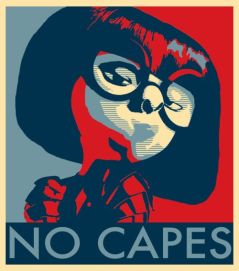
Not every hero wears a cape

Sometimes you hear a story about a person that makes you stop in your tracks and think, “Whoa. I could never do what that person is doing.”

Last night, I saw a story on the news about Darius Matsuda, a soon-to-be sophomore in high school who is visiting local middle schools to tell his story about growing up with autism. He shares with the students his experiences – including being forced into a circle with another boy while the others chant “Fight! Fight! Fight!” He explains what it’s like to live with autism – how it impacts your sensitivity to sound, light, and your ability to make friends.

It’s a powerful, personal story, and he’s already told it nine times to kids not that much younger than he is. All in the hopes that kids learn a little compassion for their fellow students, and understand that just because someone is different doesn’t mean they’re lesser than. Darius is going for Eagle Scout, and this is his service project.

This kid is amazing. Talk about putting yourself out there.

I bet that if we look hard enough, we all have someone like Darius around us. Someone with a story to tell, who has learned lessons in their life and are willing to share them. Not because it will help them…but because it will help those who come after them.

These are the heroes in your community and in your workplace. Listen to their stories. Learn their lessons.

Nice work, Darius.


If you want to learn more about autism and how to get involved, visit the Autism Society website

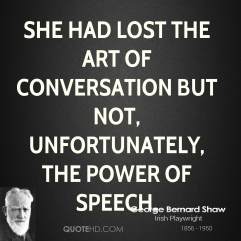
Small talk and the decline of practically everything

There is a lot of chatter out there.

On any given day, millions of ideas are shared via the internet, via Twitter, LinkedIn, articles, this blog, etc. Lots of one liners, jokes, snarky comments; but also inspirational quotes, videos of baby goat yoga, lists of “life hacks” (whatever the hell those really are), etc. In fact, every minute on the internet sees, among other things, a minimum of 2.4 MILLION Google searches, 347,222 tweets on Twitter, and 972,222 Tinder swipes (may you all find love).

This is the age of Big Data [insert dramatic music here].

And yet, most of what is out there is little more than a tasting menu of ideas. It’s a one-way sharing of thoughts, feelings, observations, and/or ego. We dip our toe into the pool of discourse, but we don’t stay too long lest we get dragged into a debate, get attacked by trolls, or – lord forbid – have to participate in an honest-to-god CONVERSATION.

What happened to our ability to sit down and actually talk to people?

In high school and college, people were all about having deep, philosophical conversations about life, death, and everything in between. Yeah, they got pretty annoying sometimes, but it was good practice in identifying where you stood in the world. You were able to frame your argument, consider counterpoints, and share your own counterarguments. It was a great way to apply debate skills and decide what you may or may not believe in.

Granted…I did not have Twitter or Facebook when I was in college. We barely had the internet. #Iamnotold #dammit

Today, communication is built to be quick, witty, and shallow. I actually resisted Twitter for a LONG time because I do not believe 140 characters is enough room to communicate meaningfully. I now accept it for what it is, but still throw it the side-eye now and then because I think it’s part of the problem.

People don’t really talk anymore.

I am as guilty of this as anyone. As an affirmed introvert, I LOVE the fact that I can do so much “communicating” online, in writing, without actually have to see someone face to face. I hate talking on the phone voluntarily. I avoid networking events like the plague. Give me a chance to interact virtually and I will take it every single time. And it probably makes me less effective as a coworker/boss/friend/human being.

It’s easy to just stop typing when you’re not happy with the way a conversation is going. You can just block someone if they get a little too obnoxious. Or you just throw a hashtag out there (#micdrop) and act like you won.

Real world conversations take vulnerability. They take concentration. They take commitment.

I’m going to try to do better at this. I’m going to try and have better conversations with the people I actually see in real life.

This doesn’t mean I won’t be quick, witty, and shallow on the internet. Are you kidding?! That’s way too much fun. I’m just going to…try harder. I hope you do, too.

What’s the worst that could happen?