Efforts vs. Results: Do employees know the difference?

I recently read an article  day that referenced an infographic featuring the following statistic:

Nearly half (49 percent) of employees in a survey revealed that they would leave their current job for a company that recognized employees for their efforts and their contributions.

Really.  Nearly HALF of all employees would leave their job.

I know I’m cynical, but that seems awfully high, especially in a volatile economy.  So I reframed that statement (because I’m in HR and I know what reframing is), and I started thinking about whether or not the average employee would define recognition-worthy effort the same way management would.  I came to the following conclusion…

I don’t think they would.

In my career, I’ve been a part of many a performance review process, helping managers and employees alike understand why we do them, how we do them, and what the different ratings mean.  And it never fails that there is a severe disconnect between what the employee sees a extra effort and what the manager would call DOING YOUR JOB.
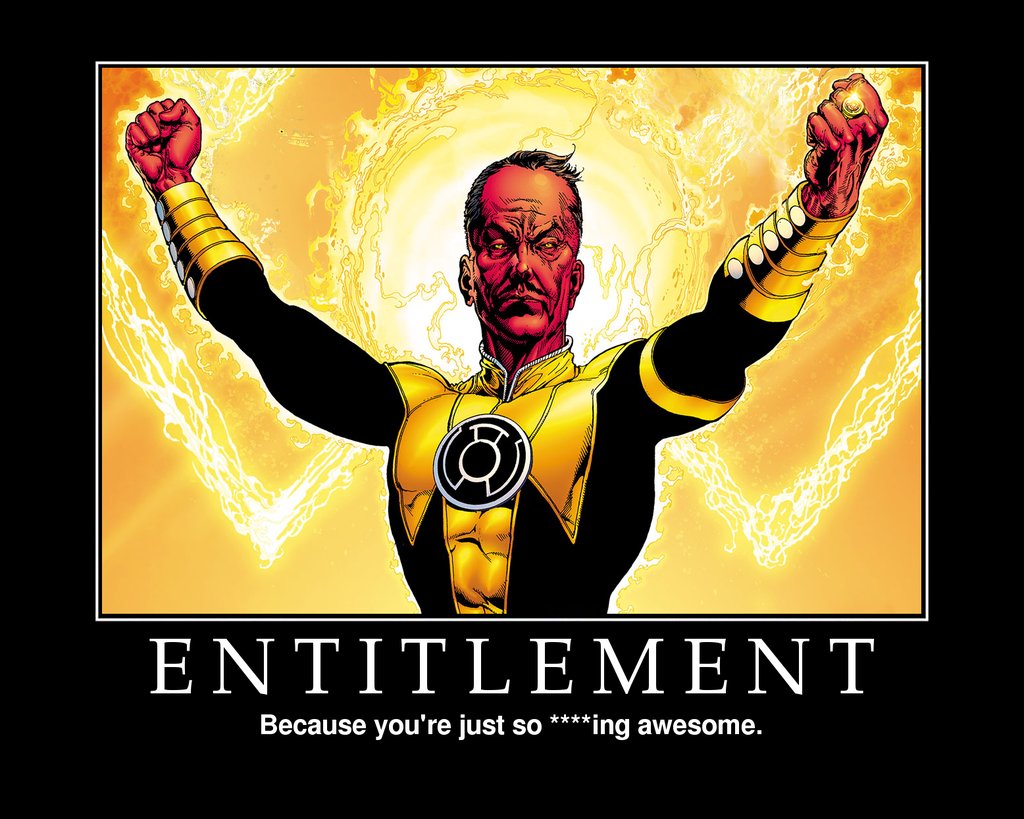
entitlement1024

Here’s a quick reminder for employees about the difference:

DOING YOUR JOB:

  • Showing up on time every day
  • Completing your work by the assigned deadline and in a quality manner
  • Being a decent human being to coworkers


EXTRA EFFORT:

  • Teaching others to do their jobs better
  • Identifying a more efficient way to do a task
  • Going above and beyond for a customer

Really, it’s about the difference between EFFORT and RESULTS.  Effort is good – managers want to see effort.  It’s an indicator that employees give a damn.  But guess what – results pay the bills, which means managers are more likely to recognize employees whose efforts yield results.  As an employee, I need to be aware of what will benefit the business and ensure my work is truly “value add.”  And I also need to communicate what I’m doing to my manager to ensure I’m aligned with his/her expectations.

Managers, you’re not off the hook for this one.  If your employees feel like you don’t notice their efforts, that’s on you.  It’s your job to give clear expectations for results and to provide meaningful feedback to your employees year-round. Too often managers are afraid to have a difficult conversation, telling employees “that was a a darn good try” all year…only to rate them lower in the annual review because nothing got done.  On the other hand, things come up that are out of the employee’s control that can keep their efforts from yielding the expected results.  So be a human being and acknowledge that.

Lack of recognition by managers is a real problem in many organizations, and it CAN lead to employees wanting to leave for a better job.  I also think misconstrued ideas of what recognition should look like leads to unrealistic employee expectations.

What do you think? Are employees being greatly unappreciated? Are managers being unfairly maligned for not rewarding employees for just showing up?  Share your thoughts in the comments.

Tell your inner two-year-old to shut it

There’s a reason they call it the “terrible twos.”

Tantrums. Stubbornness. Attitude. Diapers (probably). And every parent’s favorite word….

NO.

Don’t believe me?  Watch this. Then go hug a parent of a toddler. They deserve it.

It’s kind of cute to watch a little kid try to exert some control over their world by saying no to every suggestion. It’s not so cute when it’s an adult in the workplace.  You’ve seen them – heck, you’ve probably even been one.  Goodness knows I have.  The scenario may change, but the process is pretty consistent:

  • Step One: Person A elicits heavy sigh.
  • Step Two: Person B asks what’s wrong.
  • Step Three: Person A unleashes a barrage of complaints, usually including righteous indignation about events that happened years ago.
  • Step Four: Person B makes suggestions about how Person A might resolve their issues.
  • Step Five: Person A’s inner two-year-old says NO. Cycle repeats.

angrytoddlerThe reasons that Person A relinquishes control to the inner two-year-old can vary.  Maybe it’s fear of change. Maybe it’s love of the attention being a martyr gives them. Heck, maybe it’s a passive-aggressive attempt to exert control in a situation that feels like it’s spiraling OUT of control.

Whatever the reason, the more we listen to the voice of that inner two-year-old, the louder that voice becomes, and that can lead to bad things. It’s exhausting to deal with someone else’s refusal to listen to solutions. At some point, Person B will stop talking to Person A, and Person A might gain a reputation for being “difficult to work with.”

Critical inner speech can impact your ability to find positive resolutions and can cause you to spiral into a pile of negativity that makes you incapable of acknowledging that success is an option, creating a self-fulfilling prophesy of doom. And in really bad cases, it can lead to life-threatening depression.

So do yourself a favor. The first time your inner two-year-old crosses his/her arms, pouts out the lip and says NO, you tell that kid to shut the hell up.  Then seek some positivity in your life – a coworker, a spouse/partner, a close friend, a sympathetic dog, wine. Whatever it is, help change the story you’re telling into something good.

Even two-year-olds grow out of their tantrums and laugh again. If they can do it, so can you.

Positive anything is better than negative nothing.
– Elbert Hubbard

You are who you THOUGHT you were! (a question of identity)

If you’re like most people, your life has been one identity crisis after another.

  • When you’re a little kid, you might have wanted to be astronaut, a doctor, a firefighter, a police officer….a stunt car driver.
  • When you’re in high school, you freak out because you’re a freshman – bottom of the social ladder.
  • When you’re a senior, you feel invincible – because you aren’t those puny freshman anymore.
  • When you’re in college, you decide you’re going to major in chemistry…no, pre-med…wait, art history…aw, screw it – business.

And then you start your working life for real, and you realize you’ve been answering the question, “What do you want to be?”, instead of, “What do you want to do?”

139580 green
He knew what he was talkin’ about.*

In our culture, we have learned to equate our job/career with who we are.  You can argue the rights and wrongs of this approach, but it’s a fact of life for most people in the working world.  I’m not here to debate pros and cons.  I’m more interested in honestly facing the impact our identity obsession has on our career decisions, and how acknowledging that fact can help us make better ones.

  • The Company: Whether it’s when you’re first starting out or are 20 years into your career, the name of the company on your business card can influence your choice. Do you join Google, even though the job sucks?  Or do you join ABC, Inc. – a relative nobody, but a nobody who will challenge and engage you on a daily basis? Easy money says you take the cooler sounding company because you know you have the opportunity to grow in an awesome organization.

    And yet…companies like Google are targeted by recent college grads, but not because of their job now, but because it will help them get a better job later. [Note: Peter Cappelli shared this thought in a presentation I saw 6 years ago – still searching for the link!]  Be honest about whether this choice is a destination or a stepping stone to something else.

  • The Path: At some point, you may be faced with the choice between remaining an individual contributor or angling for the management track.  A lot of people have no desire to lead others.  They like what they do, the challenge of the work.  The idea of dealing with the drama of others makes some people break into a cold sweat.

    And yet…some people think if they don’t achieve manager status, they have some how failed.  Is it enough to be “just” an expert in your field, or do you feel like you have to “prove” something…and maybe give up a piece of what makes you happy?

  • Title: Those in the know will claim title doesn’t matter, just what you do; and that truly happy employees are unconcerned with such trivial things as what’s on their business cards.  Plenty of us in HR and recruiting have rolled our eyes at the “Manager of Accounts” title that amounts to little more than a glorified salesperson.

    And yet…how many of us have faced those same recruiters and had to answer ridiculous questions about why you “took a step back” just because a title isn’t as cool sounding as as the responsibilities you have?  (Seriously, recruiters – you know better than to assume every company uses the same title structure!) It would be disingenuous to not acknowledge the influence that title has on our decisions.

  • Industry: My background has been in a lot of different industries – some exciting (VOIP, startups, alternate energy) and some not thought of as innovative (event planning, insurance, utilities).  Each industry I’ve worked in has taught me fascinating things and challenged me in ways I didn’t anticipate.

    And yet…there have been times in my past where I have hesitated to share what industry I worked in because it wasn’t the “hot new thing.”  If your identity is tied to being forward-thinking, envelope-pushing, and an all-around rabble-rouser, there can be some cognitive dissonance around the industry you choose to work in.

Each of us has made at least one decision (or more) in our career based on how we’ll answer the question “what do I want to be?” If we think we aren’t considering the coolness factor of a particular opportunity, and the way others might react when we’re talking at cocktail parties, we’re just fooling ourselves.

The ultimate sign of confidence and self-actualization may be the ability to simply share what you do when talking about your job…and being who you truly are.

We know what we are, but not what we may be.
-William Shakespeare 


*Because it never gets old to watch Dennis Green do this.