Don’t like policies? Then control yourself

I’ve worked in HR for a long time, which means I’ve heard pretty much every complaint out there about why people don’t like the human resources department (or personnel, if you’re of a certain age).

While some reasons are downright creative – even colorful – the most common one I hear about is that HR always says no. Or that HR is the “Policy Police.” Or that HR won’t let you do anything.

*sigh*

Listen, people. It’s not HR who isn’t letting you do something. It’s YOU – leaders and employees alike. Actually, let me amend that – it’s US. We all contribute to this issue.

If human beings weren’t so jerky from time to time, we wouldn’t have to have all these stupid rules. If we could act like adults with integrity, we wouldn’t have to worry about nepotism, inappropriate conduct, approval levels, complicated oversight, internet and computer usage, etc. meatdress

But we’re people. So we do stupid things. And we make stupid decisions. And we act like it isn’t our fault. Hence…personnel policy manuals.  We like to be able to point to something and say, “Hey, not our idea. It’s in the policy.” When the tough conversations come up, we like to be able to say, “I didn’t want to, but HR made me.”

This is a total rule of thumb, but I’ve noticed that the thicker the rule book, the more unhealthy the culture. (There are exceptions, but still.) When employees can’t make smart, informed, mature choices, you see more and more of the decision-making taken away and replaced by a policy.

Is that how you roll? Do you WANT to lead that way?

I know I don’t. And I don’t like having to practice HR that way, either. I like to be able to work with leaders and employees to find the best solution for the situation they are currently in. It needs to be legal. It needs to be consistent with previous situations. But we all need the flexibility to make good decisions for the circumstances.

So what’s the answer?

Don’t be a doofus. And tell your peers and employees to not be a doofus. If integrity is a value to you, then LIVE IT, don’t just point to a banner on the wall. Do the right thing, especially when there isn’t a policy telling you what to do.

We all have the power to change the system. Believe me – most HR pros would LOVE to rip up the policy manual and just talk it out.

Help us help you.

A skeptic’s view of happiness at work

The Intro Bit

If you know me, follow me on social media, or just make up a fake backstory about me (please make me a pirate), you probably realize that while I like to laugh and have fun, I’m not a particularly “up” person.

What I mean by that is I am not a Pollyanna who looks on the bright side of things and always believes things are all going to work out. I tend towards realism with a dose of cynicism. (And a side of eyeroll for good measure.)

So when the whole “happiness” thing started hitting the internet, I was skeptical.  It sounded like just another way of talking about work without having to have any data or research behind it beyond a Cosmo quiz. And deep down, I suspected Pharrell had something to do with it.

Therefore, I did what every good skeptic does. I researched it so I could debunk it.

The Sorta Science-y Bit

Here’s the thing – while some of the “science” out there is a little sketchy (or…a LOT sketchy), there is some really compelling evidence that happiness at work makes a difference to the success of an organization. The iOpener Institute has developed a happiness measure and released some findings in the Wall Street Journal – happy employees stay twice as long, are more likely to help their colleagues, are less likely to be absent, and are more efficient. (For more info, read this white paper.)

Basically, happy employees perceive themselves to be more connected to their organization and are therefore more likely to stay on task and are more likely to choose to be engaged at work than non-happy employees.I_want_to_believe5

The Skeptical Bit

While certain research points to some strong correlation between happiness and connection to business, there is no predictive model between happiness and business performance indicators.

Also, happiness sounds suspiciously like “satisfaction” to me – and you can have satisfied employees who are completely happy to do as little as possible at work. In fact, some research even suggests that job satisfaction has a NEGATIVE impact on productivity. So I’m curious to see more about additional research into this area.

The ‘Here’s How to Make it Work’ Bit

While still preliminary, there’s enough out there to point to definite benefits to supporting happiness at work. As leaders and HR professionals, you are in the perfect position to help employees make the choice to be happy, thereby gaining some positive outcomes for the workplace.  As employees, no matter what your role, you have the power to decide about your own happiness at work.

Some things to keep in mind as you embark on the journey to Work Happyland:

  • Happiness is unique to each person: One of the reasons a predictive model is so hard to find is because “happy” means different things to different people. Watching this video of a tiny horse trotting makes me ridiculously happy. Other people prefer NASCAR. So you have to be willing to adapt to the needs of your team and organization.
  • The pressure to be happy can bum you out: One psychological experiment reported by the Harvard Business Review suggests that the increased expectation of employees to build an “upbeat” workplace can lead to resentment – having the opposite effect on the workplace. Don’t force your people to smile all the time. Create environments where happiness can happen organically.
  • Sometimes, it’s okay to work angry: Some people are more focused, able to detect deception, and negotiate WAY better when they have a little edge. Keep in mind that sometimes happiness can hurt productivity and quality, so don’t be worried if someone isn’t giddy all the time.
  • Help folks set boundaries: We continue to blend work and life more and more – and it’s stressing people out. By making it okay for your employees to leave home at home and work at work, you give them permission to save their best selves for when they need it most.

The research in this area is still emerging, so I am keeping my eyes and ears open as we learn more about happiness at work. I also reserve my right to roll my eyes every now and then if you try to tell me it’s a standalone metric, or if you try to be all obnoxious about it.

On the other hand, my inner skeptic wants to be believe. After all, we spend A LOT of time at work. So why not at least try to make it a happy place to be?


Want to join me in learning more about happiness and other good stuff in the workplace? Come to the WorkHuman 2016 Conference in Orlando, May 9-11, 2016. To register, go to  and use promo code WH16MF300 for $300 off.  THAT should make you happy!


HR is burned out…why leaders should care

This week I am attending the WorkHuman 2015 Conference in Orlando, Florida. The goal of this conference is to help companies find ways to create a community of support and positivity that brings greater meaning to everyone’s work lives.  I’ll share what I learn here and on Twitter (@mkfaulkner43 #WorkHuman). 


Any time you go to an HR-related conference, you meet amazing people, are exposed to new (and old) ideas, and get a sense of what life is like in others’ work worlds.

You also inevitably hear complaints.

This is not unique to an HR conference. Get any two people who work for a living together and they will start complaining about their office, or their boss, or some process they hate. It’s human nature to vent, and conferences are a breeding ground for it because this is a new group of people who has never heard our stories before. And we love a fresh audience.

What does strike me at the more recent HR conferences I’ve been to is that the stories have moved away from the “You won’t believe what this employee did” variety to more of the “I don’t think I can do this anymore” variety. HR professionals are feeling stretched thin, trying to juggle the ongoing demands of changing regulations and administration with the increased pressure to be strategic and bring value, and oh, by the way – plan the company picnic.

In short – HR is burned out.Oxygen Mask

They are sick of hearing about how they are the problem. They are sick of hearing about how employees are their problem. They are sick of employees complaining about their bosses, and they are sick of hearing managers complain about their employees.

They’re also tired. HR people don’t always get a full night’s sleep.

So why does this matter to leaders? Why should you care if HR is burned and cranky?

Because that HR person needs to have your back. They need to help advise you on the right decisions to make. They need to help you balance dollars and humanity. They craft the strategy that helps attract and retain your talent, and they hold you accountable to those promises you made during that all team meeting. They also help you deliver difficult messages with grace, keep egg off your face (if you let them), and have some pretty great ideas about how to help the business reach the next level of awesomeness.

And if HR is burned out…they may be less inclined to do those things for you. Sure, they’ll make sure the employees are paid and legal, but you won’t get all the extras that you take for granted.

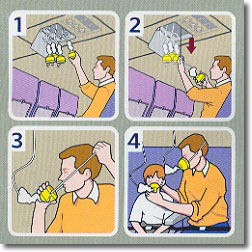
In a morning keynote, Arianna Huffington spoke elegantly about the power of renewal – of putting the care of ourselves first so that we can facilitate the care of others. She compared it to: “In case of emergency, place your own oxygen mask before assisting others.” It results in better health, better innovation, better creativity, and better productivity.  It results in RESULTS.

HR is often the worst at taking its own advice. We work through lunch. We come in early and on weekends, we stay late to meet with employees afraid to meet during business hours. We respond to emails at all hours of the night because an executive forgot to tell us something that we really need to know before that meeting in the morning. We do this because many of us are martyrs who think we have to. And we do this because we care that things are done to expectations.

This comes at a cost.

Leaders – don’t take HR for granted. Help them set the example that the rest of the organization can follow. Tell them to go home on time. Tell them to stop responding to emails. Don’t enable their need to please. Help them set boundaries…and then allow them to KEEP those boundaries. No one gets to break that rule. No one.

In the end, you will have more effective HR, more effective employees, and a more successful business.

And HR conferences will be filled of fun stories again, instead of good people at the end of their tether.