Your zipper is down

May you always have someone in your life who will tell you your zipper is down.

May you have a friend who lets you know there’s cilantro stuck between your teeth.

May you have a significant other who tells you when you are overreacting.

May you have an archenemy who makes you smarter.

May that same archenemy be willing to team up with you against a common foe as needed.

May you have a boss who is brave enough to tell you to stop it, you’re making an idiot of yourself. 

May you have a best friend who gets it when you just text “Blergh.”

May you have a pet who loves you unconditionally…but totally leaves the room when you start yelling at the TV, because who’s got time for that?

May you have a health care provider who reminds you to take care of yourself.

May you have a teacher in your life whom you remember for the best of reasons.

May you have parents whose phone calls you sort of avoid because seriously, you don’t need to talk to me EVERY 3 hours, do you?

May you have all these things and more because it means you’re not alone. It means there are people out there who care enough to point out your faults. There is someone out there who wants to make sure you’re on the right path.

And if you have that, it means you have an obligation to be that person to someone else.

Because everyone needs at least one person who cares enough to tell you that your zipper is down.

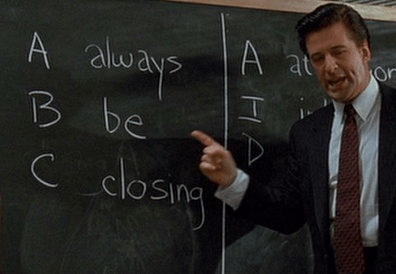
Always Be Curious (with apologies to Glengarry Glen Ross)

As you probably know, I have a day job. Yes, I actually work in human resources. For a real company and everything!

But I’m also fortunate enough to have the opportunity to speak at a handful of conferences and other events throughout the year. I enjoy doing this – it’s a great chance for me to visit other states and talk to fellow HR professionals about the struggles they’re facing and to share my experiences in the hopes we all walk away with a fresh perspective and some new ideas to try.

Well, that’s the idea, anyway.

The reality is that not everyone attends a conference with the intent to learn. Some are there just for the recertification credits. Some are there to hang out with their HR friends and hit the expo floor. Some are there to finally get a few days away from the kids so they can watch some RHONJ in peace, dammit! It’s not necessarily what the conference planners intended, but honestly, they’re pretty happy if people pay, show up, give the keynotes some attention, and fill out the feedback forms.

Speakers have a love/hate relationship with feedback forms. We do want to hear from our audience – we want to get better, we want to know what was meaningful to you, we want to hear that we’ve changed your life because you finally understand the new overtime regulations. (Okay, that last one was a bit tongue in cheek.) But seriously…we want some sort of validation that the time we spent building the presentation, practicing, traveling to the conference, and delivering the content was useful for someone. And most comments are very kind. You get the random comment about room temperature (sorry, we can’t control that) or the fact that someone doesn’t like the color of your dress (which is why I usually wear pants), but for the most part, it’s good feedback.

For the most part.

Inevitably, no matter what presentation I deliver or at what conference, there is at least ONE person who writes the comment: “I didn’t learn anything new.”

Really? Not a single thing? At all?

Listen, as a speaker, I’m usually a tough audience. Speakers end up seeing a lot of different sessions with different types of presenters, so you can get a little jaded. I admit it. But I walk into every session with the intent of taking away at least ONE thing I’ve learned from that person. Hell, if nothing else, I learned their name and what they do for a living.

But not this person. This person just says, “I didn’t learn anything new.”

This depresses me. Not because I worked hard to do research to include a lot of value-added data (which I always do), or because I shared my experiences in other orgs in hopes it helps (which I also do). It depresses me because a comment like that indicates that this person is not curious. They walk into every situation assuming they know everything and that there is nothing that anyone could possibly teach them.

Who wants to live life like that?

BE CURIOUS. Be open to new ideas and new experiences. Be open to new data. Be open to the fact that your carefully crafted world view might not be 100% accurate.

I’m not asking you to agree with everything you hear. In fact, I want you to question it, challenge it. That shows me you are thinking about it and are curious about how it ties into what you’re currently doing. It shows me you’ve internalized the idea and are considering it and may decide to reject it. At least you cared enough to hate it instead of dismissing it as “nothing new.”

So this is my challenge to you from now until the end of the year. Instead of dismissing something outright, think about it. Question it. Be curious about it. You might actually learn something new.

God forbid.

We’re failing our people

The Society for Human Resource Management – or SHRM – recently released some very interesting surveys around employee engagement and talent acquisition. Both reports have some very interesting information, so I highly suggest you download and give them a read.

As a leader and an HR professional, there were a few stats that stood out for me:

  • 88% of US employees reported overall satisfaction with their current jobs
  • 45% of US employees reported they were likely or very likely to look for a job outside their current organization within the next 12 months
  • 32% is the average turnover rate in the first 6 months for new employees
  • 26% of jobs are filled from internal candidates

Now, I’ve been known to find patterns and connections that are tenuous at best (don’t call me a conspiracy theorist…it’s really more of a hobby). But when I see these stats together, I’m inclined to make some leaps of logic, such as:

  • People are “satisfied” but would happily jump ship because they think there’s something better out there (read: “it’s all about the benjamins”)
  • 3/4 of our jobs have to be filled externally because we didn’t plan ahead
  • We’re doing a pretty crappy job of selecting the right people and/or onboarding them properly

In short, we seem to be failing our people as leaders. the-office-quotes-12-main

Yes – I’m pointing the finger at leaders right now. We’re the ones making the decisions. We create comp structures that incent employees to leave within two years (or is it three years) or lose earning power. We make lazy hiring decisions – either waiting too long to make a decision and thus lose the best candidate, or we settle for someone who isn’t really qualified because we just need a warm body.

And why are we making those lazy hiring decisions? Because we haven’t invested in employee development for a long time. The recession of 2007/2008 (and beyond) helped us justify cutting costs for developing our people – even though we know it would improve their performance, commitment and our bench strength. Oh, and it would also improve our managers, who impact our employees’ day-to-day lives. But hey…we really needed to save that $300,000 at the time. Right?

And so, we are playing catch up. Our workforce is facing a retirement wave. Yes, it was delayed by a down economy as people stayed in the workforce longer, but now people are leaving to enjoy their hard-earned retirement. So we have to hire external people to fill the leadership or more senior roles we should have been developing internally. And yes – a healthy mix of internal to external hires is preferable. But do you think it’s 25% to 75%? Really? Because our current employees see this happening and decide that there is no future for them at their current company…so they start looking.

We can make it better.

We can look at our employees’ development and decide to invest in them.

We can build Total Rewards programs that actually reward people. AND keep up with market increases. You don’t want to build base salary? Fine. Offer incentives/bonuses/whatever you want to call them. Build in some flexibility, too.

We can have conversations with our employees about their career goals, and then try to help them reach those goals. Will they always be at the current company? No. But that employee will remember you did that for them and share that story. And now you have an employer brand to be proud of.

You’ve all seen this old chestnut:

CFO asks CEO: What happens if we spend money training our people and then they leave?

CEO: What happens if we don’t and they stay?

Now replace “training” with “developing” or “investing in” or “caring about” our people. And realize that the CEO in this quote doesn’t need to worry.

The reality is, they won’t stay. They’ll find an organization that values them enough to invest in their future. And they’ll leave angry and bitter rather than inspired and grateful. And they won’t be our problem any more. And the cycle will repeat.

This is your call to action. This is your chance as a leader to use your voice and your influence to change the system. Show the business you mean business. Show your people you care.

Turn failure into success.