Not too long ago, I wrote about the importance of having a support network to keep you on track.
I have my own group – #teamfaulkner.
The concept was born out of the idea of having a personal board of directors. (I don’t remember where I first heard about it, but this HBR article is a good overview.) I had hit a point in my life and my career where I wanted to start thinking about the long-term, “what do I want to be doing for the rest of my career” questions, and I knew I wasn’t equipped to figure that all out on my own. I figured I’d put together an advisory committee of people who knew me from various aspects of my life, and I would use them to explore what I might be when I grow up. There wasn’t a timeline attached – it was basically an exploratory committee. I figured I had lots of time.
Reality had other ideas, and my job went away as part of a restructure.
It happens. It sucks when it happens, but it happens. The good news is that I already had a ready-made support team as I contemplated my next move.
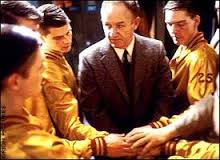 #teamfaulkner helped keep me grounded after the surprise of the reorg. They offered support and acted as a sounding board for different options. They connected me to some amazing people who shared their thoughts on the state of HR and helped me explore various career paths. They made me laugh (a lot). They listened to me in my whiney moments. They took time to reach out individually as needed. They let me bounce ideas off them, sharing opinions on various interviews and job options. They told me what they thought while still leaving room for me to think it through. And they supported me when I decided on where to land.
They were great. They’re still great.
One of the #teamfaulkner members asked what I thought about the whole process. I asked for a little time to think about it, and this person said I should answer on my blog. So I am. Here are a few things I’ve learned along the way:
- I reached out to the right people: When I thought about putting this “board of directors” together, I wanted to pick people who knew me from a variety of viewpoints – people I’ve worked with, people who at one time worked for me, people I know primarily through the online community, consultants, practitioners, professors, all that stuff. This variety of perspectives has been invaluable to me; almost like a short-hand for debating all sides of an argument. Depending on the topic, they share a spectrum of opinions from conservative to “why the hell not?”
- It’s okay to disagree with the #team: I wanted feedback, not an owner’s manual. So when someone on #teamfaulkner suggests something I don’t really agree with, it’s awesome because even though I’m not going to take that particular piece of advice, I had to think about why and articulate that “why” to someone else, thereby thinking through the decision-making process much more thoroughly.
- It’s better to be specific in my requests: I have found it most helpful when I ask specific questions or am more precise in describing what my issue is. Shockingly, just saying, “I DON’T KNOW WHAT TO DO!!!” doesn’t elicit the most useful feedback. I am also planning to ask #teamfaulkner to challenge me a little more. Part of it could have been the circumstances (no one wants to kick a person when they are down), and part of it could have been the way I framed the questions.
- It’s not just about me: Ostensibly, #teamfaulkner is all about me (after all, it’s named after me). But what various folks have shared is that the group was helpful for them as well – whether it was practice coaching, learning from the advice of others, or being exposed to a new way of thinking through things.
- I was unprepared for how much people would be willing to reach out and help: I’m a pretty independently-minded human being, which means I typically figure things out on my own. (Some people would say I’m ‘stubborn’…but I don’t talk to those people any more. Haha. Sort of.) When I reached out to a cross-section of friends from different walks of life, I figured I’d get a post now and then…maybe a “like” on my Facebook group. What I got was an amazing amount of support – thoughtful comments, emails, phone calls, texts, all that cool stuff. I am still in awe of, and incredibly touched by, the level of personal outreach I’ve received from #teamfaulkner. (This is for you.)
Now that I’ve started my next adventure, a couple of folks asked whether that was the end of #teamfaulkner. The answer – HELL NO. I will continue to rely on this group to guide me in my career and personal development. I want to keep making them visit the Facebook group and read silly posts. I want to keep learning from this amazing group of people. I want the group to continue to learn from each other. I want to tell them when I think they’re full of crap, and I want them to tell me when I’m full of crap (which they totally will).
In short, I want to keep in touch.
#teamfaulkner started as an experiment in leveraging my network, and it has grown into more. And I will continue to reach out to my team for as long as they will have me. It’s been an interesting process for me, and one I recommend for others who are looking to gain insight into their development. Who knows? There may be a book in it one day. (If the team is okay with it.)
It is literally true that you can succeed best and quickest by helping others to succeed.
~Napoleon Hill


 Surviving Leadership