You are how you act (a cautionary tale)

See thou character. Give thy thoughts no tongue,
Nor any unproportioned thought his act.
Be thou familiar, but by no means vulgar.

– Polonius to Laertes, Hamlet

I hate to be yet another post about Richard Sherman and all that, but try as I might, I just can’t shake some feelings of disappointment over the whole affair.  For those of you who have been without internet, here’s what everyone has been talking about.

Sherman’s reaction touched off a firestorm of reaction.  The debate seems to have settled into two camps – those who think Sherman is a thug, and those who think the media is being unfair.

Give every man thy ear, but few thy voice;
Take each man’s censure, but reserve thy judgment.

When I saw it, I was pretty annoyed – he was asked a question about his team, and chose to use this moment to trumpet himself (not his team) and make a personal attack on Michael Crabtree, his opponent.   I don’t think he’s a thug or any of the other words used to describe him – I think he’s a guy with low impulse control who needs to have a little more professionalism.  The outburst (and subsequent follow up comments) lacked humility, a quality other greats in the game show in victory and defeat.whois

But do not dull thy palm with entertainment
Of each new-hatch’d, unfledged comrade. Beware
Of entrance to a quarrel, but being in,
Bear’t that the opposed may beware of thee.

But apparently I’m mistaken.  This story was written – telling us that we are lazy and awful because we didn’t bother to get to know the real Richard Sherman, and aren’t we all just shallow.

Guess what? We are how we act. Each of us is responsible for our behavior. Richard Sherman has a pattern of disrespecting his opponents. I’m glad he’s a person who found a better life through his talent, but that doesn’t excuse him for acting like a jerk.  And now kids are making videos re-enacting the rant.  We are supposed to be okay with it because if kids can re-enact it, there obviously wasn’t anything inappropriate done or said.  Other than the lack of sportsmanship.

There are CEOs who are assholes in their day-to-day lives who are loved because they manage their public persona so well (or the serial killer about whom everyone says, “he seemed like such a nice guy”), just as there are people like Sherman who may do wonderful things away from the spotlight, but chooses to act like a jackass when the cameras are on.  And the one we see on TV is the one from whom we make our judgements.  Is it fair?  Maybe not.

And that in way of caution, I must tell you,
You do not understand yourself so clearly

But it happens to each of us every day – our value to a company might be based on a hallway interaction with an EVP, or one meeting with stakeholders, or a chance encounter on IM.  And we don’t always get a chance to hold follow up press conferences or send out tweets to argue our case.  And most of us don’t get to play the “that’s your problem” card.

We all have choices on how we act.  No, we cannot control how people will react to us.  Nor can we control the judgements made about us based on the baggage people carry around with them.  But we can acknowledge that sometimes our actions might be misinterpreted because of the timing or tone, and we can apologize when we act inappropriately.  We can be accountable for how we act, for that is how others see who we are.

Sherman has had a good past couple of years (as well a dodged suspension due to irregularities in the collection process), and he has always had a big mouth.  If he wants to be remembered for his talent and not for his attitude, he would do well to rethink his public persona.  If he wants to be remembered for his intelligence and escape from a difficult childhood, he should act as the person he is.

This above all: to thine ownself be true,
And it must follow, as the night the day,
Thou canst not then be false to any man.

Unless he is the person he acts like.  And that’s all on him.
Snark is the New Cool…and that may not be cool

One of the things you may not know about me is that I’m a bit of a musical theater nerd.  What this really means is I tend to be a singing snob.  Yeah…I’m one of those people.  It doesn’t mean I think I can do it better than other singers, I just get annoyed when singing isn’t done correctly. (Note to teachers of young singers – STOP MAKING THEM SING OUT OF THEIR NOSES!!!!!  Thank you.)

So when a live broadcast of The Sound of Music was announced with Carrie Underwood, I wasn’t terribly excited.  Nothing against her voice – I’m just not a country fan and I think sometimes she can be a little wooden in her performance.  And I love Julie Andrews.  Therefore, I chose not to watch.

That doesn’t mean I didn’t read a bunch of the comments made on social media on the interwebs.  Seriously, y’all got creative.  And some of you were funny.  And a little mean.

snark1

I was listening to Seth Speaks on my satellite radio (On Broadway channel – enjoy!) and Laura Benanti was a guest (she played the Baroness on the NBC broadcast, and starred as Maria in the Broadway revival…and she is amazing).  She was sharing some backstage stories and such, and Seth asked her what she thought about the comments made against Carrie.  And Laura threw down on the haters.

“Snark,” Laura says, “is the new cool.”   She pointed out that here was a person with the courage to try something she’d never done before…live…in front of 18 million people.  Instead of applauding her for it, and celebrating the fact that a major network took a chance to bring a new, younger audience to Broadway and music, the Twitter-verse used it as a chance to show off how clever it is.

No snark?
This stuck with me.  I love snark.  I enjoy the heck out of reading it, and I tend to engage heavily in the dishing out of said snark, too.  But Laura has a point – snark can get in the way of what you’re really trying to accomplish.  It can shut down people’s willingness to take a chance.  It can break down the feeling of “team”.  A lot of people who give snark can’t take it, so then you get a whiny snarker.  And while snark might be funny or make you look clever, is it adding anything of value to fix the perceived issue?  In short, snark can be extremely damaging.

What to do?
I’m not going to advocate going snark-free.  A little snark is like good satire – it points out that the emperor has no clothes and uses humor and shock to heighten awareness about a situation.  Matt Charney’s Snark Attack blog  is great!  So is Television Without Pity (spare the snark, spoil the network).  That snark IS cool.  And funny.  And thought-provoking. And change driving.

So if you consider yourself a snark aficionado (and who doesn’t, amiright?), use the next 30 days to pay attention to how and when you use it.  If your intent is pure and you’re working towards a greater good, snark away.  And a little snarkiness amongst friends can be fun!  But if you’re employing snark to put someone else down because it makes you feel better about yourself and you think it makes you look clever, stop it. You’re just being an asshole.

Put me in, Coach! (what you’re missing when you leave people on the bench)

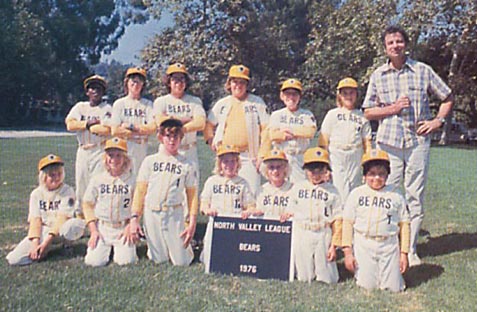
You know how in a lot of movies and TV shows, there always seems to be a plot twist in which the team finds itself in trouble and the dashing lead runs out of ideas…and then the goofy misfit they let tag along for the ride suddenly saves the day.  Take The Bad News Bears (but make sure it’s the 1976 version, ’cause the remake sucked).  This was a team of kids who shouldn’t have been able to do anything useful – they couldn’t hit, couldn’t throw, couldn’t field…and yet they managed to win a Little League championship.

My point here is that each member of your team has the potential to contribute something pretty awesome to your overall success.  And maintaining the status quo simply because you are in “if it ain’t broke, don’t fix it” mode can have some pretty big consequences to both your team and your business.

Here are a few reasons to get your people in play:

  • It keeps them engaged: It’s hard enough to get your employees to care about the day-to-day of their job.  Your employee might be secretly waiting to unleash his/her brilliance unto the universe…but you’ve got that person doing data entry because you’ve got bigger fish to fry.  According to a SHRM engagement study, 75% of respondents named “opportunities to use skills/abilities” as a top engagement aspect.  Surprisingly, no one listed “being left alone to try and figure out how to stay busy” as a top factor for engagement.  How ’bout that.

    bad-news-bears
    (Did you know Kelly Leak was played by Jackie Earle Haley? No kidding!)
  • You don’t know everything: You might think that everything is fine and therefore there is no need to get one of your resident experts involved, but guess what – you are not the expert, so it’s possible you don’t realize that your resident expert needs to be involved.  Your employees might bring a fresh perspective to an existing problem that allows you to reach a solution, and they get to feel awesome doing it.  Sounds like a win-win. Oh, and if your expert comes to you and suggests how you might be able to use him/her in a way that will add value, don’t brush them off.  It’s uncool.
  • Improves response time: We all know that the status quo is just WAITING to explode at some point.  By keeping your employees in the regular rotation, they are kept up to speed and can proactively help you respond to potential issues.  If you wait until things go south before bringing in your closer, you’re going to lose precious time bringing them up to speed, getting them focused, and hoping they don’t resent the fact that your lack of planning may have created their emergency.
  • Helps you keep ’em: The days of people just wanting to keep ANY job are over.  People understand that their job isn’t the be all, end all of their happiness, but they also know that they spend a lot of time at work and want to be relatively happy while they are there.  Remember that whole “opportunities to use skills/abilities” stat?  Turns out that is the NUMBER ONE factor for job satisfaction in that SHRM study.
  • Your business will be better: There’s been some talk in the research about “passion vs. engagement” (see this report from Deloitte for details).  Basically, the research argues that engagement is all well and good for a relatively stable world, but to be able to thrive in chaos, passionate employees are where it’s at.  Passionate employees improve your business results and set you up for the long term because these employees are willing to stay with you through the good times and the bad, and are excited to take on new challenges and move the company forward.

It’s not worth waiting until a crisis to involve your people.  Don’t make your people beg to be involved.  Chances are, most of them are sitting on the sidelines, just waiting for a chance to get in the game and contribute.

I don’t believe in team motivation. I believe in getting a team prepared so it knows it will have the necessary confidence when it steps on a field and be prepared to play a good game.
– Tom Landry

Have a suggestion on how to keep your people involved?  Or maybe a story about how YOU got in the game?  Share in the comments!