The best part about being a manager

There are hundreds – nay, thousands – of blog posts about how hard it is to be a manager, the struggles one faces, the challenges we deal with.  I’ve contributed to that number.  Heck, this whole blog was created on the premise that it’s difficult to be a leader, as well as to be led.

None of that has changed. It’s hard out there for a pimp, yo.

But we focus so much on negativity that I thought it would be good to take a moment to talk about the best part about being a manager – employees.

Yes, employees are the best part about being manager. (Some of them are the worst part, but that’s another story.) Unless you are ready to work with your employees to help them be successful, you shouldn’t even consider being a manager – I don’t care what the compensation rate is.  You need to WANT to develop people. Because it’s hard work and can lead to heartache.

It can also lead to moments of incredible joy and pride.you da best

I’ve had the opportunity to manage a lot of different people in a lot of different situations in my career – some good, some bad.  While every single one is one of God’s special creatures in their own way, there have been a few that stood out because of what they accomplished.  And let’s be clear…they are the reason they are successful.  I was just lucky to be there.

I don’t want to publicly embarrass any of them, so I won’t go into great detail about their circumstances (Sam, Steven, Jim, others…you know who you are).  I worked with all of them when they were individual contributors – some in mid-career, some at the very beginning. All of them loved challenge, hated me from time to time, and have moved on to build training organizations of their own, to manage people, or to find the job that brings them happiness. And they did it because they are awesome.

There was no secret ingredient to helping them.  Really, it was about having high expectations, having their back, letting them fail from time to time, challenging them when I thought they were selling themselves short, and then getting the hell out of their way.

Whenever I have a chance to interact with these former employees, I’m always in awe of what they have been able to accomplish in spite of me.  It’s always a shame when a great employee moves on, but that’s tempered by the knowledge that they have done so much more than what they could have done if they had stayed my employee. And I learned far more from them than they did from me.

So, yeah…there are times when I hate being a manager; when I wish all I had to do was sit down, do work, and not be responsible for anyone else. But all that (well, most of that) goes away when I see an employee succeed.

Treat employees like they make a difference and they will.
 – Jim Goodnight, CEO SAS


Do you have a great employee success story? ARE you a great employee success story? Share in the comments!!!
‘Do you want to play Questions?’ (your secret weapon)

Have you ever read/saw Rosencrantz & Guildenstern Are Dead?  It’s an amazing play turned into a very good movie about two of the throwaway characters in Hamlet whose claim to fame is that they are outwitted by the brooding prince and executed in England.

In one scene, the two play a game called “Questions” – they must, not so surprisingly, only speak in the form of questions. Hesitation, statements, or non sequiturs are not allowed.  If someone goofs, the other person scores a point (or forfeits, or however you want to play it).

In the play, the scene is meant to further illustrate the limits of language and futility in seeking existential knowledge.  But what it also does is remind us of the POWER of asking questions.

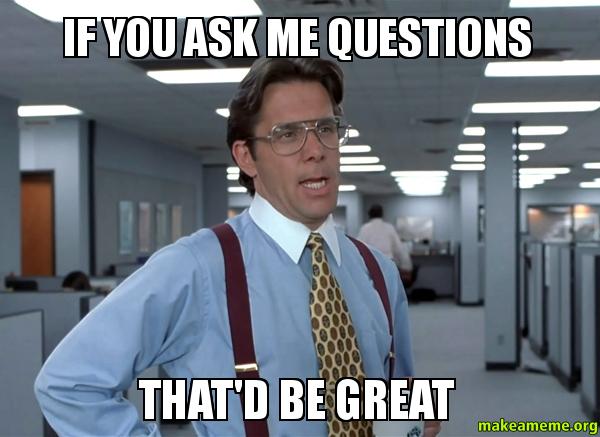
As leaders and as employees, we can benefit from playing our own version Questions when holding important conversations or when confronted with a potentially sensitive situation.  These conversations are filled with potential land mines – your innocent statement or observation could set the other person off because you didn’t know where they were coming from.If-you-ask-cp1weq

Forcing yourself to focus on questions rather than statements has a number of benefits.  You signal you’re willing to listen. Good questioning invites the other person in.  Questioning indicates you’re seeking understanding, rather than imposing your interpretation of events. When you ask questions, you actually have to listen to what the other person is saying, so that your next question makes sense in the context of the conversation.  And an added bonus, asking questions increases the chance that the other person might find their own solution.

There is, however, an art to using the questioning technique effectively.  After all, simply asking “How did that make you feel?” or “So you’re saying that customer was rude to you?” can sound condescending if that’s all you say.  Just follow the Questions rules:

  • No statements: Move the conversation forward with a question rather than your own statement. [And yes, I know that you will have to use SOME statements.  Just try to minimize them.]
  • No repetition: Stay engaged, pay attention.  If you find yourself repeating the other person’s words back to them, or ask the same question over and over, RE-ENGAGE.
  • No synonyms: It’s just a fancy way of repeating.  Show off.
  • No rhetoric: The intent of the questions is to seek clarity, not to stump the other person.  Does this mean every question you ask will be answered? No. But you should give them a fair chance.

So the next time you are in a scenario that could get messy, try following Rosencrantz and Guildenstern’s example.  Give yourself a deduction every time you break the rules and see how it turns out.  You might be surprised that all it took to defuse the situation was a few good questions.

“Words, words. They’re all we have to go on.”
― Tom Stoppard, Rosencrantz and Guildenstern Are Dead

Labor Day Reminder – (Co)Workers Matter

According to Wikipedia,

Labor Day in the United States is a holiday celebrated on the first Monday in September. It is a celebration of the American labor movement and is dedicated to the social and economic achievements of workers. It constitutes a yearly national tribute to the contributions workers have made to the strength, prosperity, and well-being of their country.

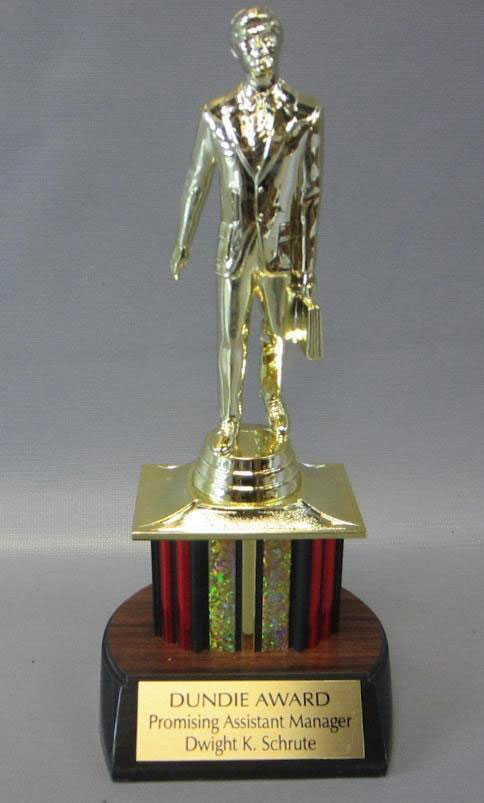
As you go about your preparations for a three-day weekend (hopefully), don’t forget to thank the people you work with and recognize the contribution they make.

dundee

Leaders, I know your employees sometimes drive you insane.

Employees, I know your leaders can make you want to poke your eyes out.

But the reality is we are all in this together.  No matter what kind of work you do, your organization, your industry, the people you work with shape your day-to-day experience.  They help determine whether or not you are in a good culture or a bad one.  They may lift you up when you’re feeling down, or help pop that ego when it gets a little too big.  They are your cheerleaders, your mentors, your sounding boards, your cranky neighbor who just wants those darn new hires to get off their lawn.

And yes…sometimes your coworkers are truly terrible.  And they contribute to an awful environment.  And they make you question whether it’s worth it.

But I wager that there is ONE person in your professional life who makes a difference.  That person deserves to hear from you.

So to everyone in my professional life – THANK YOU for your contribution to my strength, prosperity and well-being.


Now go eat some damn hot dogs.


Have a safe and fun Labor Day Weekend, everybody!